The 268th Station Hospital was a segregated African American United States Army medical unit staffed by Black doctors, nurses and enlisted medical personnel. Its wartime journey took it from Fort Huachuca in Arizona to Camp Columbia at Wacol and subsequently to Milne Bay in New Guinea.
The unit’s presence at Camp Columbia connects the site with an important chapter in African American military and nursing history. Its fifteen nurses were among the small number of Black women permitted to serve in the United States Army Nurse Corps during the Second World War.
Formation at Fort Huachuca
The 268th Station Hospital was activated at Fort Huachuca, Arizona, on 1 March 1943. Fort Huachuca was one of the principal training centres for African American soldiers and military units during the war.
The 268th was organised as a 150-bed station hospital. Station hospitals were intended to provide medical and surgical care at military bases and other relatively permanent locations. Their responsibilities included treating illness and injury, operating medical and surgical wards and caring for patients during recovery.
Although the United States was fighting a war against fascism and racial persecution, its own armed forces remained segregated. Black medical personnel were generally assigned to segregated units and frequently restricted to treating African American soldiers.
The 268th Station Hospital was the first African American medical unit deployed to the Pacific theatre to care for wounded and sick military personnel.
African American nurses in the wartime Army
More than 59,000 nurses served in the United States Army Nurse Corps during the Second World War, but only 479 were African American. In 1941, the Army limited the number of Black nurses to 56. The quota was increased to 160 in 1943 and was eventually abandoned in 1944 following political pressure and public criticism.
Black nurses were required to meet the same professional standards as white nurses but were offered far fewer opportunities to serve. Even after being accepted into the Army Nurse Corps, they faced segregated accommodation, restricted assignments and discrimination within the military establishment.
The unit departed the United States for the Southwest Pacific Area in October 1943 aboard the SS Monterey. After reaching Sydney, its personnel travelled to Brisbane and were temporarily based at Camp Columbia, Wacol.
Camp Columbia was then an important United States Army headquarters, staging and medical centre. The 268th remained there while its hospital facilities were being prepared at Base A, Milne Bay, in New Guinea.
During its time at Wacol, the unit’s officers, nurses and enlisted personnel lived within the segregated structure of the American Army. Nevertheless, their presence brought one of the most substantial African American military units to wartime Brisbane.
The panoramic photograph
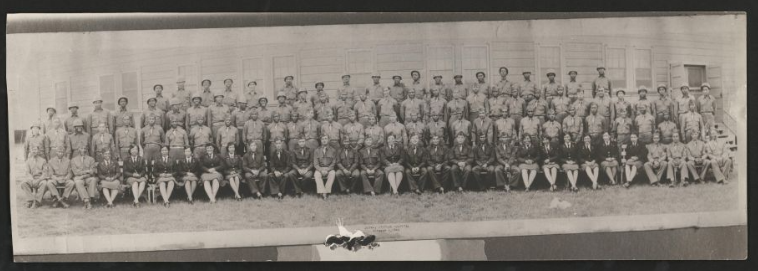
A surviving panoramic photograph shows the officers, nurses and enlisted personnel of the 268th Station Hospital assembled as a complete unit. The North Carolina Digital Collections catalogue identifies the location as Camp Columbia, Wacol, and dates the photograph 5 October 1943.
This catalogue information presents a significant problem. Other accounts state that the unit did not depart the United States for the Southwest Pacific Area until 15 October 1943. The setting shown in the photograph also appears more consistent with an American military installation than with Camp Columbia.
It is therefore likely that the photograph was taken in the United States before the unit’s departure, possibly at Fort Huachuca, and was subsequently given an incorrect location in the catalogue. However, its original location has not yet been independently verified.
The photograph remains an important record of the unit and its African American doctors, nurses and enlisted medical personnel, but it should not presently be used as photographic evidence of the 268th Station Hospital’s presence at Camp Columbia.
Personnel of the 268th Station Hospital, 5 October 1943. The archival catalogue identifies the location as Camp Columbia, Wacol, but the date and physical setting indicate that the photograph was probably taken in the United States before the unit departed for Australia. Exact location unconfirmed. Source: State Archives of North Carolina.
Nurses photographed at Camp Columbia
Several United States Army Signal Corps photographs preserve the names and experiences of women serving with the 268th Station Hospital.
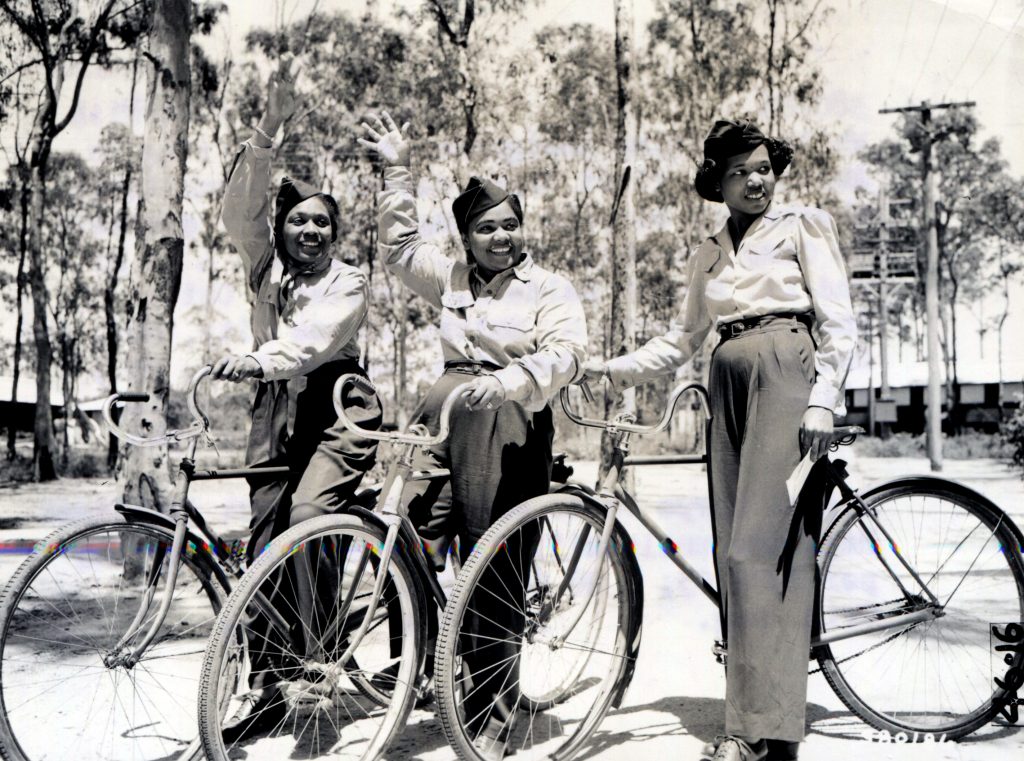
One of the best-known photographs was taken at Camp Columbia on 29 November 1943. It shows Second Lieutenants Beulah Baldwin, Alberta S. Smith and Joan S. Hamilton trying bicycles near their quarters.
Original Caption: “While awaiting assignment after arriving in Australia, first Negro nurses to reach these shores try bicycle riding near their quarters in Camp Columbia, Wacol, Brisbane. Left to Right: 2nd Lt. Beulah Baldwin (Cleveland, Ohio), 2nd Lt. Alberta S. Smith (Kansas City, MO), and 2nd Lt. Joan S. Hamilton (Kansas City, MO), all attached to the 268th Station Hospital.” Photographer: Williams. This item was produced or created on November 29, 1943. See: https://catalog.archives.gov/id/178140880
The historical language in the caption reflects terminology used by the United States Army in 1943. Today, the photograph is significant both as a military record and as an image of friendship and relaxation among three women preparing for demanding overseas service.
Mail from home
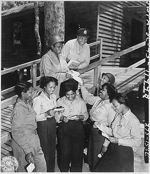
Nurses of the 268th Station Hospital receive mail from home after arriving in the Southwest Pacific Area, 29 November 1943. Among those identified are Lieutenants Prudence L. Burns, Inez Holmes and Birdie E. Brown. Photograph by Sgt Dick D. Williams. Source: United States National Archives, Local Identifier 111-SC-370740; NAID 531410.
Another photograph, also dated 29 November 1943, shows members of the fifteen-woman nursing contingent receiving their first mail from home after arriving in the Southwest Pacific Area.
Three of the women are identified as:
Lieutenant Prudence L. Burns
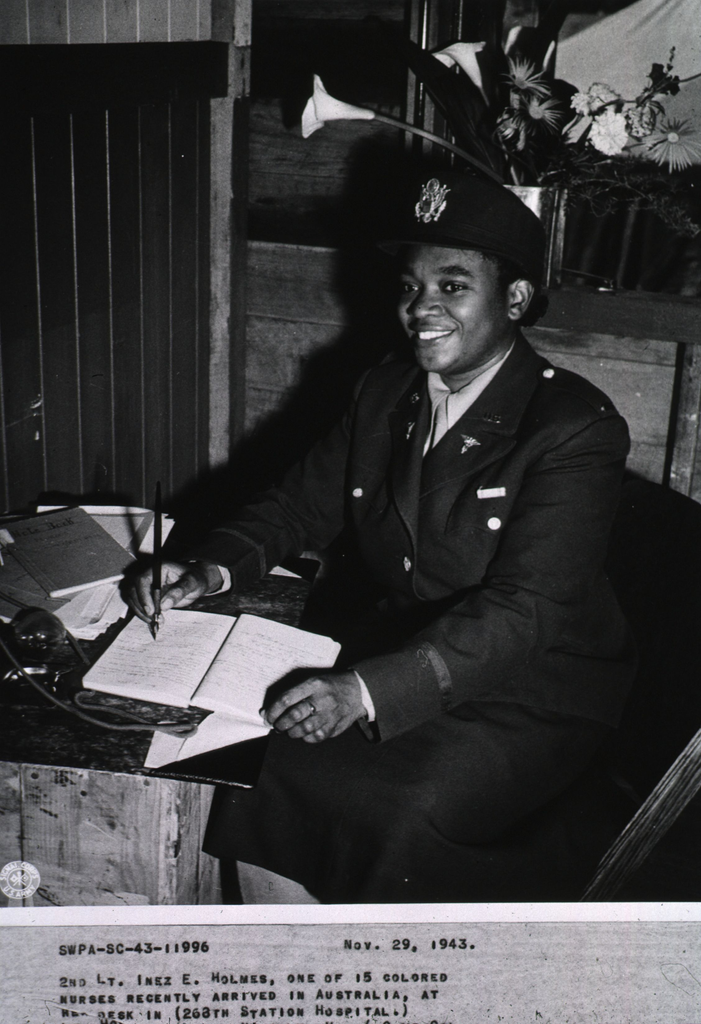
Lieutenant Inez Holmes
Lieutenant Birdie E. Brown
Mail had particular importance for personnel serving overseas. It provided a connection with families and communities thousands of kilometres away and helped sustain morale during lengthy and uncertain wartime deployments.
Inez Holmes was born in Norfolk, Virginia, in 1915. Before joining the military, she worked for four years at Seaview Hospital on Staten Island, New York. She also trained at the Piedmont Tuberculosis Sanatorium for the treatment of African American patients in Virginia.
By 1942, Holmes had become the first head nurse of a surgical ward for an African American division at Fort Bragg, North Carolina. Contemporary African American newspapers celebrated her achievements at a time when Black nurses faced severe restrictions on military service.
Holmes subsequently became one of the fifteen nurses sent to the Southwest Pacific with the 268th Station Hospital. Her career illustrates the professional experience these women brought to the Army and the obstacles they had to overcome simply to be permitted to serve.
From Camp Columbia to Milne Bay
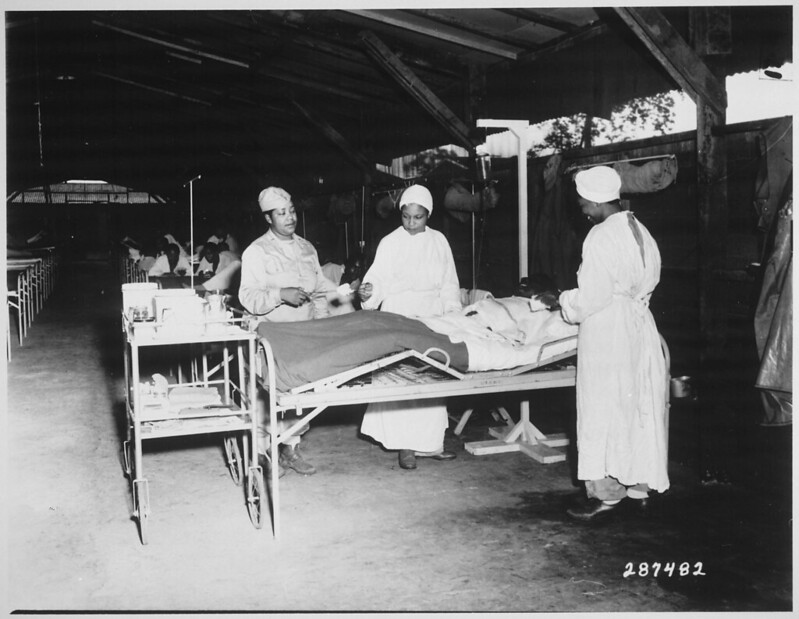
Surgical treatment at the 268th Station Hospital, Base A, Milne Bay, 22 June 1944. From left: Sergeant Lawrence McKreever, Second Lieutenant Prudence Burns, Second Lieutenant Elcena Townscent and an unidentified nurse. Source: United States National Archives, Local Identifier 111-SC-287482; NAID 530771.
After its temporary stay in Brisbane, the 268th Station Hospital moved to Base A at Milne Bay in New Guinea. United States Army medical records confirm that the hospital was operating there by January 1944.
Milne Bay presented difficult conditions for patients and medical staff. High rainfall, heat, mud, insects and tropical diseases affected both military operations and everyday hospital life. Malaria was a constant danger, and hospital beds required mosquito netting.
The medical staff treated soldiers suffering from illness and injury as well as patients requiring surgical care. Although the unit had been created within a segregated military system, its personnel treated sick and wounded servicemen requiring their assistance.
A United States National Archives photograph taken at Milne Bay on 22 June 1944 shows the hospital’s surgical staff treating Sergeant Lawrence McKreever. The photograph identifies Second Lieutenant Prudence Burns as the ward nurse and Second Lieutenant Elcena Townscent as the chief surgical nurse. A third nurse is not identified. Staff that most likely traveled with the rest of the hospital; staff from Camp Columbia to Milne Bay.
In June 1944, the 80th General Hospital began taking over the Milne Bay facilities occupied by the 124th and 268th Station Hospitals. This formed part of the continuing reorganisation of American medical services as Allied operations moved farther north.
Service within a segregated military
The history of the 268th Station Hospital contains an unavoidable contradiction. Its doctors and nurses served a country fighting for freedom overseas while remaining subject to racial segregation and discrimination within their own military.
The nurses were commissioned officers and professionally trained medical personnel. Nevertheless, the Army restricted how many Black nurses it would accept and where they could serve. Segregated assignments limited their opportunities even while military authorities faced a shortage of qualified nurses.
Their deployment to Australia and New Guinea was therefore significant. They demonstrated their professional ability under difficult overseas conditions and contributed to the gradual challenge against racial restrictions within the United States military.
The American armed forces were not formally desegregated until President Harry Truman issued Executive Order 9981 in 1948.
Army nurses, not WACs
The women of the 268th Station Hospital are sometimes incorrectly described as members of the Women’s Army Corps.
They were commissioned officers of the United States Army Nurse Corps. The Army Nurse Corps and the Women’s Army Corps were separate organisations:
Army Nurse Corps officers were professionally qualified nurses responsible for medical care.
Women’s Army Corps members served in administrative, communications, transport, mechanical and other military support roles.
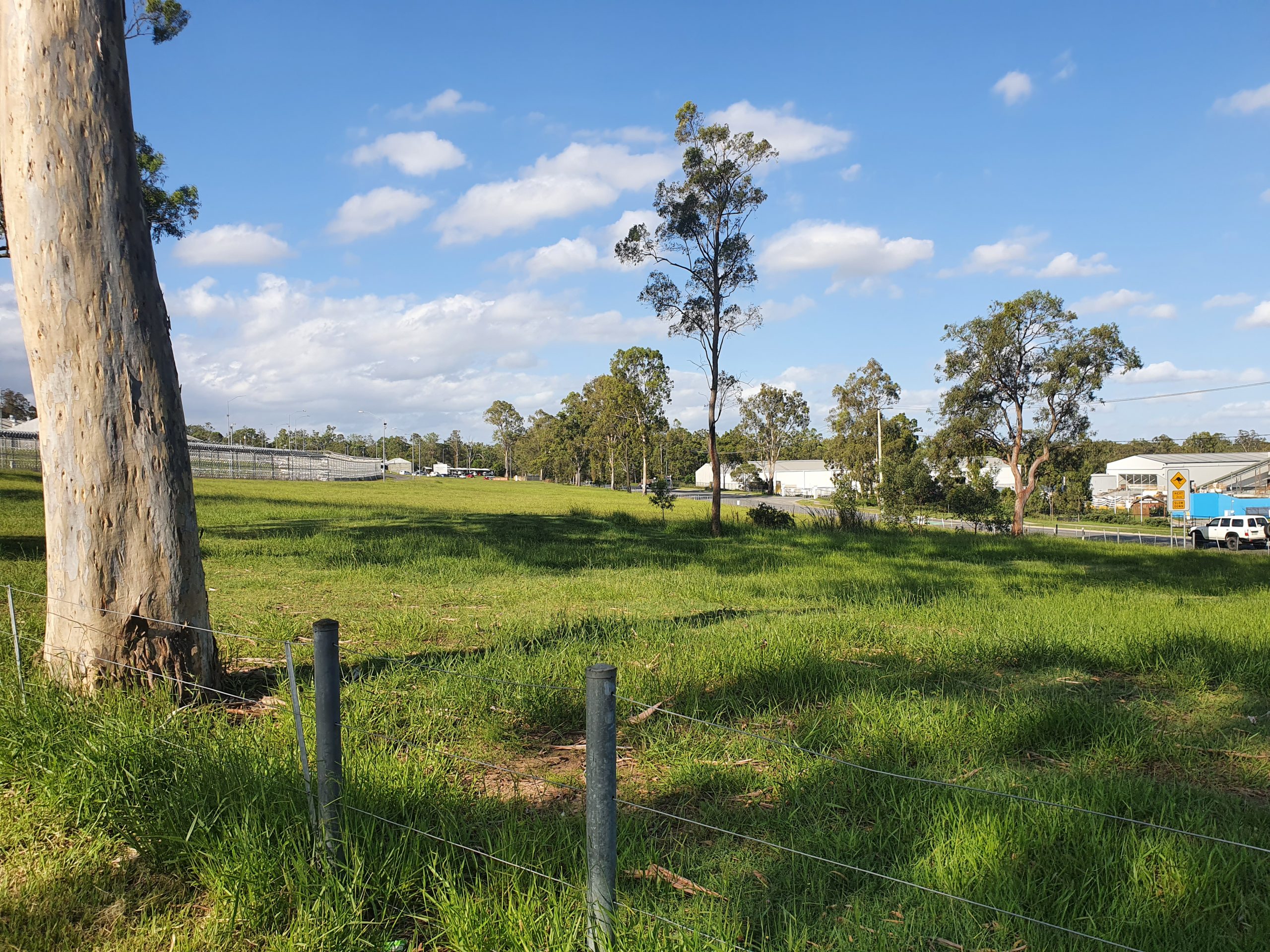
Site of the former military hospital now Brisbane Corrective Services. Photo Paul Budde 2022
This distinction is important when describing the women in the Camp Columbia photographs.
Why the 268th matters to Camp Columbia
The 268th Station Hospital broadens the history of Camp Columbia beyond its headquarters and staging functions. The camp was also a place where African American doctors, nurses and enlisted personnel prepared for medical service in New Guinea.
The surviving photographs are especially important because they preserve the identities of individual women. Beulah Baldwin, Alberta Smith, Joan Hamilton, Prudence Burns, Inez Holmes, Birdie Brown and Elcena Townscent emerge not merely as unidentified figures in military photographs but as trained professionals participating in a major international conflict.
Their time at Camp Columbia was comparatively brief, but it connects Brisbane with the wider histories of African American military service, wartime nursing, racial segregation and the struggle for equality.
The 268th Station Hospital was activated at Fort Huachuca, Arizona, on 1 March 1943. It was a segregated African American medical unit staffed by Black doctors, nurses and enlisted medical personnel.