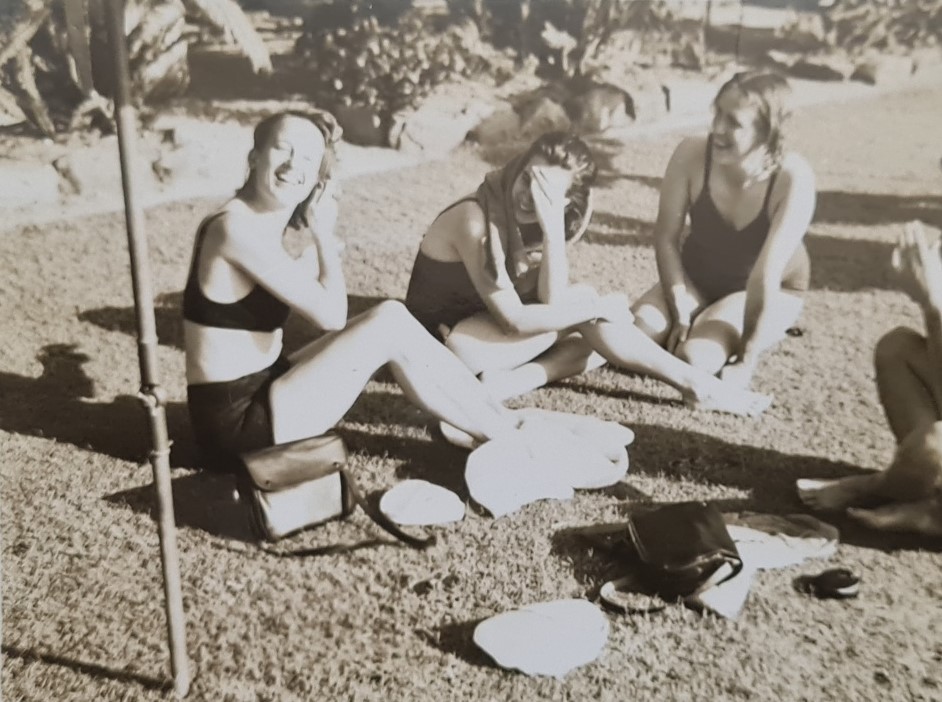
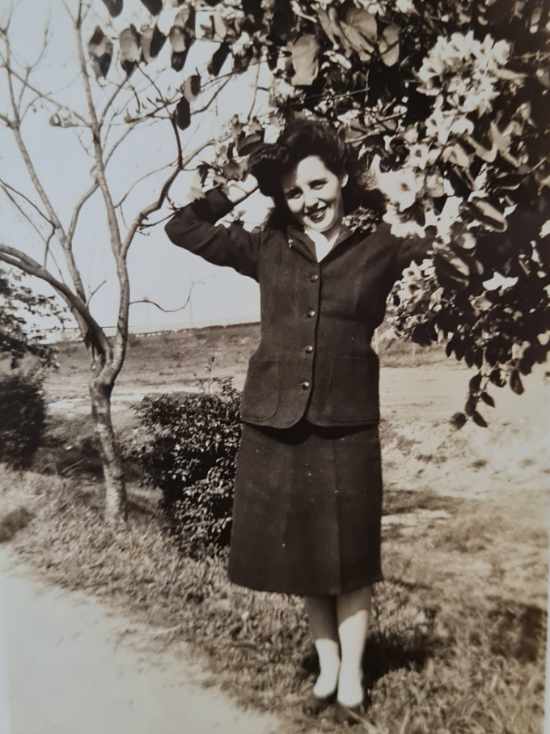
Joan McConachy was an Australian civilian secretary who worked for the Dutch Army at Camp Columbia during the Second World War. She was not a member of the VK-KNIL, but she worked within the same Dutch military community and knew many of the women and men associated with the camp.
This account is based principally on Joan’s recollections as recorded and provided by her son, David Hill. David also made available the wartime photographs preserved by his mother, enabling an important part of Joan’s life and the wider history of Camp Columbia to be documented.
From western Queensland to wartime Brisbane
Joan was born in Winton in central-western Queensland in 1924. Her family later lived at Dotswood, a large cattle station near Charters Towers in North Queensland. The property subsequently became part of an Australian Defence Force training area.
Joan moved from Dotswood to Brisbane around 1943. Before leaving the station, she experienced something of the American military presence around Charters Towers. She spoke fondly of American airmen visiting Dotswood while on rest and recreation leave from a nearby air base.
According to Joan, American aircraft sometimes flew low over the homestead and dropped chocolates and stockings as presents for the family. These were welcome luxuries at a time when such goods were difficult or impossible for Australian civilians to obtain.
Working for the Dutch Army
In Brisbane, Joan became a secretary at Camp Columbia. She always described this employment to David as working “for the Dutch Army” and spoke about it with considerable pride.
Her precise departmental placement has not yet been established. It was previously suggested that she might have worked for the Netherlands Forces Intelligence Service, but no employment record has been located to confirm this. She should therefore be described as a civilian secretary employed by the Dutch military organisation rather than specifically as a NEFIS employee.
By 1944–45, Camp Columbia accommodated the Netherlands East Indies Government-in-Exile, Netherlands East Indies Army headquarters, the Netherlands Indies Civil Administration, intelligence sections and numerous administrative, communications and supply services.
Joan believed that she and other women working in the offices and typing pools handled sensitive information. Although the details of this work were not recorded, her photographs and recollections show that she was familiar with numerous sections of the camp and with Dutch, Indonesian and Australian personnel working there.
Joan’s Camp Columbia photographs
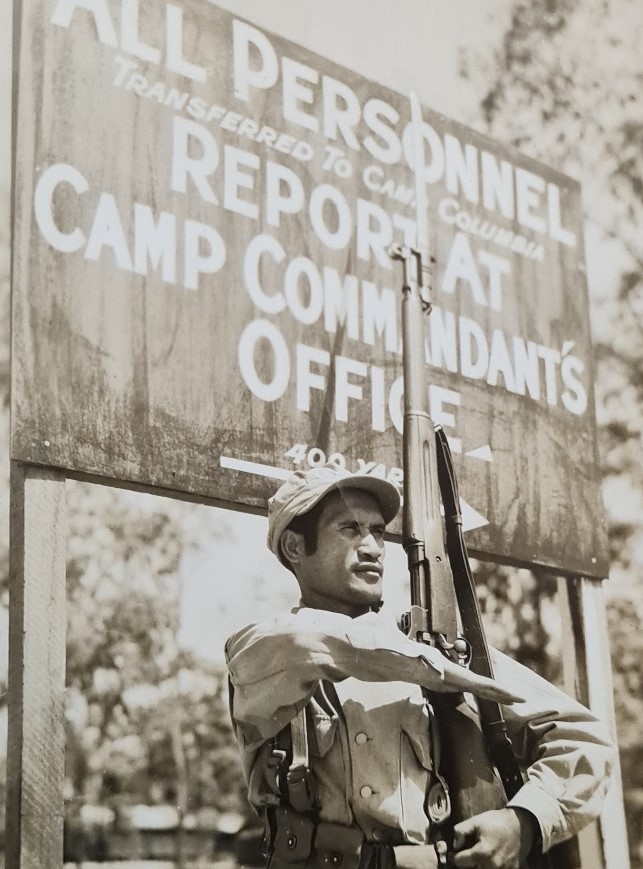
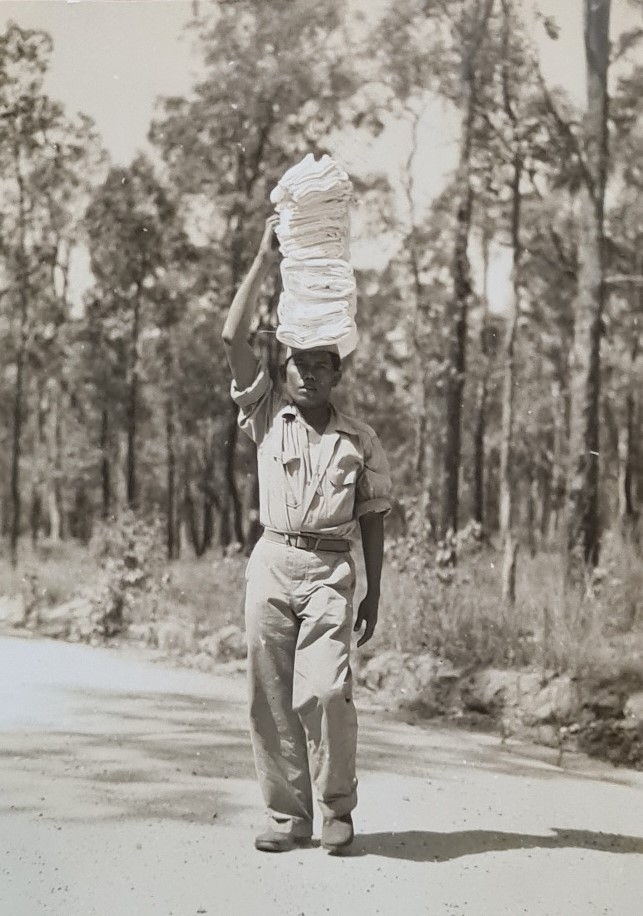
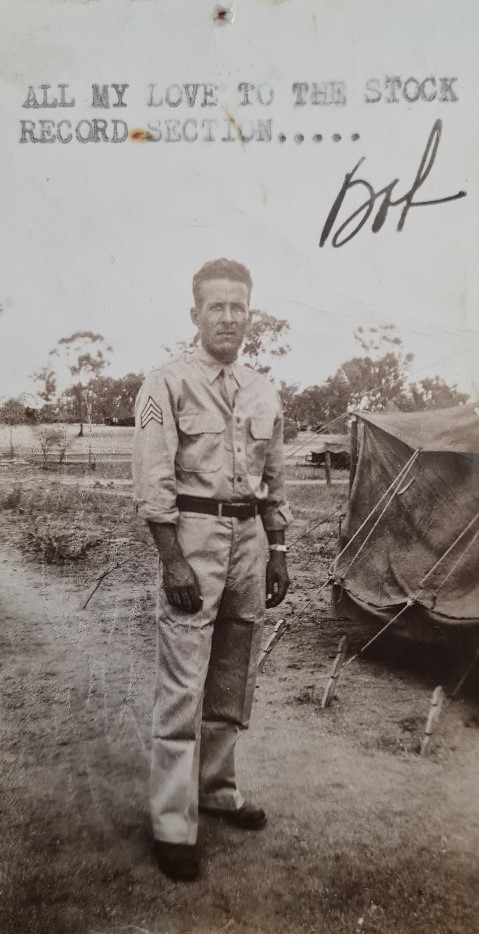
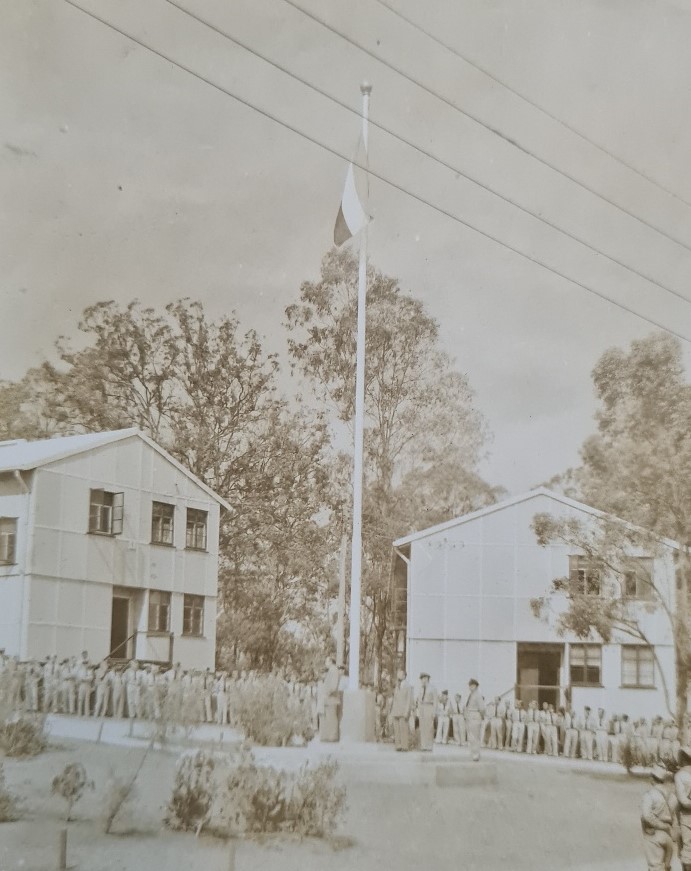
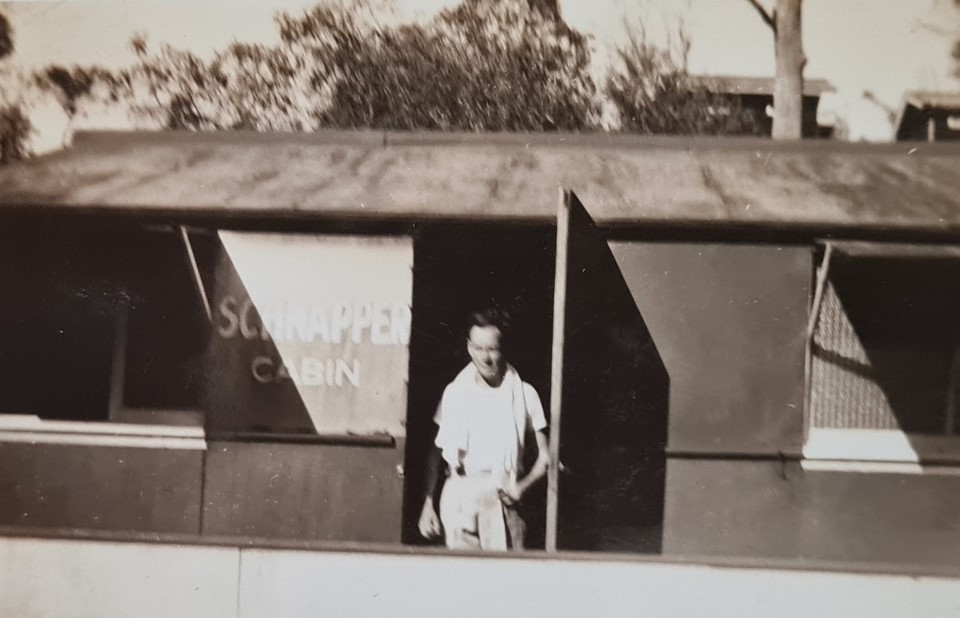
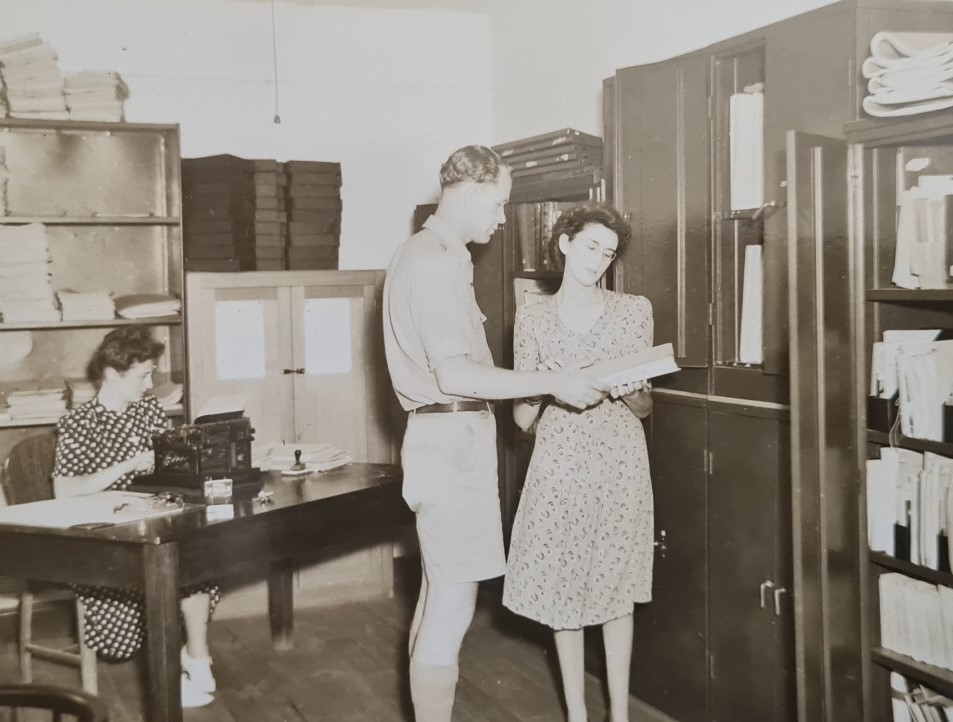
Joan treasured the photographs from her time at Camp Columbia because they reminded her of the friends she made and the team of people with whom she worked during an extraordinary period of their lives.
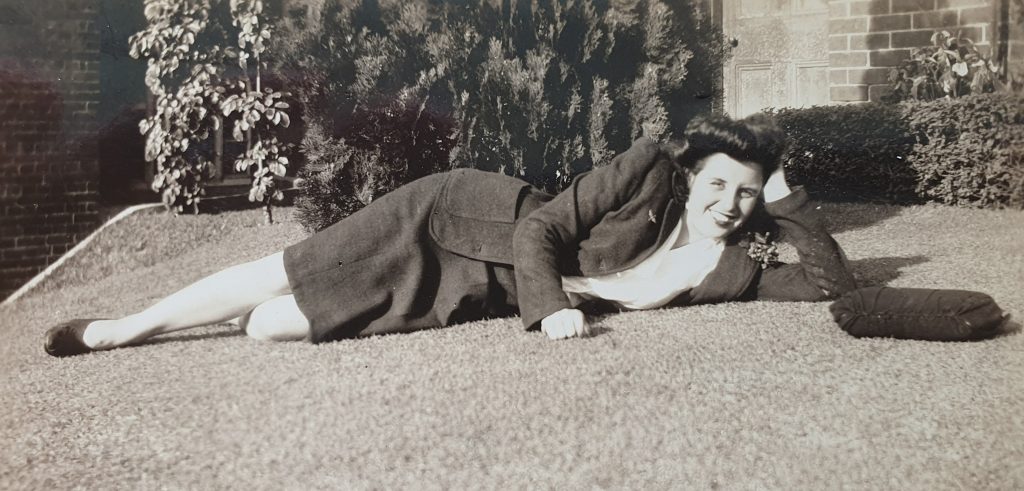
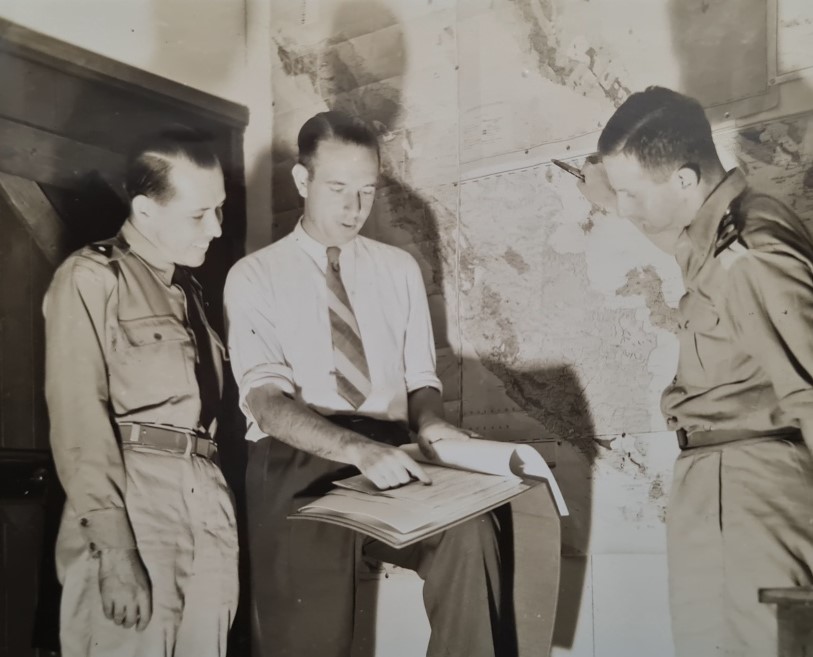
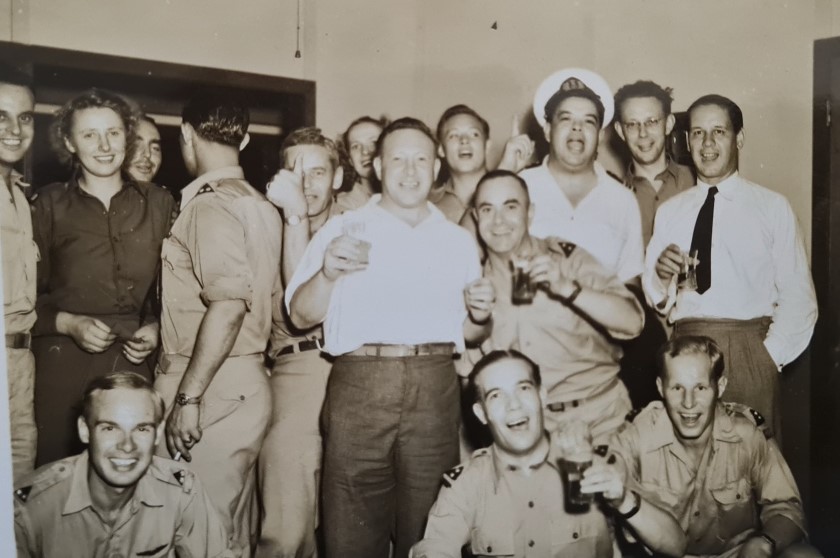
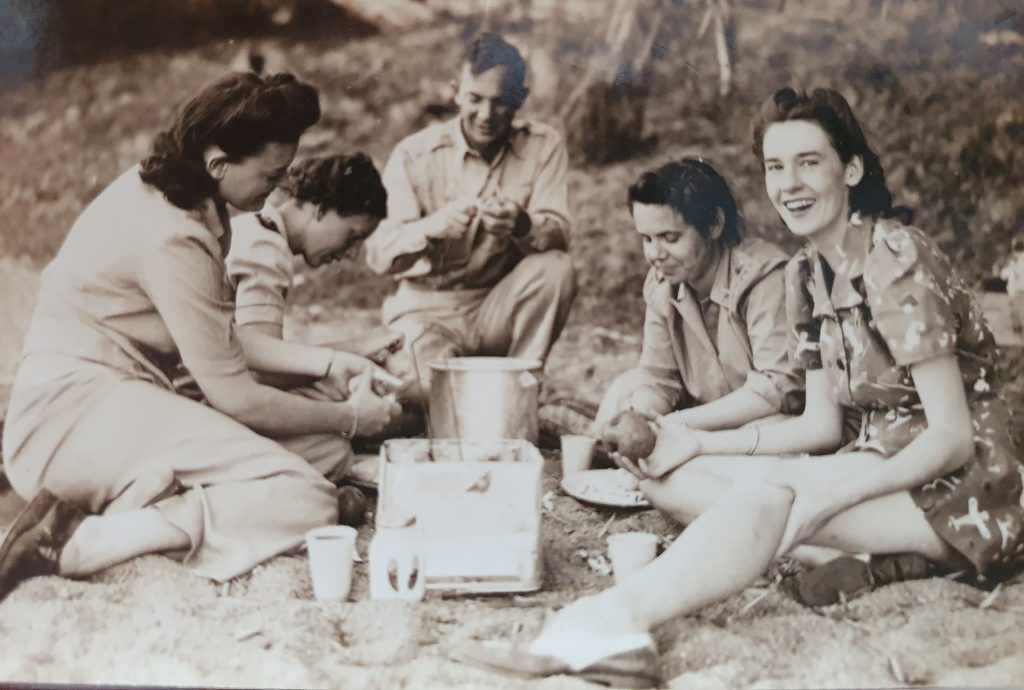
David has allowed these photographs to be reproduced as part of his mother’s story. The wording written on the backs of the photographs has been retained wherever possible. Two photographs carry no accompanying description.
The photographs are also stamped and numbered on the reverse. The significance of these markings has not been confirmed. They may indicate that the photographs were processed, registered or approved by a Netherlands East Indies government or military authority.
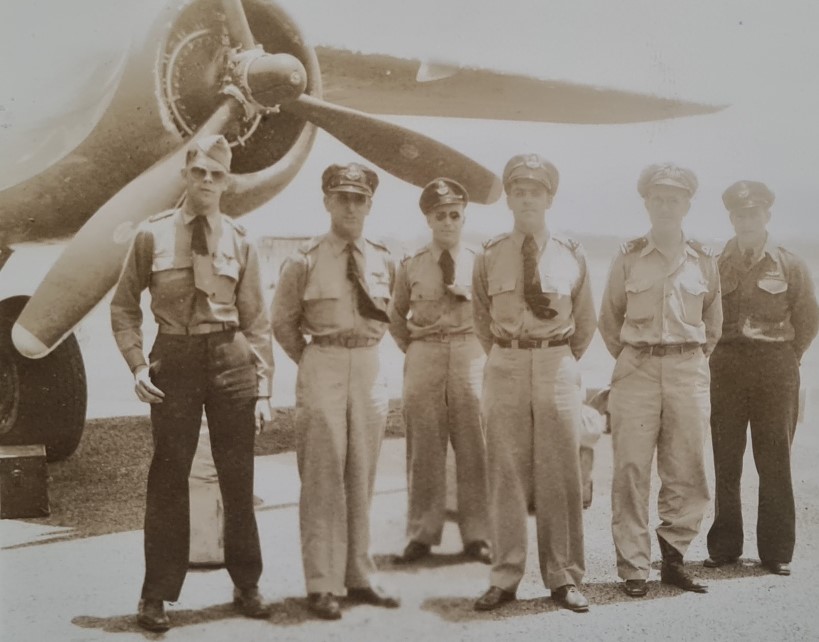
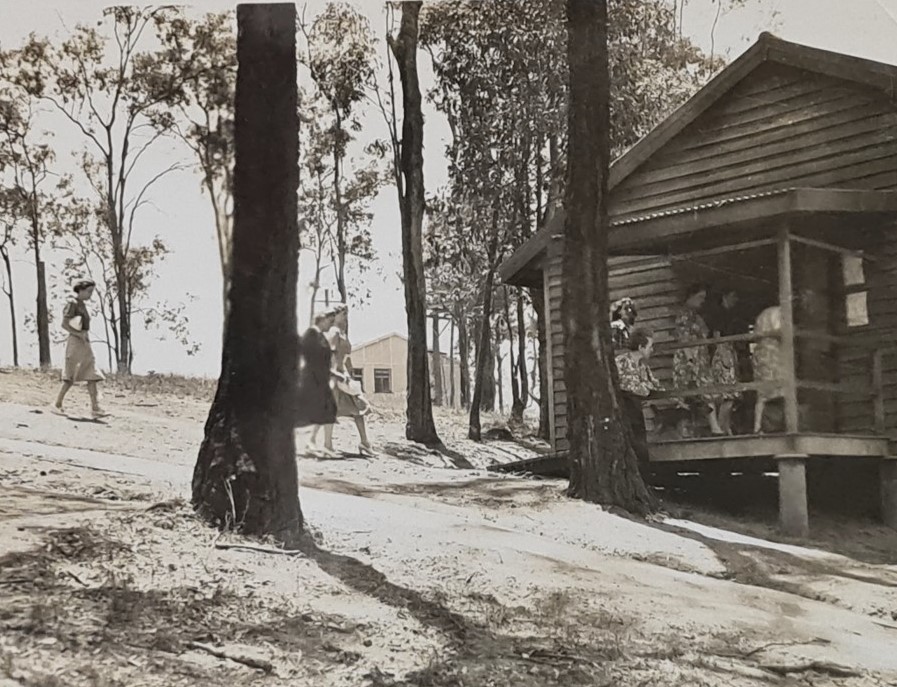
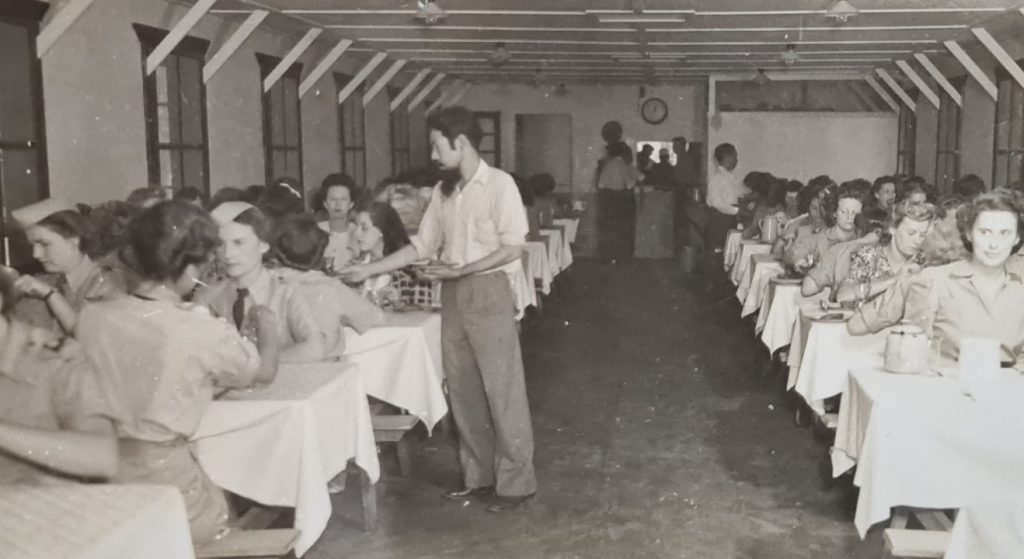
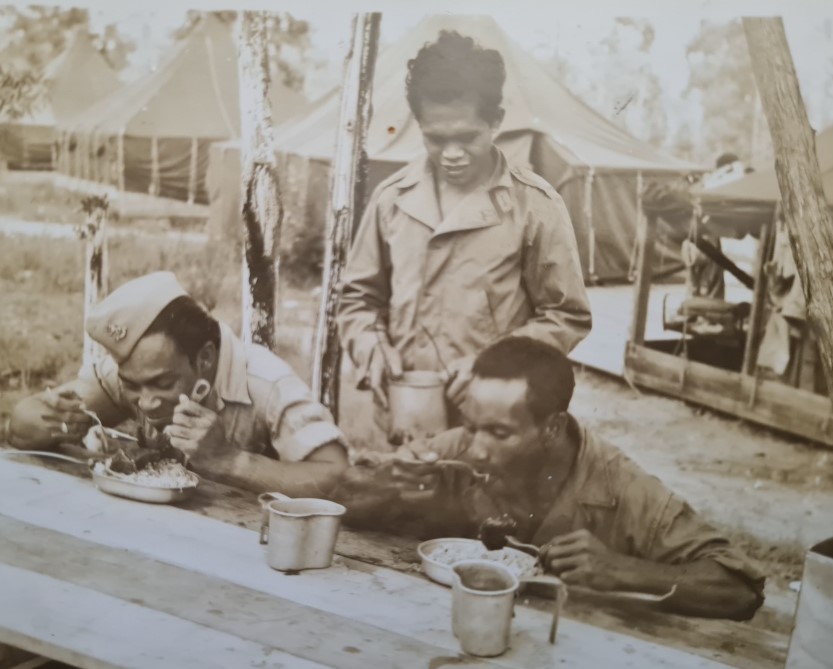
The collection includes photographs identified by Joan as:
- “Native guard on main gate N.E.I. Headquarters”;
- “Javanese soldier on detail duty, 1945”;
- “Saluting the flag. The Liberation of Holland 1945”;
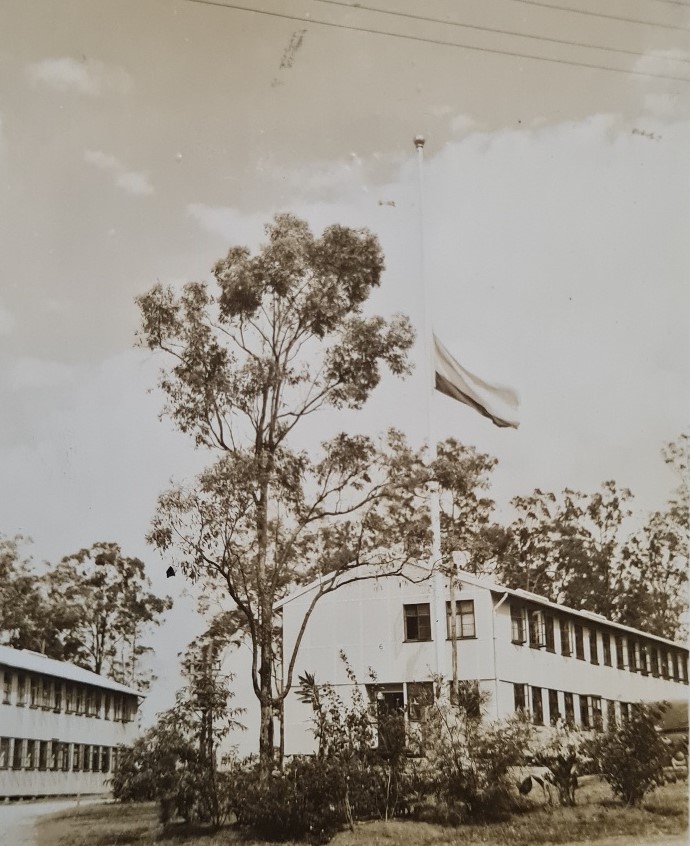
- “Dutch flag half mast for the death of President Roosevelt, United States of America, 1945”;
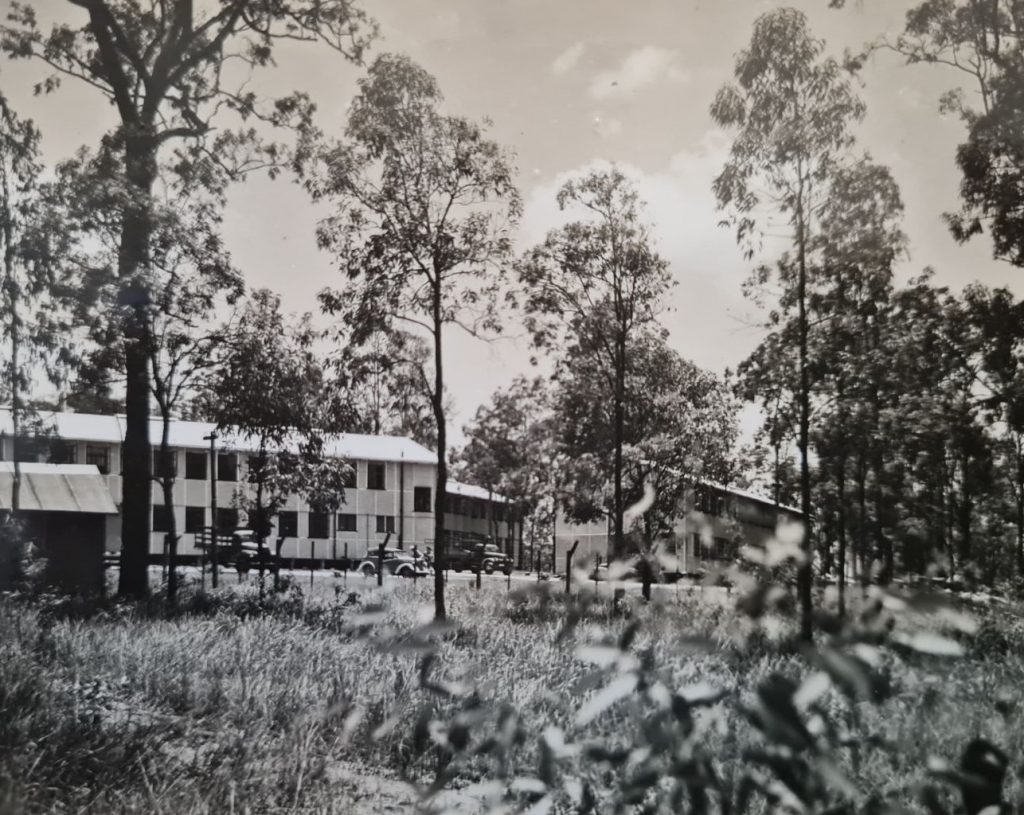
- “Netherlands East Indies Army Headquarters, Camp Columbia, Brisbane, 1945”;
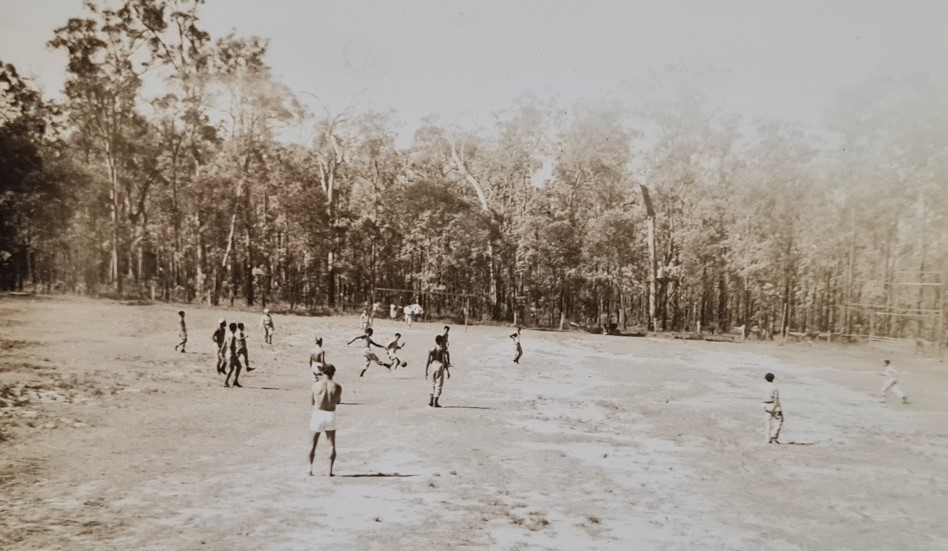
- “Javanese boys playing football N.E.I. Headquarters”;
- “Dutch crew taken at Archerfield”;
- “‘C’ Mess Hall N.E.I. Headquarters”;
- “Javanese boys in the Mess Hall”;
- “The NEFIS library, 1945”;
- “Civil Affairs Intelligence Section V, 1945”;
- “Drinking Party ‘Officers Club’”; and
- “Dutch Girls. Taken at ‘Oasis’”.
The historical captions reflect the terminology used at the time and have been retained as part of the record. Where identities or locations are uncertain, they should not be treated as independently verified descriptions.
Meeting Danny Hill
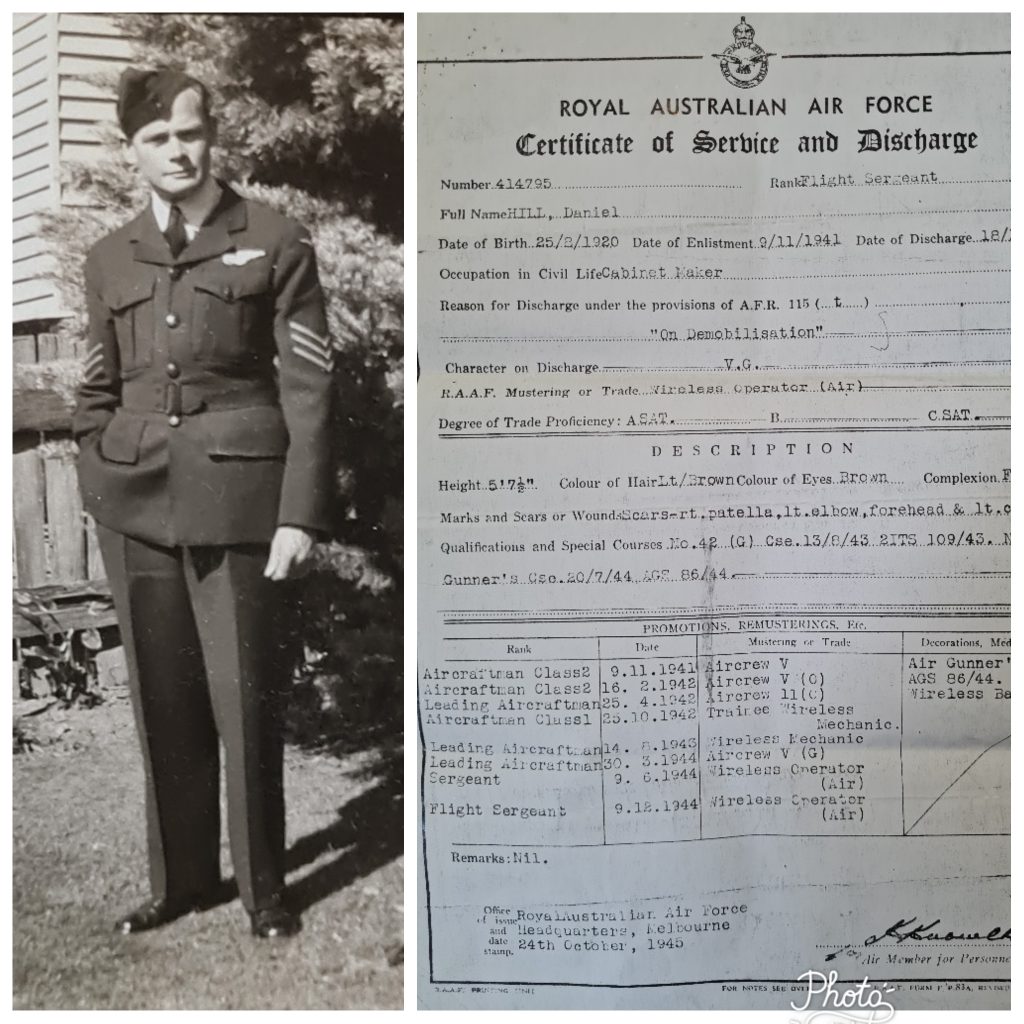
During her wartime years in Brisbane, Joan met her future husband, Daniel “Danny” Hill. Danny was born in Brisbane in 1920 and served in the Royal Australian Air Force as a wireless operator and air gunner aboard Dakota DC-3 transport aircraft.
According to the family account, his operations included the transport of troops and supplies to Papua New Guinea and Dutch New Guinea from bases in northern Australia, including the Cairns and Townsville regions. A connection with No. 36 Squadron RAAF has been suggested, but this has not yet been verified from his service record.
Danny affectionately referred to the Dakota as the “Biscuit Bomber”, reflecting its role in carrying and dropping supplies to troops. After the war, he briefly worked as an air traffic controller at Archerfield Airport.
Danny had originally hoped for an aircrew posting to Europe. While undertaking training in Melbourne, however, he suffered food poisoning after eating an oyster or seafood meal provided by the family with whom he was billeted. The illness prevented him from continuing to the anticipated European posting.
He later remained disappointed that he had missed the opportunity. David, looking back at the very high losses suffered by Allied aircrew over Europe, felt differently. He believed that the unfortunate meal may ultimately have saved his father’s life—and consequently made David’s own life possible.
The death of Joan’s mother
Joan’s mother died unexpectedly from pneumonia at Dotswood during the war. At the time, the Burdekin River was in flood, leaving the station isolated and preventing the family from obtaining medical assistance.
Joan was in Brisbane and wanted to return north for the funeral. She later told David an extraordinary story about how she obtained help.
According to Joan, she approached General Douglas MacArthur while he was eating lunch alone on a park bench near the Old Windmill at Spring Hill. She explained that her mother had died and asked whether he could help arrange transport to Townsville. Joan recalled that MacArthur organised a flight for her.
Many years later, around 1964, Joan sat on the same bench with her four-year-old son and told him about the encounter.
No documentary record confirming the meeting or flight has yet been located. It should therefore be understood as Joan’s personal recollection, preserved by David, rather than as an independently verified event. Nevertheless, its detail and the importance Joan attached to the story make it a valuable part of her wartime memory.
A civilian woman within the Dutch military community
Joan’s experience helps explain the diverse position of women at Camp Columbia. American nurses and servicewomen had worked there during the American occupation. During the Dutch period, members of the VK-KNIL lived and worked alongside Australian women employed as civilian secretaries, clerical workers, drivers and specialist staff.
These Australian women were not members of the Dutch women’s corps. Nevertheless, their work supported the Netherlands East Indies government and military organisations preparing for the end of the war and the return to the Indonesian archipelago.
Joan remembered this period with pride. Through the recollections she shared with her son, and through the photographs she carefully preserved, she left an unusually personal visual record of Camp Columbia in 1945.
This article forms part of the VK-KNIL Research Portal. Joan’s story is included because it documents the contribution of Australian civilian women who worked alongside members of the VK-KNIL and other Dutch and Netherlands East Indies personnel.
Sources and acknowledgements
This article is based principally on Joan McConachy’s recollections as recorded and provided by her son, David Hill.
Photographs from the Joan McConachy collection, courtesy of David Hill. The individual photographers are not identified.
The precise Dutch department in which Joan worked, the possible connection with NEFIS, Danny Hill’s suggested service with No. 36 Squadron RAAF and Joan’s encounter with General MacArthur have not yet been independently verified.