
The 738th Military Police Battalion was the first United States Army unit stationed at Camp Columbia, arriving on 9 August 1942. This places the battalion at the very beginning of the American military presence at Wacol and gives it particular significance in the history of the site.
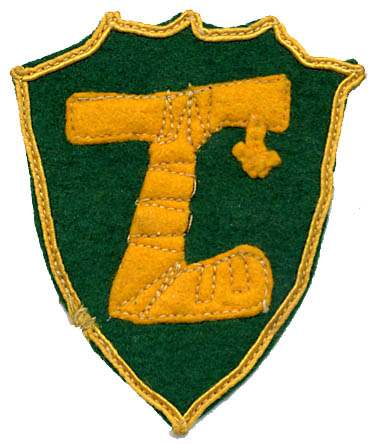
As a military police unit, the battalion’s primary role was to provide law enforcement, security, traffic control, and provost services in support of a rapidly expanding Allied force operating in Australia and the wider South West Pacific Area. Its early deployment to Brisbane reflects the strategic importance of the city as a headquarters, logistics hub, and staging point during the critical months following the fall of Singapore and the Netherlands East Indies.
In the file below are bulletins from the 738th. They are from the collection of the late Bill Bentson, which have been handed over to Peter Dunn.
Establishment and deployment to Australia
The 738th Military Police Battalion was activated on 1 February 1942 at Fort Sheridan, Illinois, as part of the rapid wartime expansion of the US Army. Personnel were drawn from a wide range of backgrounds and units, reflecting the urgency with which specialist service formations were being raised.
By July 1942, the battalion was preparing for overseas service and embarked for the South West Pacific. Battalion histories confirm that the 738th was among the earliest US Army service units to reach Australia, arriving in Brisbane in August 1942. The speed of this deployment underlines the immediate need for military policing and discipline in rear-area cities that were suddenly hosting tens of thousands of Allied servicemen.
Camp Columbia: August–December 1942
On arrival in Brisbane, the 738th Military Police Battalion was allocated to the newly established Camp Columbia at Wacol. At this early stage the camp was rudimentary: the battalion lived in tents and operated in a largely undeveloped bush setting, with only basic facilities in place. Sergeant Alton Jensen, one of the battalion members later to correspond with Bill Bentson, provided a detailed description of the layout and daily conditions at Camp Columbia. He recalled that each company had only a small number of buildings, with headquarters, medical facilities, mess, motor pool, and latrines spread across the site, and that the unit was not permitted to erect permanent structures because the stay was considered temporary.
Jensen’s account is particularly valuable because it confirms the transitional nature of Camp Columbia in late 1942. Training areas were improvised near the railway line, guard points were minimal, and movement between Camp Columbia and other nearby installations was informal. This first-hand testimony aligns with CCHA’s broader interpretation of Camp Columbia as a rapidly assembled camp that only later evolved into a major, fully developed military complex.
The 738th remained at Camp Columbia until 24 December 1942. As construction progressed elsewhere, the battalion relocated just before Christmas to Camp Whinstanes at Eagle Farm, once buildings there had been completed.
Camp Whinstanes and policing Brisbane
The move to Camp Whinstanes placed the 738th Military Police Battalion much closer to Brisbane’s inner urban areas and to the main centres of American recreation and administration. From this location, the battalion played a central role in enforcing military regulations, controlling traffic and movement, guarding key installations, escorting personnel, and managing the interaction between US servicemen, Australian servicemen, and civilians.
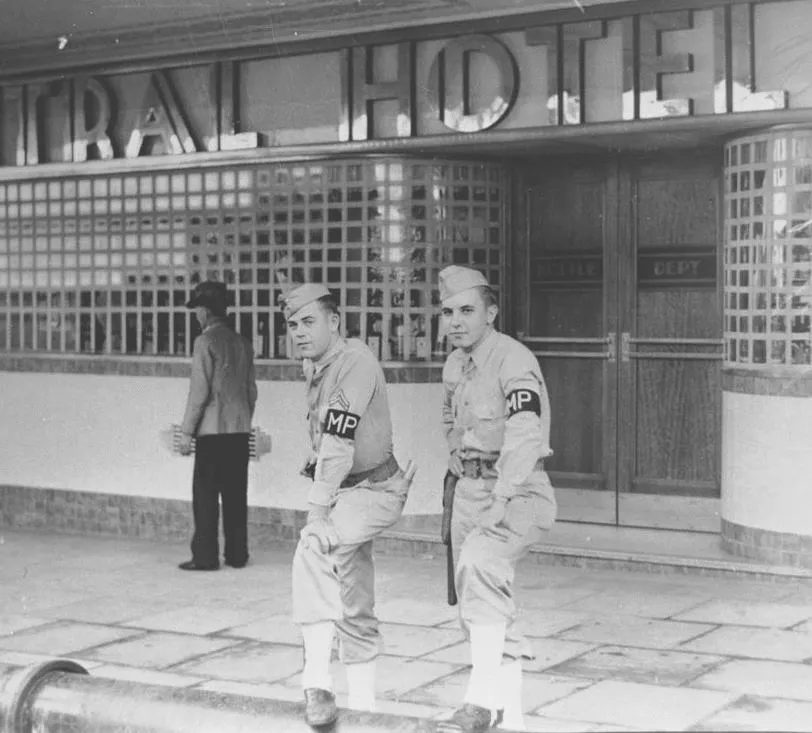
This proximity brought the battalion into the middle of growing social tensions in Brisbane. American troops were often better paid, subject to different conditions of service, and enjoyed greater access to facilities, leading to resentment among Australian servicemen. These pressures culminated in November 1942 in the event that became known as the Battle of Brisbane.
During this violent confrontation, US military police units, including elements of the 738th, were directly involved in restoring order. As a result, the battalion gained lasting notoriety in Brisbane’s wartime memory. This association reflects not a single incident in isolation, but the broader strains created by rapid militarisation, overcrowding, and the collision of different military cultures in a city under wartime pressure.
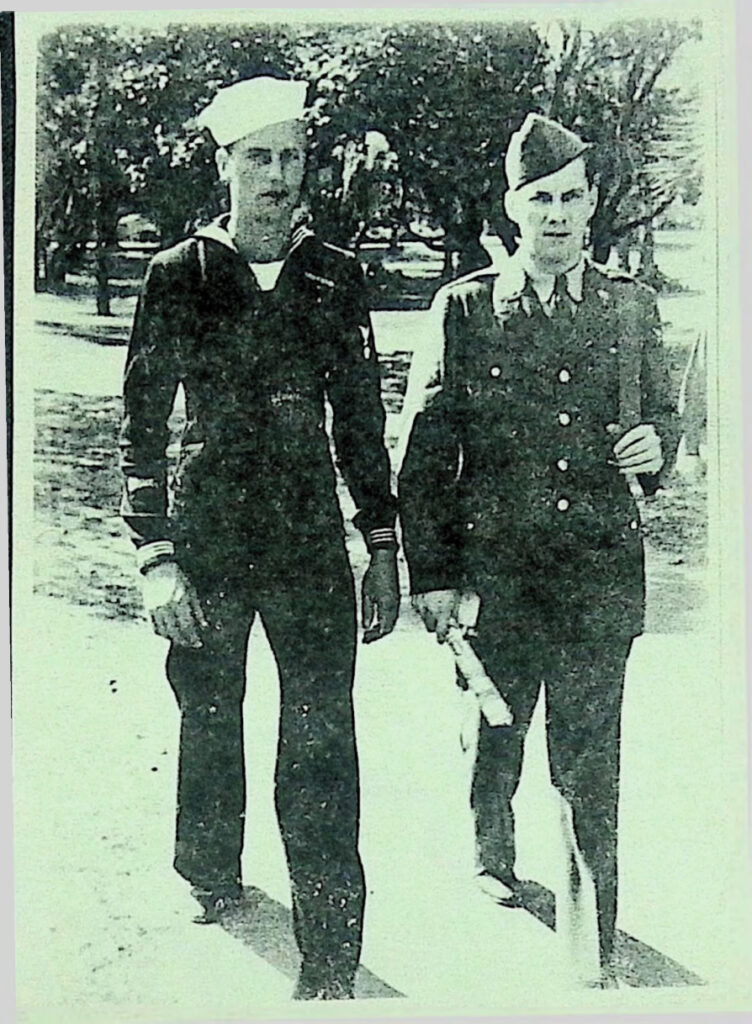
Sergeant Alton Jensen
One member of the battalion, Sergeant Alton Jensen, later corresponded with Brisbane resident Bill Bentson and provided valuable first-hand recollections of the 738th Military Police Battalion’s time in Queensland. Jensen served with the battalion both at Camp Columbia and later at Camp Whinstanes, making his testimony particularly relevant to the early American presence at both sites.
Jensen’s correspondence and related material have been published separately on the CCHA website. In the context of this article, his recollections are noted for the way they corroborate official records and help illuminate daily life, camp conditions, and the temporary nature of the 738th’s initial accommodation at Camp Columbia.
Service beyond Australia and after the war
After leaving Brisbane, the 738th Military Police Battalion continued service across the South West Pacific. Battalion records document deployments to New Guinea and later to the Philippines, including Manila, where the unit undertook demanding duties under combat and post-combat conditions. These included traffic control in contested urban areas, guarding vital installations, operating stockades, preventing looting, and escorting Allied and Japanese officials during the surrender and immediate post-surrender period in 1945.
Following Japan’s surrender, elements of the battalion remained on occupation and security duties in the Philippines into 1946 and 1947. As the US Army transitioned to a peacetime footing, personnel were progressively repatriated and the battalion was eventually deactivated.
Significance for Camp Columbia
The 738th Military Police Battalion occupies a distinct place in the history of Camp Columbia. It was the first American unit to be stationed at the site, experienced the camp in its earliest and most provisional form, and later became closely associated with Brisbane’s wartime tensions during a critical period of Allied cooperation.
Through a combination of official records and personal testimony preserved on the CCHA website, the battalion provides an important link between the physical development of Camp Columbia and the broader human and social history of Brisbane as a wartime Allied city.