
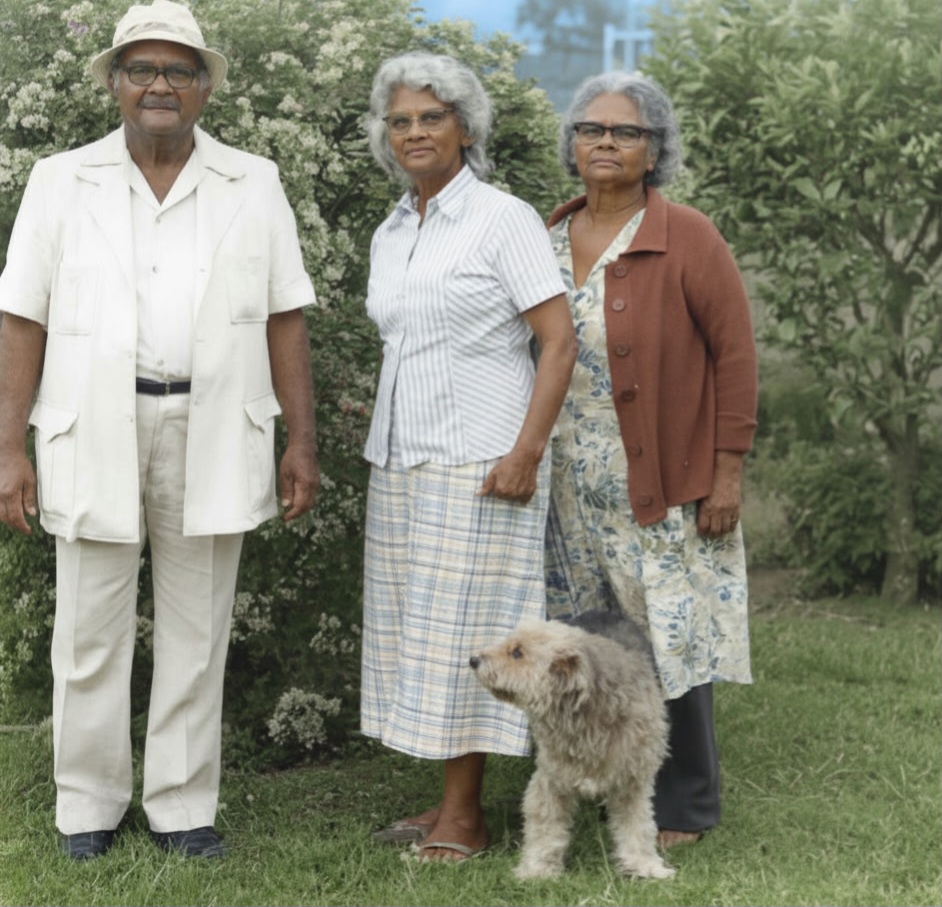
Following the end of the Second World War, the Camp Columbia site entered a new phase in which its infrastructure was repurposed to meet a range of post-war needs. One of the lesser-known uses of these facilities was the Wacol Housing Camp, where a diverse population of migrants, Australian-born families and Aboriginal residents lived side by side in converted military huts under often difficult conditions. This included the Richards family and the family of Aunty Theresa Williams.
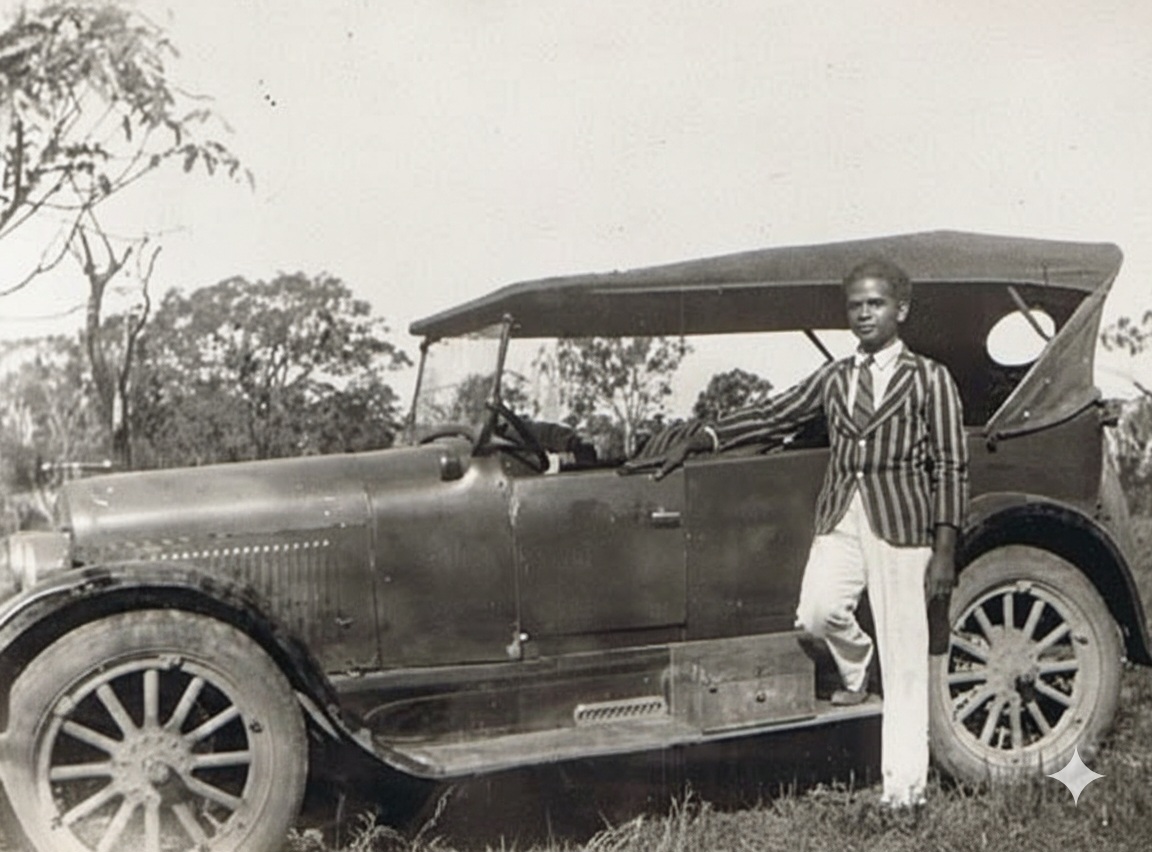
It was within this environment that Cyril Richards emerged as an important and, for his time, highly unusual Aboriginal voice.
Life at Wacol and the conditions of the camp
By the early 1950s, the Wacol Housing Camp had become one of the largest temporary housing settlements in Brisbane. Contemporary reporting described it as a mixed community, where Aboriginal and non-Aboriginal families lived in close proximity but under conditions that were often basic and inadequate. Many huts were in poor condition, facilities were communal, and opportunities for employment and advancement were limited.
For Aboriginal residents in particular, these conditions were compounded by broader structural barriers. Those classified as “exempt” from government supervision were expected to integrate into urban society, yet often faced discrimination in employment, housing and education. It was in response to these realities that Cyril Richards began to speak out. His experience illustrates the broader challenges faced by Aboriginal residents attempting to navigate employment, housing and social inclusion in post-war Brisbane under assimilation-era policies.
Speaking out in 1952
In 1952, Cyril Richards, then aged 38 and living at Wacol Housing Camp was writing to newspapers advocating for better treatment for Aboriginal people. A year later he addressed a small audience in Brisbane on the challenges faced by Aboriginal people attempting to establish themselves in the city. His remarks were direct and reflected lived experience. He spoke of the difficulty Aboriginal people faced in finding employment, noting that many employers were reluctant to hire them due to prior negative experiences or prejudice.
He also highlighted the discouragement felt by many Aboriginal people who, after repeated setbacks, found it difficult to continue trying to improve their circumstances. What was needed, he argued, was not only opportunity but also encouragement and practical support.
At a time when many Aboriginal people avoided public attention due to widespread discrimination and restrictive policies, Richards’ willingness to speak openly was exceptional.
A public voice in print
Richards’ engagement with public debate extended beyond formal meetings. In April 1954, he wrote to the Brisbane Telegraph in response to an article by T. C. Truman on racial terminology. In his letter, Richards argued for the removal of discriminatory language and called for action against what he described as “public aspects of the colour line.” He emphasised that greater understanding and tolerance were essential if a more harmonious society was to be achieved.
This correspondence provides a rare example of Richards speaking in his own voice. Truman, later involvement in initiatives at Wacol would intersect with Richards’ earlier advocacy. Together, these sources show that Richards was not only reacting to local conditions but was actively engaging in broader discussions about race and equality in post-war Brisbane.
From speech to organisation
The impact of Richards’ earlier address was immediate. According to contemporary reporting, the meeting adopted his suggestion to establish an organisation to support the integration of Aboriginal people into the broader community.
This led directly to the formation of the Society for the Development of the Aboriginal in Brisbane later that year. While the Society was formally established by non-Aboriginal organisers, including Mrs W. J. Rodwell (linked to the Bahá’í movement) and T. C. Truman, a lecturer in political science at the University of Queensland, its origins can be traced to Richards’ intervention.
The Society subsequently became active at Wacol Housing Camp, organising joint activities for Aboriginal and non-Aboriginal residents, including community events, sports gatherings and youth programs. With the support of the Queensland Housing Commission, a hut was made available for Aboriginal residents, to be used as a community space with educational and recreational facilities.
A shared space of policy and lived experience
The work of the Society reflected broader assimilation policies of the time, which sought to integrate Aboriginal people into mainstream Australian society. Notably, these efforts were framed in similar terms to those applied to post-war migrants, with Wacol serving as a shared space where both processes unfolded.
However, the origins of the Society at Wacol also point to something more complex. While external organisations sought to shape policy and practice, Aboriginal voices such as that of Cyril Richards were actively articulating their own needs and proposing solutions.
In this sense, Wacol was not only a site of policy implementation, but also a place where Aboriginal agency was expressed, even within the constraints of the period.
Family context and personal motivation
Family recollections indicate that Cyril Richards’ advocacy was closely tied to his personal circumstances. He carried significant caring responsibilities, including the care of a wheelchair-bound relative, and this appears to have shaped his sense of responsibility towards others in similar situations.
His willingness to speak publicly and to challenge prevailing conditions can therefore be understood not only as a political act, but also as a response to the immediate needs of his family and community.
Significance
Although little is known about the subsequent history of the Society for the Development of the Aboriginal, and few records of its activities have survived, the events of 1953–1954 remain significant.
They represent an early example in Queensland of Aboriginal concerns being articulated in a public forum and leading directly to organised action. The fact that a meeting adopted Cyril Richards’ suggestion to establish an association is particularly noteworthy, as it indicates that Aboriginal initiative played a direct role in prompting organisational responses at a time when such developments were rare.
Historian Dr.Ray Kerkhove has noted that this initiative appears unusual for its time. While further research is needed to fully establish the nature and continuity of the Society, the available evidence suggests that the developments at Wacol in the early 1950s were distinctive in bringing together Aboriginal advocacy, community organisation and policy-driven assimilation within a single local setting.
In this context, Cyril Richards’ role takes on added importance. His actions demonstrate that Aboriginal agency was already being expressed in organised and public ways, even within the constraints of the period. Even if the Society itself was short-lived, the moment it represents remains historically significant.
Conclusion
Cyril Richards’ story adds an important dimension to the history of Camp Columbia and Wacol. It highlights the lived experience of Aboriginal residents in the post-war period and demonstrates how, even in a context of limited opportunity and widespread discrimination, individuals could play a role in shaping responses to those conditions.
Wacol was more than a temporary housing site. It was a place where the social consequences of war, migration and policy intersected, and where voices such as that of Cyril Richards contributed to early efforts to improve the position of Aboriginal people in urban Australia.
Paul Budde, Ray Kerkhove and Chrissy Doherty (April 2026)