
Introduction
When considering Brisbane’s role during the Second World War, attention often focuses on specific sites such as Camp Columbia. Yet the wartime reality was far more complex. Brisbane functioned as part of a vast and interconnected operational system, linking command structures, training facilities, supply depots and transport networks.
Among the most critical elements of this system was maritime logistics. From Australian ports—including Brisbane—Allied forces sustained their campaigns in New Guinea through a fragile but essential shipping network. Dutch merchant vessels played a central role in this effort.
This article draws on the research of Dr Jack Ford, which provides important insight into this maritime dimension of the war.
Brisbane within a wider wartime system
Brisbane emerged during the war as a major Allied hub. It supported the headquarters of General Douglas MacArthur and hosted a range of military and administrative functions, including those connected to the Netherlands East Indies government-in-exile.
However, as Ford’s work makes clear, the effectiveness of this command structure depended on its ability to sustain operations in the field. Supplies, equipment and personnel had to be transported north from Australia to active theatres of war.
Ports such as Brisbane, Sydney and Townsville became key nodes in this system, linking the Australian mainland to forward bases in New Guinea.
Dutch merchant shipping in the Allied network
Following the collapse of the NEI in 1942, Dutch merchant vessels regrouped in Australia and were incorporated into Allied logistics. Their deployment was shaped by a complex set of arrangements involving Dutch authorities, British shipping control and American operational command.
Ford describes how, despite initial disagreements over control and chartering, these vessels were gradually integrated into the Allied supply system. Their role became increasingly important as the New Guinea campaign intensified.
Operating from Australian ports, Dutch ships carried supplies into areas where larger convoys could not safely operate. Their flexibility made them particularly valuable within the constraints of the Southwest Pacific theatre.
The New Guinea supply challenge
The geography of New Guinea posed severe logistical challenges. Overland transport was limited, air supply was insufficient for large volumes, and sea routes were exposed to enemy attack.
To address this, Allied planners developed a system of small convoys running between Australia and forward bases. These operations, later known as the “Lilliput” convoys, relied heavily on Dutch merchant shipping, as Ford shows.
Ships were loaded in Australian ports and sent north in tightly controlled movements, often escorted by naval vessels. Upon arrival, they faced rudimentary port facilities and had to unload quickly before returning south.
Operational strain and loss
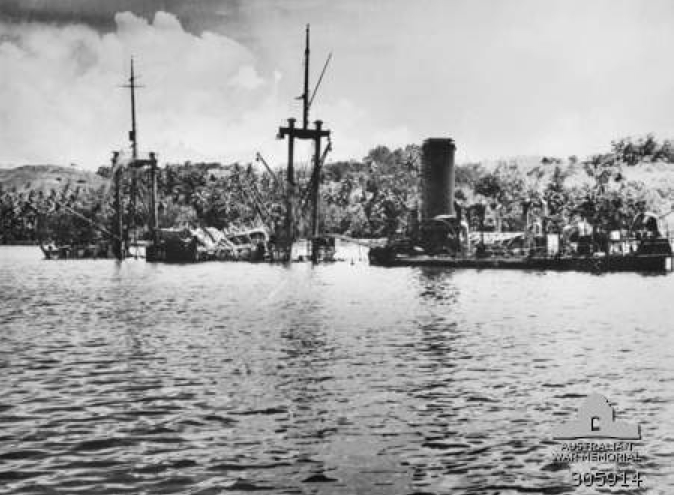
The risks associated with these operations were significant. Japanese air attacks targeted both ships and ports, and several Dutch vessels were damaged or destroyed.
Social dynamics on the Australian home front
Ford also points to the limited infrastructure in forward areas. The lack of firefighting equipment, salvage capacity and adequate port support increased the vulnerability of these operations.
These pressures placed considerable strain on both vessels and crews, yet the supply runs continued due to their strategic importance.
The presence of large numbers of foreign seamen in Australian ports created social and political challenges. Many of the crews operating Dutch ships were Indonesian, and their treatment reflected broader racial and labour tensions of the period.
As Ford notes, difficulties in accommodation and concerns about discrimination were significant. In 1942, these tensions culminated in a major strike involving around 2,000 Indonesian crew members, influenced in part by Australian union movements.
These events highlight the extent to which the war effort in Australia was not only military but also social.
Linking to Camp Columbia
Camp Columbia must be understood within this broader wartime system. While the camp itself functioned as an important military and administrative site, it formed only one element within a much larger operational network.
The effectiveness of Allied operations depended on the integration of command centres, training facilities, transport systems and supply chains. Maritime logistics—particularly the Dutch merchant fleet operating from Australian ports—was a critical component of this system.
Seen in this context, Camp Columbia was connected to the maritime lifeline that sustained Allied operations in New Guinea.
Conclusion
Brisbane’s wartime role cannot be reduced to individual sites. It was the product of an interconnected system that extended from local facilities to distant battlefields.
Dutch merchant shipping formed a key part of this system, enabling the movement of supplies under extremely challenging conditions. By viewing Camp Columbia within this wider framework, a more complete understanding emerges of how Brisbane functioned as a central hub in the Allied war effort.
References
Dr Jack Ford, The floating Dutchmen: The Dutch Merchant Navy in the 1942/43 Papua Campaign, in Brisbane Redcoats to Diggers, Brisbane History Group, 2024.