
A surviving building from Wacol’s military history
The Everyman’s Hut at Wacol is one of the surviving buildings associated with the former Camp Columbia military complex. Its history provides a connection between the American wartime presence, the subsequent Australian Army occupation and the National Service era.
The distinctive curved-roof building was used by Everyman’s Welfare Service to provide recreational and welfare facilities for servicemen. Following the closure and redevelopment of the former military establishment, the hut was preserved and relocated to the National Service Heritage Precinct at Wacol.
Its survival offers an opportunity to explore an aspect of Camp Columbia’s history that extends well beyond the Second World War.
The American wartime connection
Camp Columbia was established at Wacol during the Second World War and became the headquarters of the United States Sixth Army under General Walter Krueger.
The extensive military complex contained headquarters buildings, accommodation, administrative facilities and training establishments.
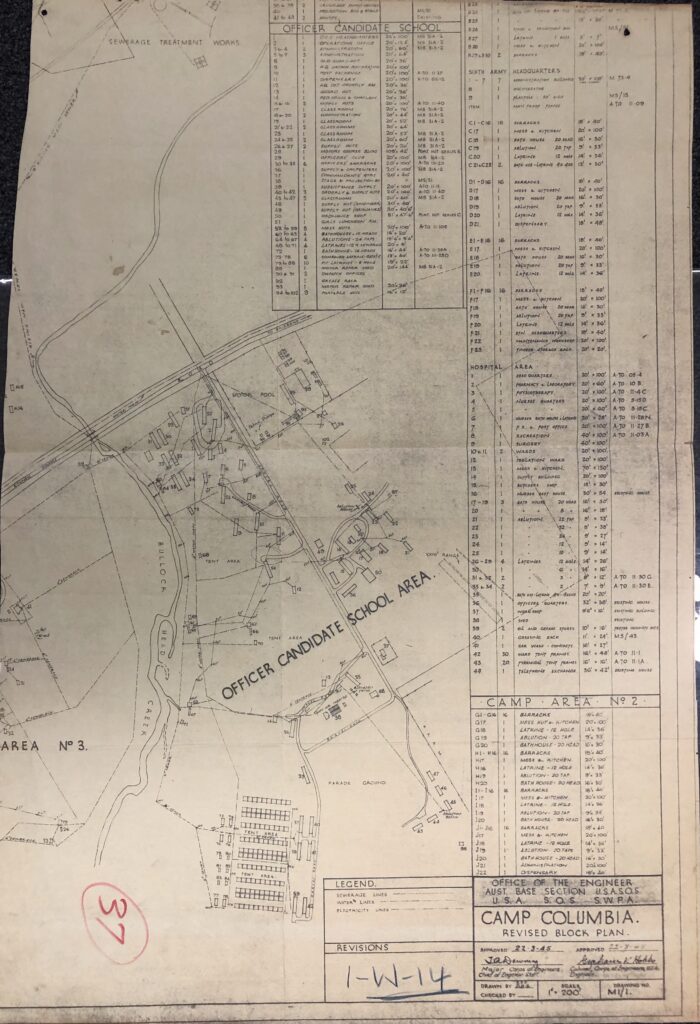
One of these was the American Officer Candidate School, which operated from November 1942 until June 1945. The school occupied a separately designated area within Camp Columbia, as identified on the 1945 Revised Block Plan held by the National Archives of Australia.
The historical video History of the Everyman’s Hut at the Wacol Army Barracks includes maps and aerial photographs relating to the former American camp and the later location of the hut.
These materials suggest a possible geographical connection between the hut and the former Officer Candidate School area. However, the precise original position and construction date of the building still require confirmation before it can be identified definitively as an American wartime structure.
For further information, see the CCHA article American Officer Candidate School in Brisbane.
Everyman’s Welfare Service
Everyman’s Welfare Service originated from the Christian organisation Campaigners for Christ and developed its activities among Australian military personnel during the Second World War.
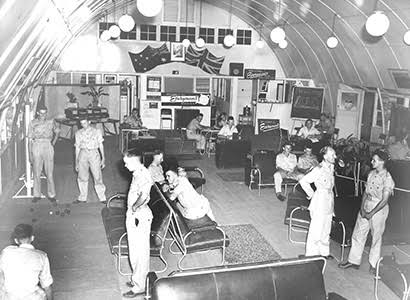
Its welfare huts provided places where servicemen could relax, obtain refreshments, socialise and receive personal or pastoral support.
The huts became familiar features of military establishments throughout Australia. They offered an informal environment away from the routines and discipline of military life.
At Wacol, the Everyman’s Hut served Australian military personnel during the post-war period, including men undertaking compulsory National Service.
The building’s recreational function forms an important part of its history, illustrating the social and welfare services that supported military personnel alongside their formal training and duties.
Further information about the organisation is available from Everyman’s Welfare Service.
The National Service years
Following the Second World War, the Australian Army continued to use substantial parts of the former Camp Columbia complex.
Wacol became a major National Service training establishment during the 1950s. The 11th National Service Training Battalion operated there, using a combination of existing military buildings and newer facilities.
Approximately 40,000 National Servicemen are reported to have undertaken training at Wacol during this period.
The Everyman’s Hut provided a recreational and welfare facility for these servicemen. Its role was distinct from the military training activities of the battalion, although both formed part of daily life at the camp.
The last National Service intake at Wacol occurred in August 1959. The military establishment continued to be used by the Australian Army, eventually becoming known as Sanananda Barracks.
The wider history of the 11th National Service Training Battalion will be covered in a separate CCHA article.
Preservation of the Everyman’s Hut
Following the closure of the military establishment and the redevelopment of the former barracks, efforts were made to preserve several historically significant buildings.
The National Servicemen’s Association played an important role in establishing the National Service Heritage Precinct at Wacol.
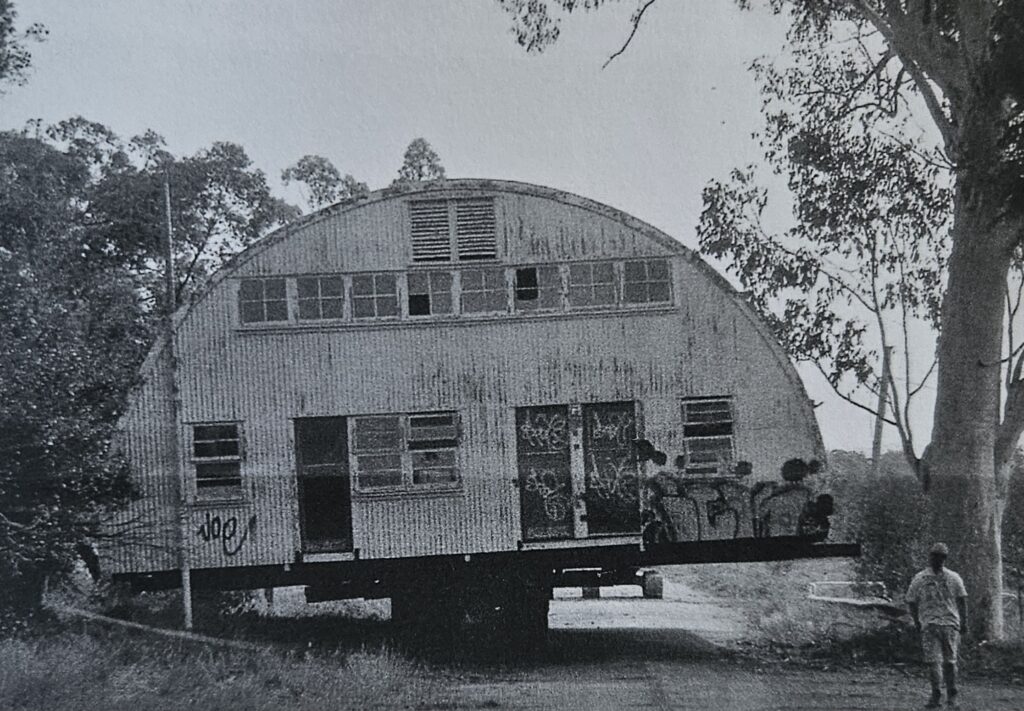
In 2005, the Everyman’s Hut was among the buildings relocated for preservation. The structure was subsequently restored and adapted for museum use.
The building therefore represents not only the history of military welfare services but also the efforts of former servicemen and heritage volunteers to preserve Wacol’s military heritage.
The hut is part of a small surviving collection of buildings associated with the extensive military complex that once occupied the area.
See also Preserved Camp Columbia buildings at the National Service Heritage Precinct, Wacol.
Historical video – the Everyman’s Hut
The video History of the Everyman’s Hut at the Wacol Army Barracks brings together historical photographs, maps, aerial imagery and images of the surviving building.
Of particular interest are the references to the former American camp areas, the Officer Candidate School, the location of the hut and the subsequent development of Wacol Army Camp.
The video provides a useful visual record of the building and its historical surroundings.
Video: History of the Everyman’s Hut at the Wacol Army Barracks
Sources and further reading
- National Archives of Australia, Camp Columbia – Revised Block Plan, 1945.
- History of the Everyman’s Hut at the Wacol Army Barracks, historical video.
- Everyman’s Welfare Service – History.
- CCHA – American Officer Candidate School in Brisbane.
- CCHA – Preserved Camp Columbia buildings at the National Service Heritage Precinct, Wacol.