Introduction
As the Allied advance moved closer to the Netherlands East Indies during 1944–45, the Dutch authorities faced an urgent problem: they needed military officers, civil administrators and specialists who could return to territories recovered from Japanese occupation.
Camp Columbia became an important part of this preparation.
The former American military complex at Wacol contained extensive accommodation, offices, classrooms and facilities previously used by the United States Army, including an Officer Candidate School. After the Netherlands Indies Government and military organisations moved to Camp Columbia in 1944, these facilities could support the assembly, orientation and preparation of personnel awaiting deployment northwards.
Camp Columbia was not the only training centre used by the Dutch in Australia. Courses and specialist training were conducted at several locations, including Melbourne and elsewhere in Queensland. Personnel arriving at Camp Columbia therefore came with different backgrounds and levels of training.
What made Camp Columbia particularly important was the concentration there of the Netherlands Indies Government, KNIL headquarters, NICA, NEFIS and other organisations involved in preparing for the return.
Military officers, civil administrators and specialists could be assembled, briefed and assigned before moving through the Allied transport system towards New Guinea and other parts of the Netherlands East Indies.
Camp Columbia was therefore best understood not simply as a training school, but as an important headquarters, preparation and staging centre for the Dutch and Netherlands Indies personnel who were expected to return north as Allied forces advanced.
The American Officer Candidate School at Camp Columbia
One of the major facilities already operating at Camp Columbia was the United States Army Officer Candidate School.
Established in late 1942, the school trained American personnel for commissioned service in the Southwest Pacific Area. Courses covered a range of military branches and subjects, and almost 6,000 candidates passed through the school before it closed on 15 June 1945.
The school developed substantial training infrastructure at Camp Columbia, including classrooms, accommodation and associated training areas.
Importantly, the American Officer Candidate School continued operating for almost a year after Dutch and Netherlands Indies organisations began moving into other parts of Camp Columbia in 1944. For a period, therefore, American officer training and the expanding Netherlands Indies presence existed alongside one another within the wider camp complex.
Earlier accounts have suggested that Dutch personnel subsequently used the American Officer Candidate School facilities for their own training. While this is possible, the evidence currently available does not establish clearly that formal Dutch or NICA courses were conducted through the American school itself.
What can be established is that Camp Columbia became an important centre for assembling, briefing and preparing Dutch and Netherlands Indies personnel for deployment, while formal training was also undertaken at other locations in Australia.
Preparing personnel for civil administration
The return to the Netherlands East Indies required more than military forces. Dutch authorities also needed administrators and specialists capable of restoring government and essential services in territories emerging from Japanese occupation.
NICA was central to this preparation. Its personnel would be expected to work alongside Allied forces and deal with immediate problems such as civilian relief, local administration, health services, supplies and the restoration of government functions.
Training and preparation took place at several locations in Australia. NICA operated an administration school in Melbourne, while personnel subsequently moved through Camp Columbia as the Netherlands Indies government and military organisations concentrated in Brisbane.
There was also training activity at Camp Columbia itself. Personal recollections describe an Army School (Soldatenschool) as well as Malay and Dutch language instruction at the camp. Joan Butler,Preparation at Camp Columbia was not confined to civil administration. Military personnel also received training and instruction appropriate to the duties they were expected to perform.
The experience of the Women’s Corps of the Royal Netherlands East Indies Army (VK-KNIL) provides particularly good evidence of this activity. Members of the corps received military instruction as well as training designed to prepare them for a wide range of support roles.
At Camp Columbia this included drill, physical training, weapons instruction and language lessons. Women also worked and trained in specialist roles including administration, communications, transport and supply.
Joan Butler’s recollections provide a first-hand account of this training. She remembered the Soldatenschool (Army School), Malay and Dutch lessons, drill and physical training. She also worked on the camp switchboard, trained as a driver and later worked in the Supply Department.
The VK-KNIL illustrates the wider purpose of training in Australia. Personnel were being prepared not simply for conventional military service, but for the diverse practical tasks required as Dutch and Netherlands Indies organisations moved back towards the archipelago.
Other specialist personnel followed different training paths. NEFIS officers and operatives, for example, could be sent to Australian intelligence and special-operations establishments elsewhere in Queensland. Camp Columbia remained their headquarters and organisational base, but specialist training was part of a wider Australian and Allied network.
The variety of training undertaken by personnel associated with Camp Columbia reinforces its role as more than an administrative headquarters. It was also a place where people acquired and practised skills needed for the return north.
Military and specialist training
Preparation at Camp Columbia was not confined to civil administration. Military personnel also received training and instruction appropriate to the duties they were expected to perform.
The experience of the Women’s Corps of the Royal Netherlands East Indies Army (VK-KNIL) provides particularly good evidence of this activity. Members of the corps received military instruction as well as training designed to prepare them for a wide range of support roles.
At Camp Columbia this included drill, physical training, weapons instruction and language lessons. Women also worked and trained in specialist roles including administration, communications, transport and supply.
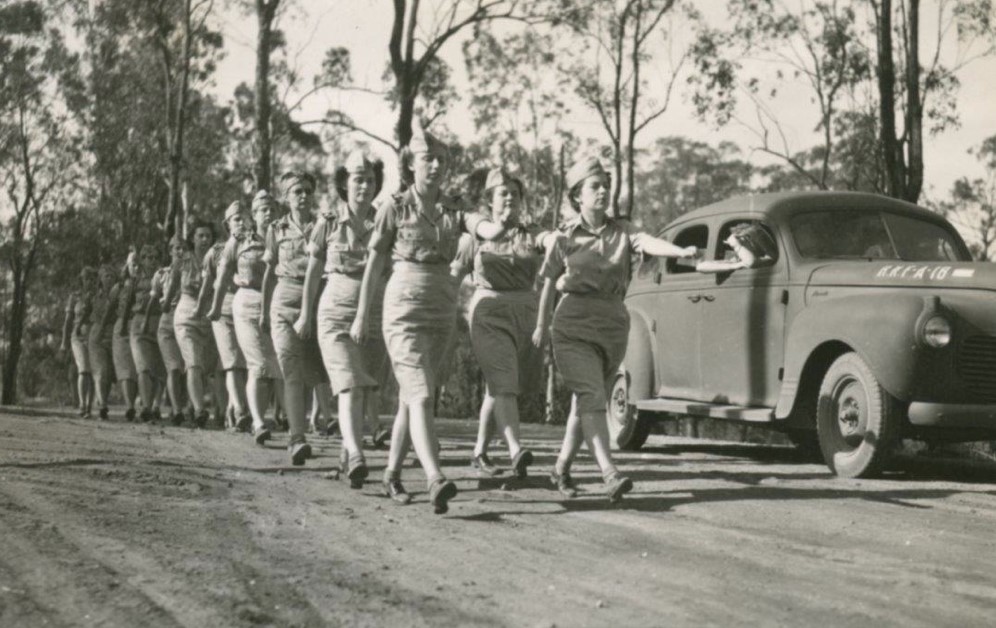
As mentioned above, Joan Butler’s recollections provide a first-hand account of this training. She remembered the Soldatenschool (Army School), Malay and Dutch lessons, drill and physical training. She also worked on the camp switchboard, trained as a driver and later worked in the Supply Department.
The VK-KNIL illustrates the wider purpose of training in Australia. Personnel were being prepared not simply for conventional military service, but for the diverse practical tasks required as Dutch and Netherlands Indies organisations moved back towards the archipelago.
Other specialist personnel followed different training paths. NEFIS officers and operatives, for example, could be sent to Australian intelligence and special-operations establishments elsewhere in Queensland. Camp Columbia remained their headquarters and organisational base, but specialist training was part of a wider Australian and Allied network.
The variety of training undertaken by personnel associated with Camp Columbia reinforces its role as more than an administrative headquarters. It was also a place where people acquired and practised skills needed for the return north.
Camp Columbia was therefore an important link between training undertaken across Australia and the practical deployment of personnel back into the Netherlands East Indies and New Guinea.
From Camp Columbia to New Guinea and the Netherlands East Indies
The preparation undertaken at Camp Columbia had a practical objective: personnel were being readied for service as Allied forces advanced back towards the Netherlands East Indies.
From 1944, Dutch and Netherlands Indies military personnel, civil administrators and specialists increasingly moved north from Australia. Some joined NICA detachments entering territory recovered from Japanese occupation, while others were assigned to military, administrative and specialist duties in New Guinea and elsewhere in the archipelago.
Camp Columbia formed an important staging point in this movement. Personnel could be assembled at Wacol, receive briefings and assignments, and then travel north through the Allied transport network.
New Guinea was particularly important. Hollandia became a major Allied base following its capture in April 1944 and an early centre for the restoration of Netherlands Indies administration. Dutch personnel were also required for the longer-term administration and development of Netherlands New Guinea.
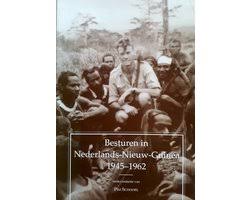
Individual experiences illustrate how Camp Columbia fitted into this process. Piet Merkelijn, for example, passed through the Netherlands Indies wartime organisation in Australia before beginning a career that would take him to Netherlands New Guinea. His story provides a personal example of the wider movement of personnel from wartime Australia back into Dutch service in the region.
Camp Columbia should therefore be understood as part of a chain rather than as an isolated training establishment. Training could take place elsewhere in Australia, but Wacol brought together the government, military and administrative organisations responsible for assigning and preparing personnel for the journey north.
Significance
Camp Columbia played an important role in preparing Dutch and Netherlands Indies personnel for the return north during the final stages of the Pacific War.
Its significance, however, should not be understood as that of a single Dutch training school. Formal military, intelligence and civil-administration training took place at several locations across Australia.
Camp Columbia’s particular importance came from the concentration at Wacol of the Netherlands Indies Government, KNIL headquarters, NICA, NEFIS and other military and administrative organisations. Personnel could train, receive briefings and language instruction, be assigned to particular duties and prepare for deployment within the same large complex.
The surviving evidence—including contemporary reports and the recollections of people such as Joan Butler—shows that training did take place at Camp Columbia. At the same time, the wider record demonstrates that Wacol formed part of a much larger Australian and Allied training network.
Camp Columbia therefore served several interconnected functions: headquarters, training location, preparation centre and staging base.
From there, Dutch and Netherlands Indies personnel moved north to New Guinea and other parts of the archipelago, carrying with them skills and experience acquired not only at Camp Columbia but across wartime Australia.
Sources and further reading
- Australian War Memorial — records and photographs concerning Camp Columbia, the Netherlands Indies forces in Australia and the return to the Netherlands East Indies.
- National Archives of Australia — records relating to the Netherlands Indies Government-in-Exile, Camp Columbia and Dutch military and administrative activities in Australia.
- Nederlands Instituut voor Militaire Historie (NIMH) — material concerning the KNIL and VK-KNIL in Australia, including training and the concentration of Netherlands Indies organisations in Brisbane.
- Camp Columbia contemporary newspaper collection, 1944–46 — includes reports concerning Dutch and Netherlands Indies personnel, the Civil Administration School and ceremonies and activities at Camp Columbia.
- Joan Butler, personal recollections of the VK-KNIL at Camp Columbia — first-hand evidence concerning the Soldatenschool, language lessons, drill, physical training, driving, communications and other activities at Wacol.
- United States Army Officer Candidate School records and Camp Columbia research — documenting the American OCS established at Camp Columbia in 1942 and its operation until June 1945.
Related articles
I would then link to:
- Personal Stories from the Women’s Corps Trained at Camp Columbia – Joan Butler
- From Camp Columbia to Dutch New Guinea: The Journey of Piet Merkelijn
- The Netherlands Indies Civil Administration (NICA) at Camp Columbia
- Netherlands Forces Intelligence Service (NEFIS) at Camp Columbia
- From Camp Columbia to Operation Kraai: The Australian Training of NEFIS Officer Jan Bakker
D