Following the Japanese invasion and occupation of the Dutch East Indies (now Indonesia) during World War II, many Dutch men, women, and children were interned in civilian and military prisoner-of-war camps. Conditions in these camps were often severe, marked by overcrowding, chronic food shortages, forced labour, and a near-total absence of medical supplies. Malnutrition and disease were widespread, and mortality rates—particularly among children—were high.
After Japan’s surrender in August 1945, liberation did not immediately bring safety or stability. In many parts of the Dutch East Indies, the collapse of Japanese authority was followed by violence, lawlessness, and political unrest. Contemporary reporting described conditions in which former internees, including women and children, remained physically weakened, undernourished, and at risk. In this unstable post-war environment, the Dutch government organised evacuation and medical relief efforts for civilians assessed as being in the most serious condition.
Australia played a significant role in supporting these humanitarian operations. In late January 1946 – see article below – the Dutch evacuee ship Tarakan arrived in Brisbane carrying 169 men, women, and children from Batavia and Surabaya. Press reports at the time described this as the first Dutch “mercy ship” to berth in Brisbane. Medical officers accompanying the evacuees reported widespread undernourishment, with cases of infectious illness occurring during the voyage, and emphasised that recovery from years of deprivation would take many months Refugees at Wacol.
The evacuees’ testimonies highlighted the extreme conditions endured during internment, including prolonged starvation diets, the absence of medicines, and high child mortality rates in some camps. Nursing staff among the evacuees confirmed that deaths from diseases such as beri-beri were common and that internees were often forced to construct their own coffins due to the lack of basic resources Refugees at Wacol.
Upon arrival in Brisbane, the evacuees were temporarily accommodated at the former Camp Columbia site at Wacol, which by this time was transitioning from a wartime military installation to a post-war reception and migration facility. While some evacuees remained briefly in Brisbane before onward travel, others were accommodated at Wacol prior to repatriation to the Netherlands or reunion with family members elsewhere in Australia Refugees at Wacol.
Camp Columbia was one of several Australian sites used to receive and support Dutch evacuees in the immediate post-war period. Other locations included Tatura and Bonegilla in Victoria, and Woodside in South Australia. These former wartime camps provided temporary accommodation, food, and medical support, offering a period of stabilisation and recovery for civilians who had survived years of internment and post-war insecurity.
It is important to note that evacuation to Australia was limited by logistical constraints and available resources. Only a fraction of the Dutch civilian population affected by internment and post-war violence in the Dutch East Indies could be assisted in this way. Those evacuated generally represented the most urgent medical and humanitarian cases, reflecting the scale of suffering and the difficult choices faced by relief authorities at the time.
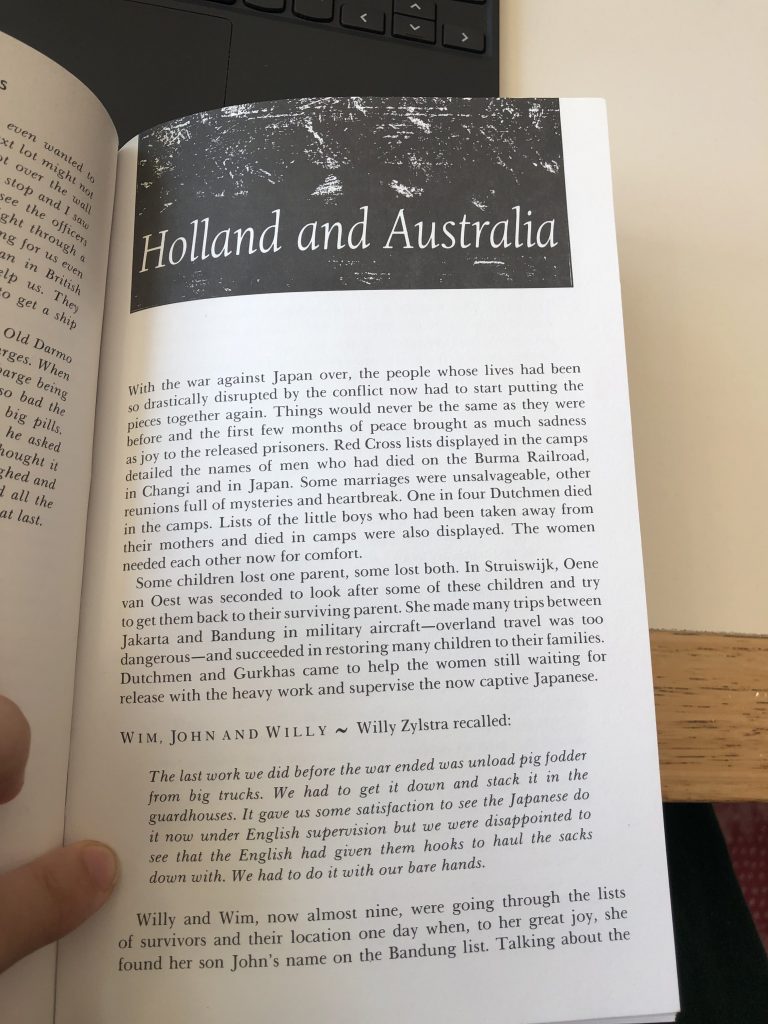
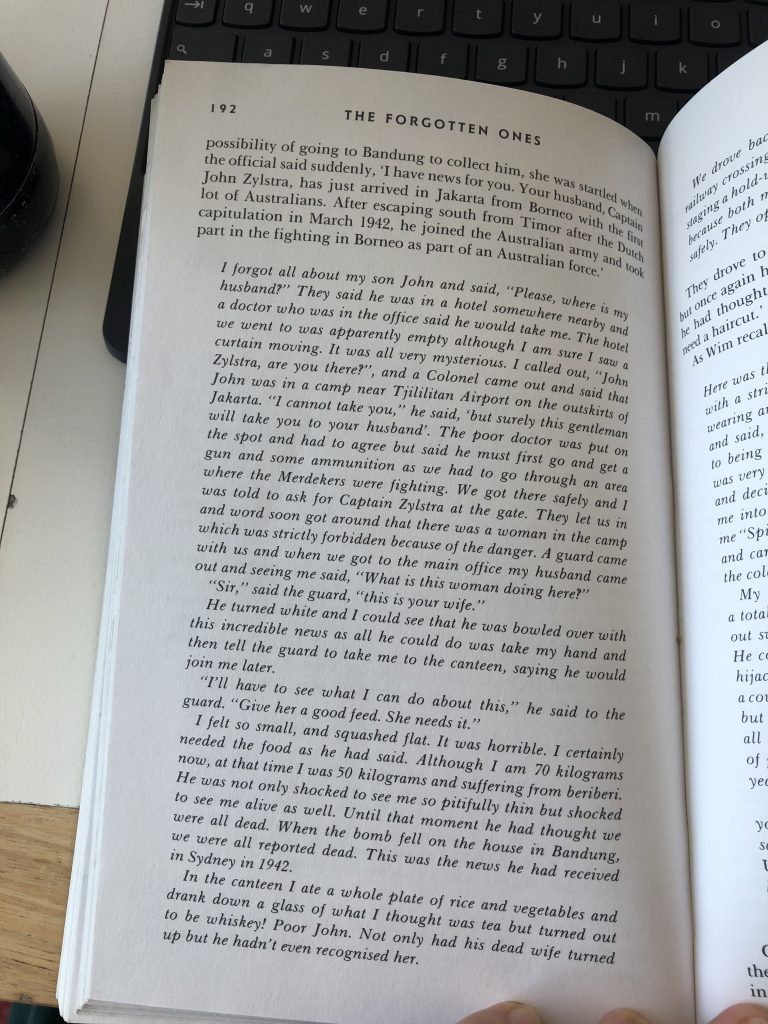
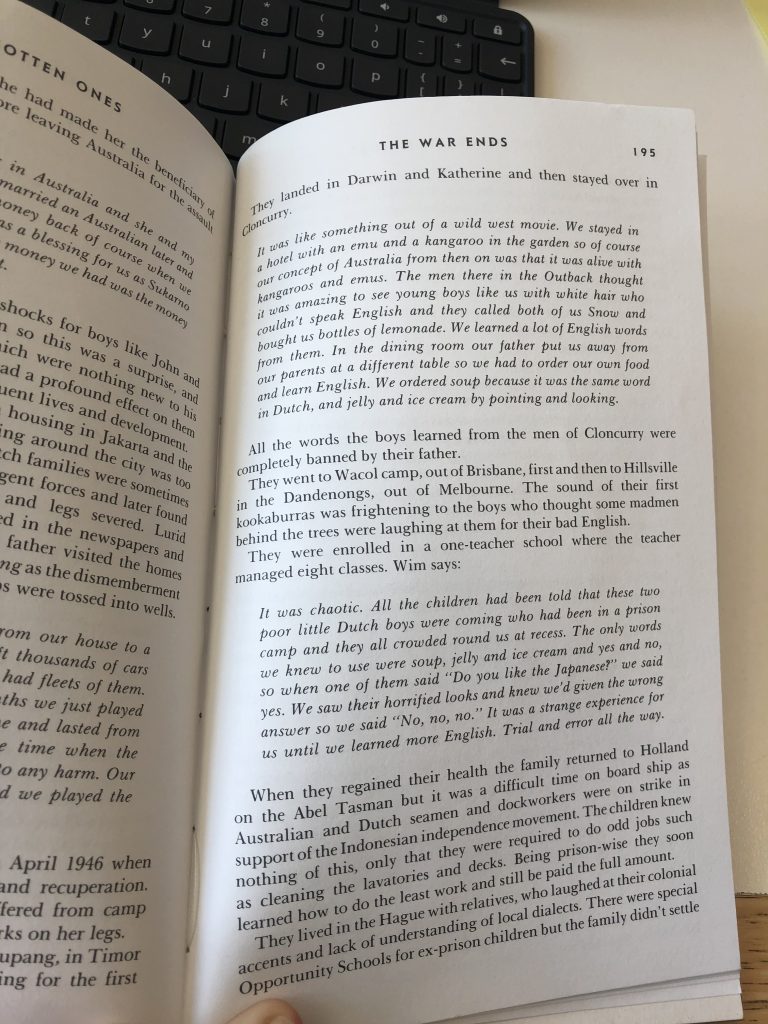
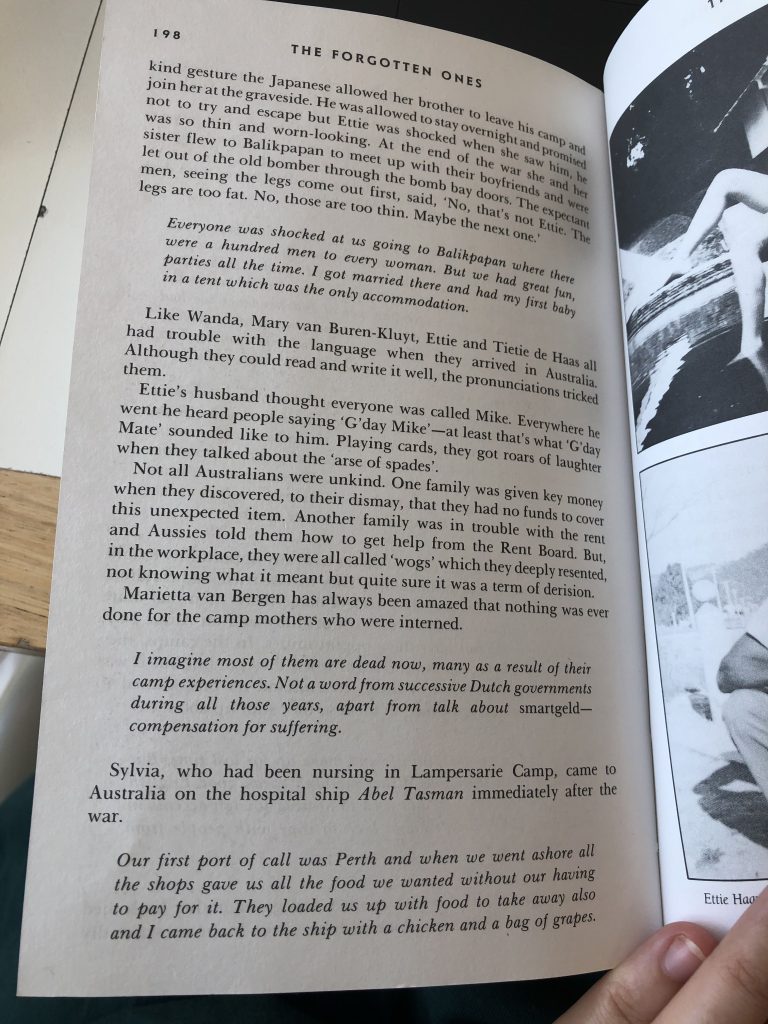
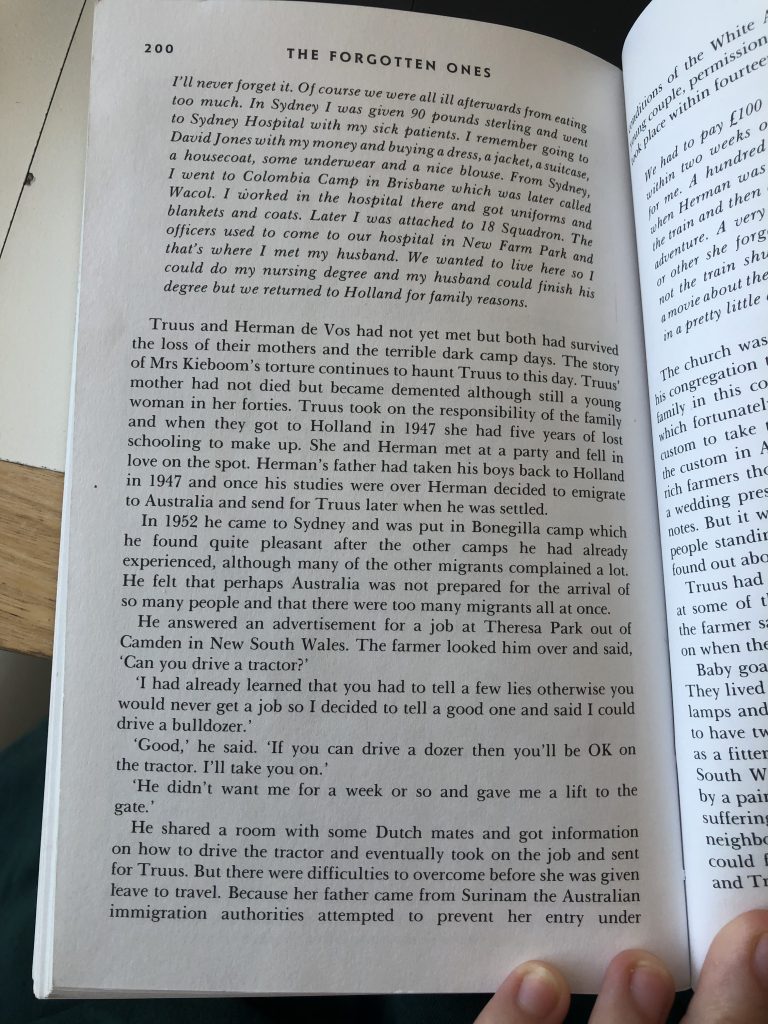
The Forgotten Ones: Women and Children under Nippon
The book: “The Forgotten Ones: Women and Children under Nippon” by Shirley Fenton Huie sheds light on the experiences of women and children during World War II in the Dutch East Indies under Japanese occupation. This also includes the story of the Zylstra family who were evacuated and also briefly stayed at Camp Columbia (Wacol). The book is at the State Library of Queensland and the pictures were made by UQ Researcher Ruby Todorovski.