USA

Camp Columbia and Base Section 3: Brisbane in the Allied logistics system

When Allied forces expanded rapidly across the Pacific following the Japanese attacks of December 1941, Australia was transformed almost overnight from a distant imperial outpost into a central rear-area base for a global war. The scale of the challenge was unprecedented. Large numbers of Allied troops, particularly from the United States, began arriving in Australia […]

Camp Columbia and Base Section 3: Brisbane in the Allied logistics system Read More »

Remember the Alamo: How Camp Columbia Became the Birthplace of Alamo Force

The words “Remember the Alamo” are among the most iconic in American history. They originated in 1836 during the Texas Revolution, following the defeat of Texian defenders at the Alamo mission in San Antonio. Although the battle itself was a military loss, it became a powerful rallying cry symbolising resolve, sacrifice, and determination in the

Remember the Alamo: How Camp Columbia Became the Birthplace of Alamo Force Read More »

Camp Columbia and the U.S. Sixth Army: A Signal Officer’s First-Hand Account

This paper draws on the autobiography of Lt. Mark Twain Muller, a U.S. Army Signal Officer assigned to Base Section 3, to illuminate the operational and Allied significance of Camp Columbia, located west of Brisbane, during the critical early years of the Pacific War. Muller’s first-hand account provides rare insight into the establishment of Camp

Camp Columbia and the U.S. Sixth Army: A Signal Officer’s First-Hand Account Read More »

The Dutch Women Army Corps in Brisbane

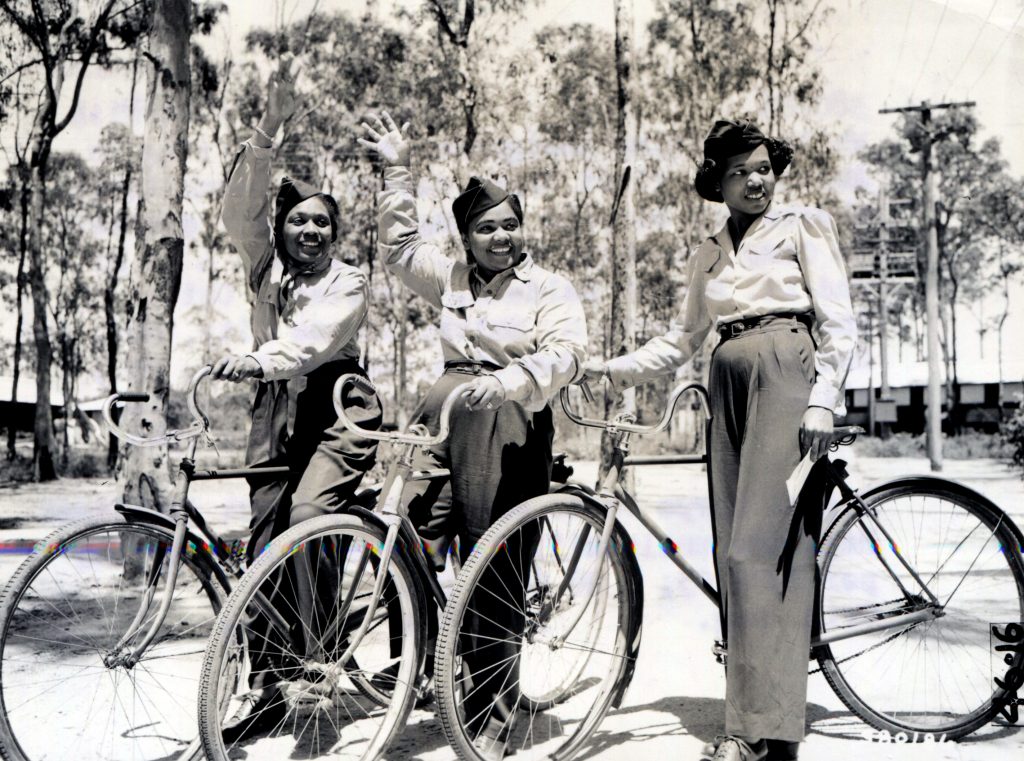
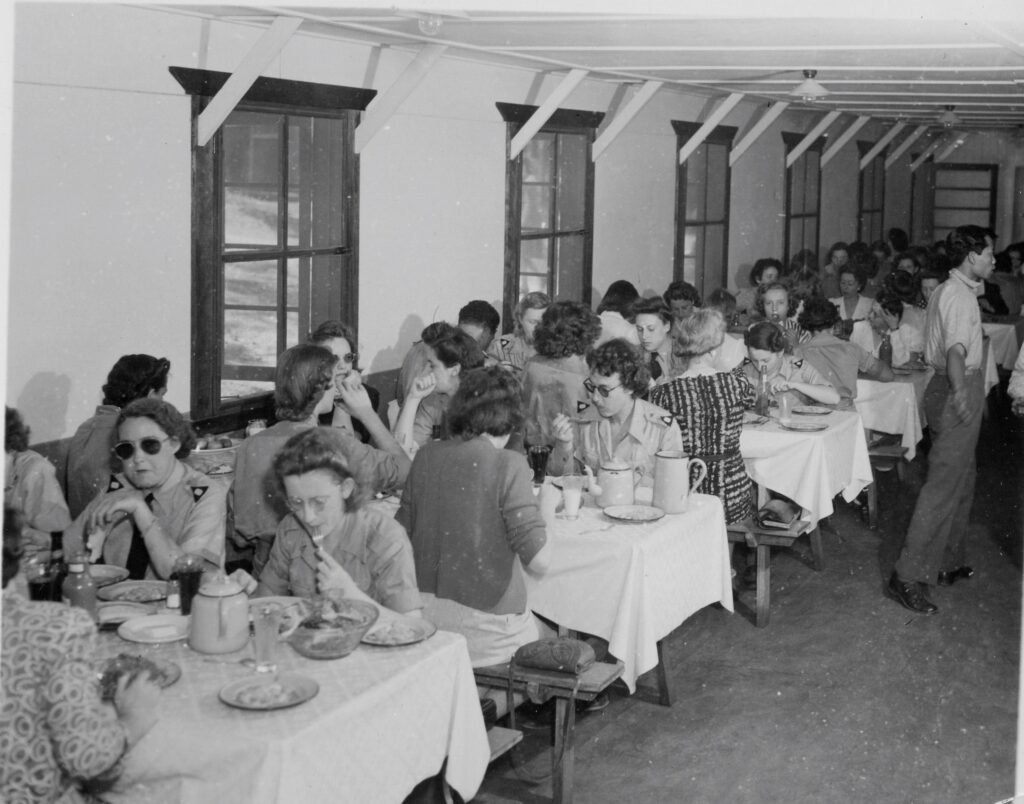
Introduction During the Second World War, women’s military and auxiliary corps became an essential part of the Allied war effort. Across Australia, the United States, Britain, the Netherlands, and the Netherlands East Indies, women served in uniform in a wide range of non-combatant roles that were vital to military effectiveness. Brisbane, and in particular Camp

The Dutch Women Army Corps in Brisbane Read More »

The Americans in Brisbane

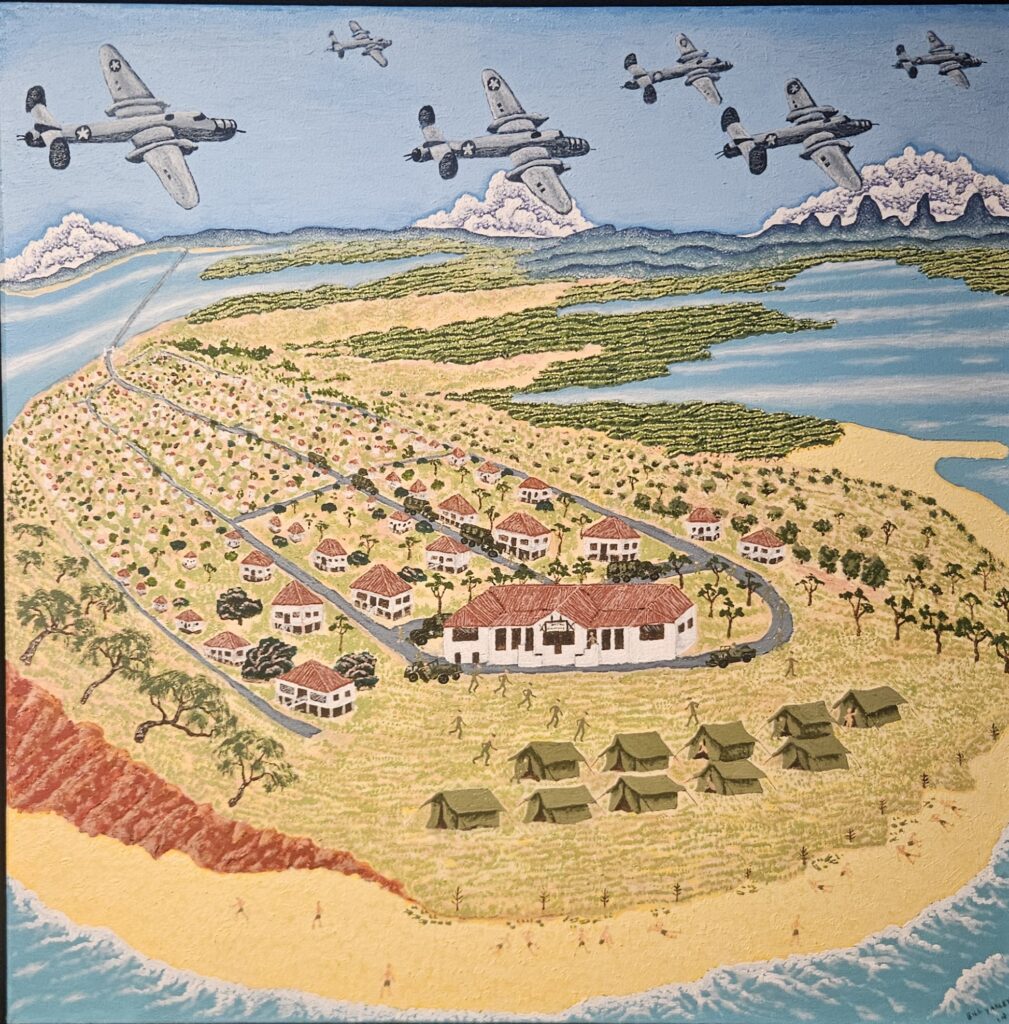
Between 1942 and 1944, Brisbane hosted one of the most significant concentrations of U.S. military personnel in the Pacific Theatre. Central to this presence was Camp Columbia at Wacol—home to 5,000 troops and headquarters for the U.S. Sixth Army under Lt. Gen. Walter Krueger. From here, key campaigns across New Guinea and the Philippines were

The Americans in Brisbane Read More »

Overlooked outpost: Brisbane and Camp Columbia in American WWII literature

Even in Brisbane, the global importance of the city’s role during World War II is largely unknown. Yes, most people are aware that large numbers of American troops were stationed here, and many will recall the so-called “Battle of Brisbane”—but for most, that’s the extent of their knowledge of Brisbane’s wartime significance. As I delved

Overlooked outpost: Brisbane and Camp Columbia in American WWII literature Read More »

The Battle of Brisbane: Two sides of the same riot

The Battle of Brisbane, a violent two-night clash between Australian and American servicemen in November 1942, remains one of the most extraordinary and yet under-discussed episodes of Allied wartime friction. In Australia—particularly in Brisbane—it has entered popular memory as a moment of explosive resentment toward the dominant American presence. In the United States, however, it

The Battle of Brisbane: Two sides of the same riot Read More »

Symposium delegates visit the site of the former Camp Columbia 1/9/2025

Delegates on the WWII Brisbane bus tour gathered at Pooh Corner Bushland Reserve, the site of the former Camp Columbia. Over tea and coffee generously hosted by Wolston & Centenary Catchments (WaCC), Paul Budde gave a short orientation on Camp Columbia’s wartime footprint and today’s conservation efforts before we walked to the recently by Brisbane

Symposium delegates visit the site of the former Camp Columbia 1/9/2025 Read More »

From Symposium to Strategy: Securing Brisbane’s Place as WWII Allied Capital

Turning commemoration into opportunity: defence ties in 2027, global heritage in 2032 The Allied Co-operation in Brisbane during WWII: Australia, USA, Netherlands, UK symposium, held at the University of Queensland on 30–31 August 2025, brought together a full house of delegates, historians, community representatives, and descendants to mark the 80th anniversary of the end of

From Symposium to Strategy: Securing Brisbane’s Place as WWII Allied Capital Read More »

Camp Columbia – a wartime crossroads on Brisbane’s doorstep

We are pleased to share a feature article , now available on the website of our researcher Ingeborg van Teeseling: Australia Explained. This comprehensive piece brings together historical insights and personal recollections to highlight the unique international role of Camp Columbia during and after World War II. From American and Dutch military operations to the

Camp Columbia – a wartime crossroads on Brisbane’s doorstep Read More »

WWII Symposium Allied co-operation in Brisbane moved to UQ St Lucia

The University of Queensland is a supporter of the Camp Columbia Heritage Association. They have conducted archeologic research at the site of the former camp. The St Lucia Campus was during WII the HQ of the South-West Pacific Area (SWPA) Advanced Land Headquarters led by Australian General Thomas Blamey, who was Commander-in-Chief of the Australian Military Forces

WWII Symposium Allied co-operation in Brisbane moved to UQ St Lucia Read More »

The 1944 US Military Pocket Guide to the Netherlands East Indies

In 1944, the United States War Department published a small but detailed booklet titled Pocket Guide to the Netherlands East Indies. Produced as part of a broader series of cultural guides for American troops deployed overseas, this 80 pages booklet was designed to familiarise servicemen with the geography, people, customs, and political structure of the

The 1944 US Military Pocket Guide to the Netherlands East Indies Read More »

Scroll to Top