
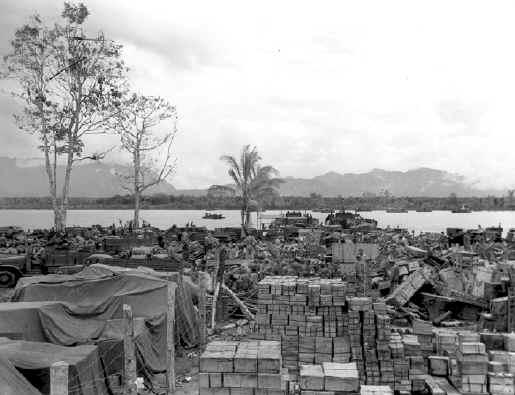
While Camp Columbia is best known as the headquarters of the U.S. Sixth Army in Australia, its effectiveness depended on far more than senior commanders and planning staff. Behind the scenes, its Quartermaster and service units ensured that the camp functioned as a self-contained military community capable of supporting thousands of personnel on a daily basis.
These units rarely feature prominently in popular wartime narratives, yet they were essential to the operation of Camp Columbia as a command, medical nd staging centre within the Allied war effort in the The U.S. Army Quartermaster Corps was responsible for the practical necessities of military life. At Camp Columbia, Quartermaster and associated service units handled a wide range of functions, including food supply, clothing and equipment issue, storage and distribution of materials, fuel provision, and camp services.
They ensured that headquarters staff, hospital personnel, military police, signal units and visiting formations were properly fed, clothed and equipped. In effect, these units kept Camp Columbia running as a functioning military base rather than simply a collection of offices and tents.
Logistics at a headquarters camp
As a headquarters installation, Camp Columbia differed from frontline bases. It did not support combat units directly in the field, but it sustained the administrative and operational backbone of the U.S. Sixth Army. This included a constant flow of personnel rotating through the camp, staff officers working long hours, and medical facilities treating casualties evacuated from forward areas.
Quartermaster units coordinated closely with transport and supply services to manage this flow. Food, uniforms, bedding, medical supplies and fuel all had to be available in sufficient quantities and at short notice. Warehousing, inventory control and distribution were therefore central tasks.
Connection to Brisbane’s infrastructure
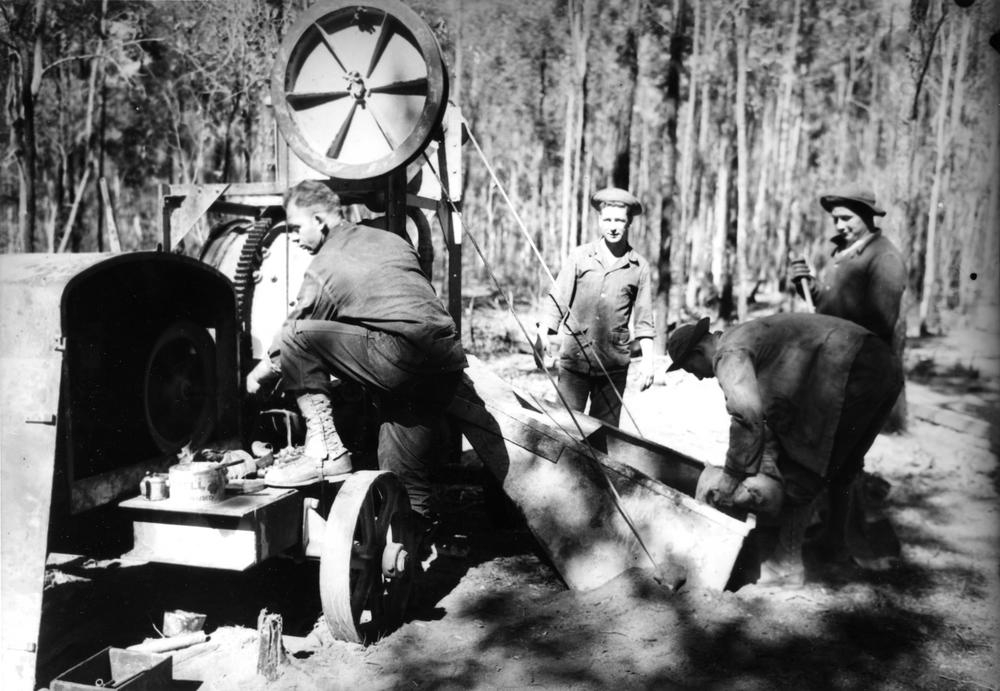
Quartermaster operations at Camp Columbia were closely tied to Brisbane’s wider civilian infrastructure. Supplies arrived through Queensland ports, rail yards and road networks, and were then distributed to military installations across the region. Australian railways, docks, warehouses and transport contractors formed part of this extended supply chain.
This interaction highlights how Camp Columbia was embedded within the broader wartime economy of Brisbane and south-east Queensland, rather than operating in isolation.
Supporting medical and command operations
The presence of large medical facilities, including the 42nd General Hospital, placed additional demands on Quartermaster services. Hospitals required steady supplies of food, linen, medical equipment, fuel and clean water. Quartermaster units played a key role in ensuring these needs were met, allowing medical staff to focus on patient care.
Similarly, the smooth functioning of Sixth Army headquarters depended on reliable daily services. From meals and accommodation to transport and basic camp maintenance, Quartermaster units provided the stable foundation on which strategic planning and command decisions could occur.
An essential but often unseen contribution
Although Quartermaster and service units did not engage in combat, their contribution to the Allied war effort was indispensable. At Camp Columbia, they transformed a large military encampment into a viable headquarters capable of sustained operations over several years.
Recognising their role helps complete the picture of Camp Columbia not just as a place of command and planning, but as a complex, functioning military community supported by thousands of men and women performing vital logistical tasks.
See also: US Army Quarter Master Museum