
From American headquarters to Netherlands Indies base
During 1944, as Allied operations moved northward through New Guinea, the headquarters of the United States Sixth Army transferred from Camp Columbia at Wacol to Hollandia in Dutch New Guinea. This made substantial accommodation, office and support facilities at Camp Columbia available for a new purpose.
At the same time, the Netherlands East Indies authorities in Australia were preparing for the anticipated Allied advance back into territories occupied by Japan. Since the fall of the Netherlands East Indies in 1942, Dutch and NEI government, military and intelligence organisations had been dispersed across Australia, particularly in Melbourne. The availability of Camp Columbia provided an opportunity to concentrate many of these activities closer to the developing operational theatre.
The camp was offered to the Dutch, with the Australian Government, on advice from the United States authorities, agreeing not to charge rent for the site. The arrangements formed part of the wider Reciprocal Lend-Lease system under which Australia had originally constructed facilities for American forces.
Preparing the camp for the Dutch and NEI organisations
Although the Dutch inherited substantial facilities from the Americans, considerable work was undertaken to adapt Camp Columbia to their requirements.
From June 1944 the NEI Labour Battalion, a KNIL unit that included substantial numbers of Indonesian personnel, began refurbishing the camp. New offices, club facilities and a laundry were constructed, while showers and toilets were added to accommodation huts. All new construction remained subject to Australian wartime building priorities and approval.
Australian NEFIS employee Jean van Schilfgaarde later recalled with amusement that the Dutch considered it necessary to improve a camp previously occupied by Americans, despite the Americans’ reputation for providing their troops with comparatively high standards of comfort. Her recollections provide a valuable personal picture of the transformation of Camp Columbia during this period.
The move from Melbourne to Brisbane
The transfer of Dutch and Netherlands Indies organisations to Brisbane began progressively during the middle of 1944.
According to historian Dr Jack Ford, Netherlands Forces Intelligence Service (NEFIS) was the first organisation to move, beginning its transfer from Melbourne in July 1944. The Australian Government provided a special train to transport NEFIS personnel to Wacol, although some NEFIS functions remained in Melbourne and other offices were maintained in central Brisbane.
The senior directors of the developing NEI administration had held their first meeting in Melbourne on 23 May 1944. After a further nine meetings there, they reconvened at Camp Columbia on 23 August.
Other organisations and personnel followed. The Women’s KNIL Corps moved from Melbourne to Brisbane in September, while other KNIL, NICA, intelligence and administrative personnel became part of the growing Dutch and NEI presence in Brisbane.
Temporary seat of the Netherlands Indies Government-in-Exile
Lieutenant Governor-General Hubertus van Mook arrived back in Australia on 23 October 1944 and moved to Camp Columbia. The Dutch regarded the camp as the temporary seat of the Netherlands Indies Government-in-Exile pending the return to territory liberated from Japanese occupation.
Camp Columbia consequently became much more than another military camp. It brought together senior government officials and personnel from organisations involved in military planning, intelligence gathering, civil administration, reconstruction and preparations for the return to the Netherlands East Indies.
Among the organisations represented were the Netherlands Forces Intelligence Service (NEFIS), Netherlands Indies Civil Administration (NICA), Royal Netherlands East Indies Army (KNIL), Women’s KNIL Corps (VK-KNIL) and departments of the Netherlands Indies administration.
Eventually, Ford estimates that nearly 2,000 personnel from various Dutch and Netherlands Indies organisations occupied Camp Columbia.
From victory over Japan to the end of the Dutch period
Japan’s surrender in August 1945 fundamentally changed Camp Columbia’s purpose. The organisations assembled there had been preparing for the liberation of the Netherlands East Indies and the restoration of civil administration. Instead, the proclamation of Indonesian independence by Sukarno and Mohammad Hatta on 17 August 1945 created an entirely different political situation.
Personnel and organisations progressively moved north, while Camp Columbia also became part of the wider Australian network dealing with Dutch and Netherlands Indies personnel and civilians displaced by the war.
The wartime Netherlands Indies administration in Australia was wound down, but Dutch use of Camp Columbia did not end immediately. Dutch and NEI personnel continued to use the facilities during the postwar transition before the Dutch presence at Wacol finally came to an end.
Camp Columbia’s Dutch and Netherlands Indies legacy
Between 1944 and the postwar departure of the Dutch, Camp Columbia occupied an unusual position in Australian history. A large American military headquarters had been transformed into a centre from which Dutch and Netherlands Indies officials, soldiers, intelligence personnel and civil administrators prepared for the return to an Asian colony that had been fundamentally changed by war.
The Camp Columbia story therefore connects Brisbane not only with the Allied war against Japan, but also with the final years of the Netherlands East Indies and the beginnings of the Indonesian struggle for independence.
Today, the surviving history of Camp Columbia provides an important physical and documentary link between Australia, the Netherlands and Indonesia.
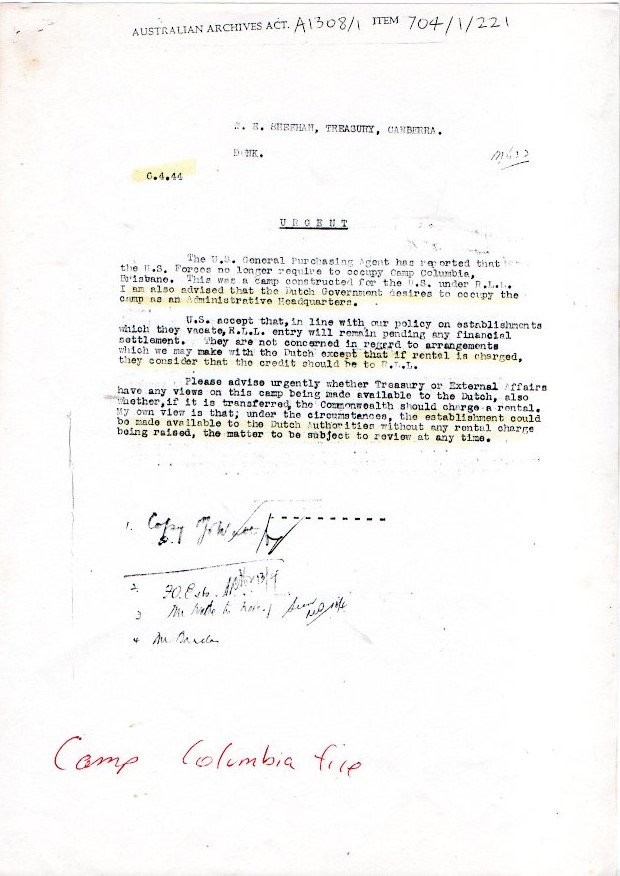
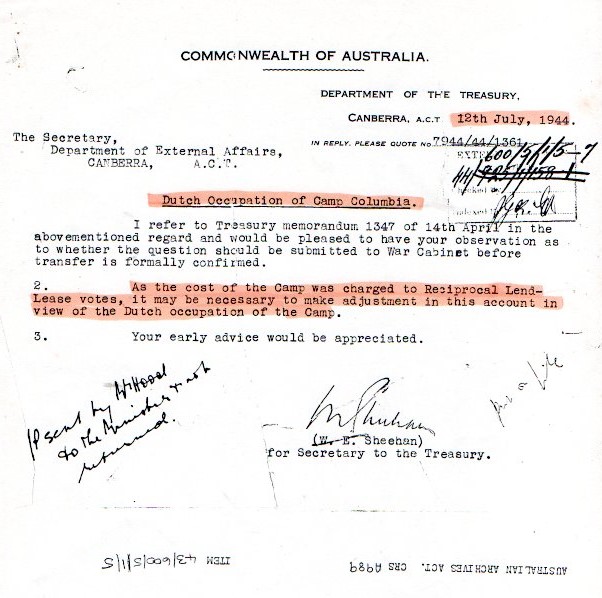
The Dutch at Camp Columbia
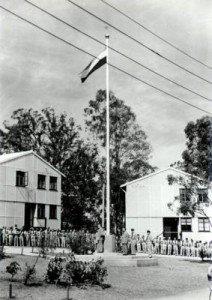
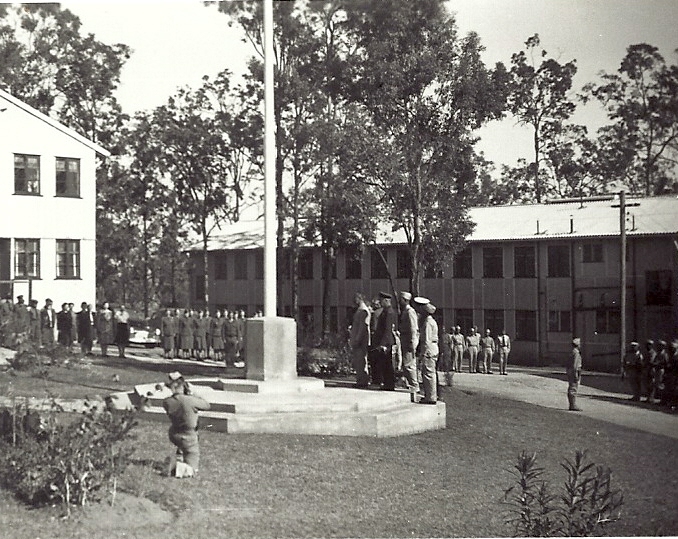
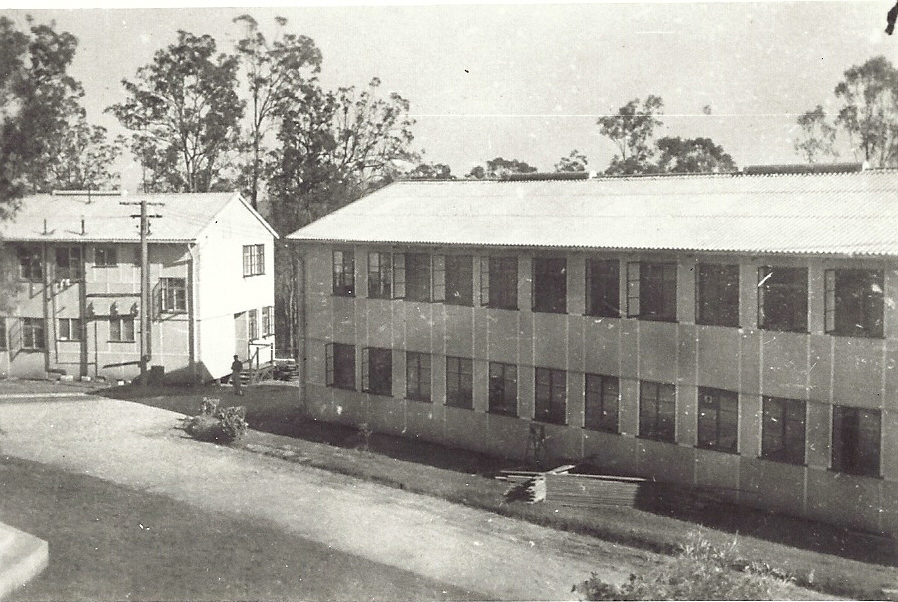
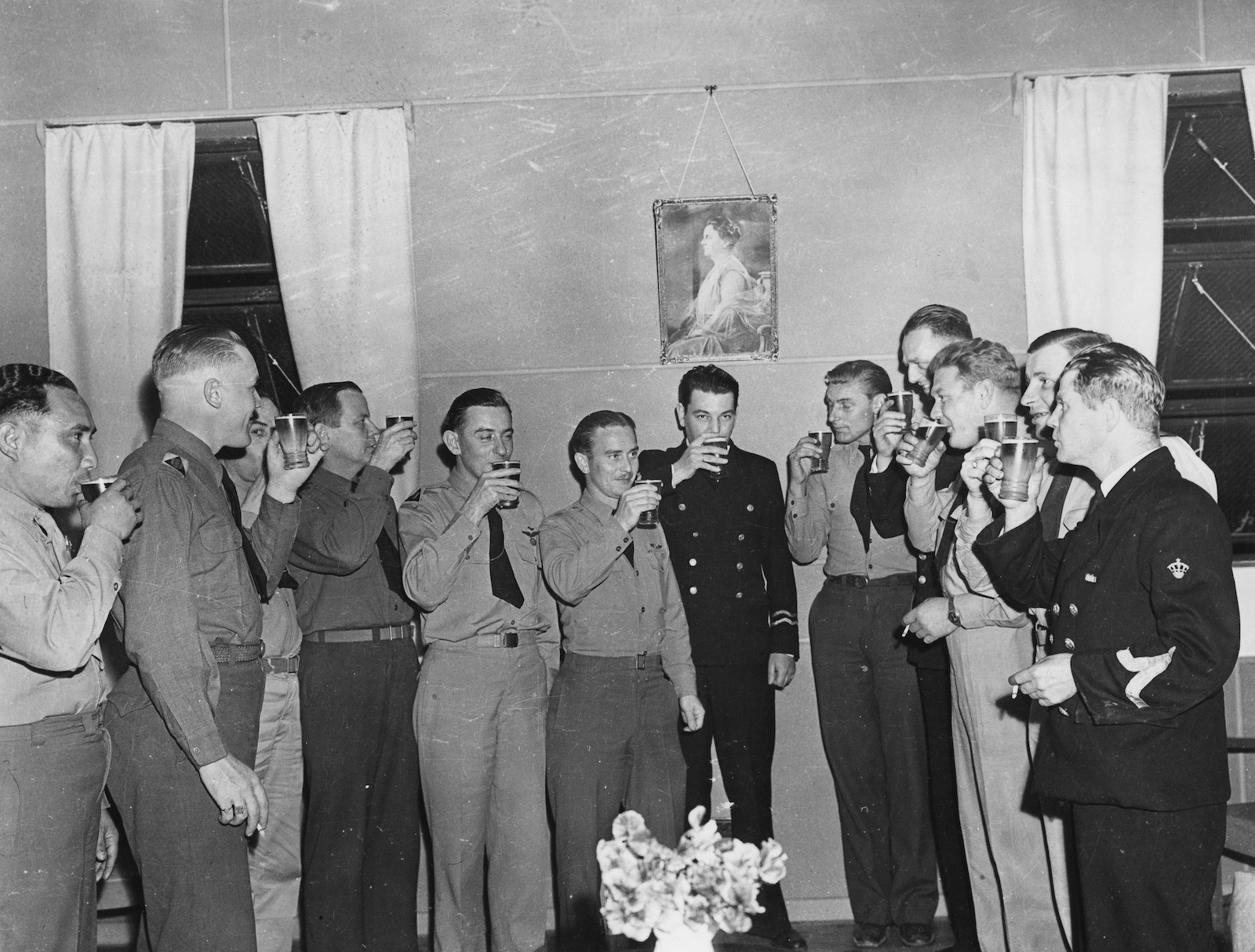
Jack Ford has been of great assistance in the research in particular about the Dutch during WWII. He has been very generous in sharing his knowledge and material with us. The documents and photo’s above are all from Jack’s research. The photos are from his correspondence with Jean van Schilfgaarde. Here personal story is told here.
Jack published a book: Allies in a Bind – Australia and the Netherlands East Indies in the WWII by Jack Ford
Next: