
From Camp Columbia to migrant accommodation
The site at Wacol, southwest of Brisbane, has a significant place in both Australia’s wartime and post-war history.
During the Second World War, Camp Columbia served as headquarters of the United States Sixth Army and subsequently became an important centre for Netherlands East Indies military and administrative activities. After the war, the Wacol area became associated with Australia’s immigration and settlement programmes.
The Wacol Migrant Centre provided temporary accommodation for people arriving from overseas as they began establishing new lives in Queensland. It remained in operation until 1987.
A photographic record from 1969
A collection of photographs preserved by the National Archives of Australia provides a glimpse of daily life at Wacol in 1969.
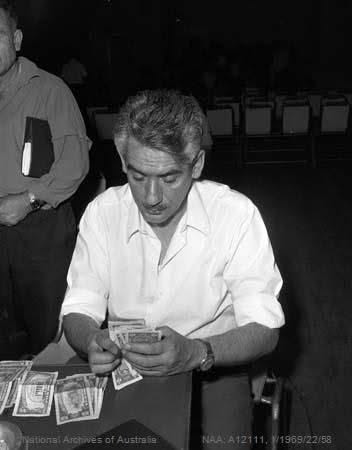
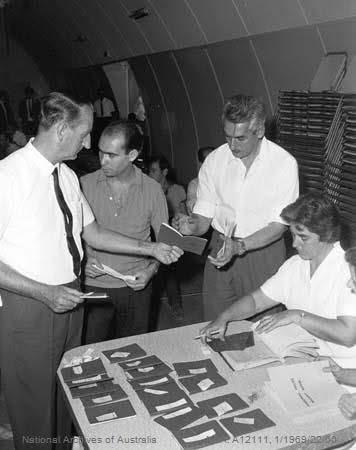
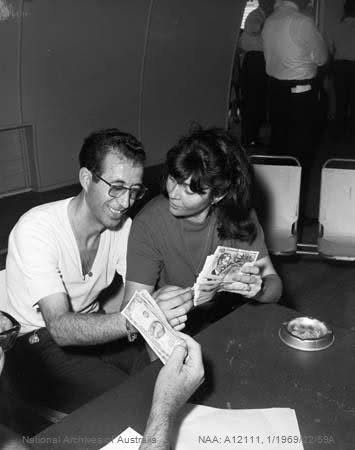
The photographs document the arrival and settlement of migrants, including a group of 175 people from Spain. They show the practical assistance available to newcomers, from currency exchange and banking to housing applications and school enrolment.
Other images record family life, accommodation buildings, gardens and the people who lived and worked at the centre.
Taken together, the photographs offer more than a record of the buildings. They show the human dimension of Australia’s post-war migration programme.
Arriving and settling in
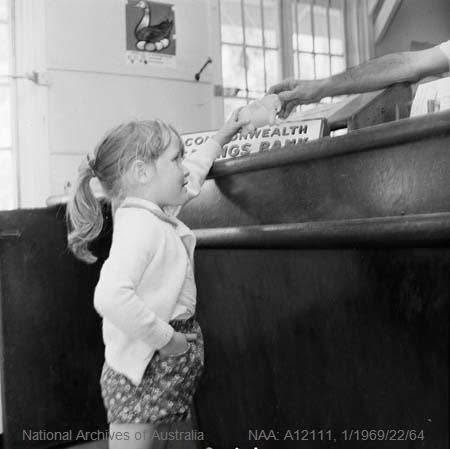
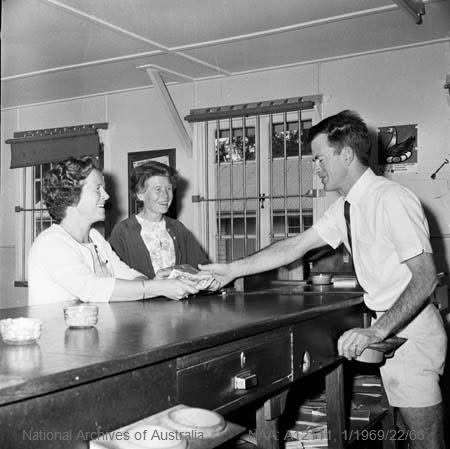
One of the first challenges facing newly arrived migrants was organising their finances. Representatives of two banks were available at Wacol following the arrival of migrants, helping with currency exchange and other banking arrangements.
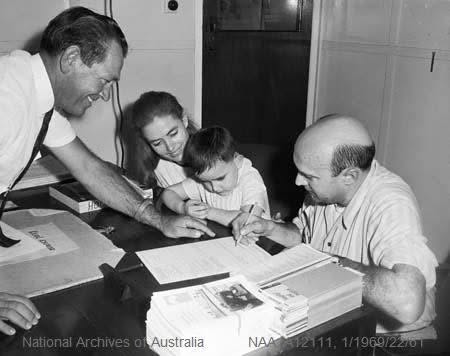
The photographs also show migrants completing applications for Queensland Housing Commission accommodation. These arrangements formed part of the transition from temporary hostel accommodation to more permanent housing.
Centre manager Mr H. Bale is photographed with new arrivals, providing a record of the staff who helped administer the centre.
Children, education and family life
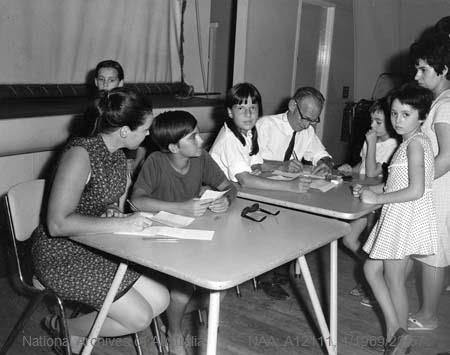
The photographs document the enrolment of 44 migrant children, assisted by headmaster Mr J. J. Heber and teacher Miss Lyn Daniels.
Two interpreters, John Bermejo junior and Rosaria Aramayo, both themselves settlers in Australia, helped with the enrolment process. Their participation illustrates the important role established migrants could play in assisting new arrivals.
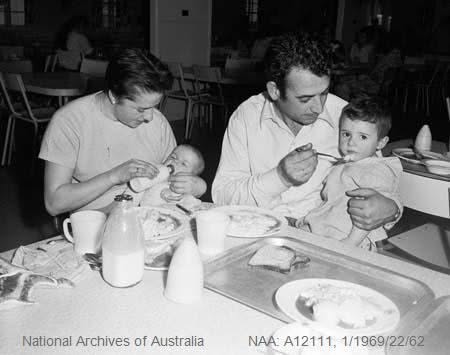
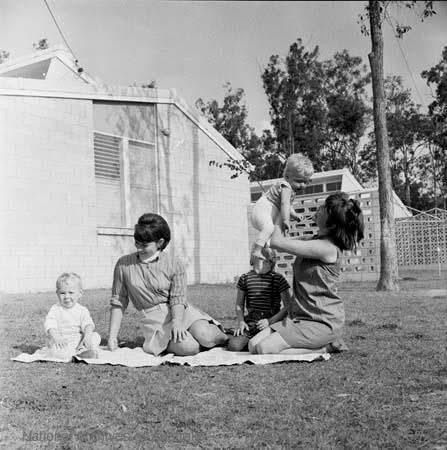
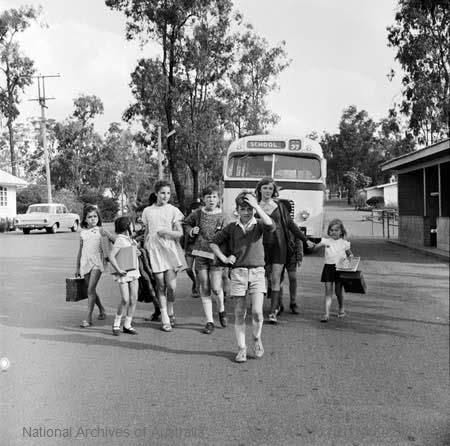
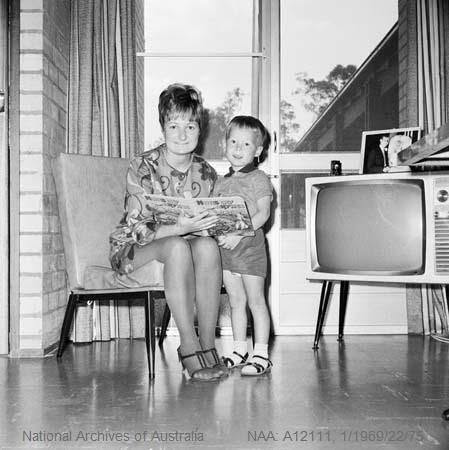
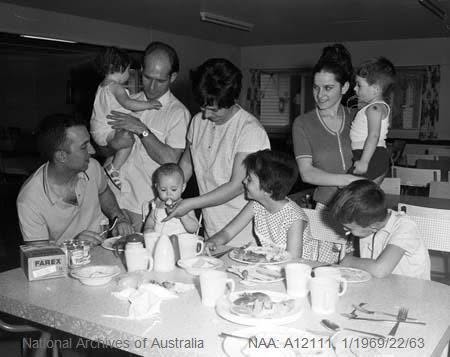
Other photographs show children returning on a school bus, families sharing meals and parents caring for young children.
Several residents are identified by name in the original archival records, including the Galan, Ruiz, Perez, Kvamme, Djuve, Robinson and Crombie families. These identifications help preserve the personal histories behind the photographs.
The residential environment
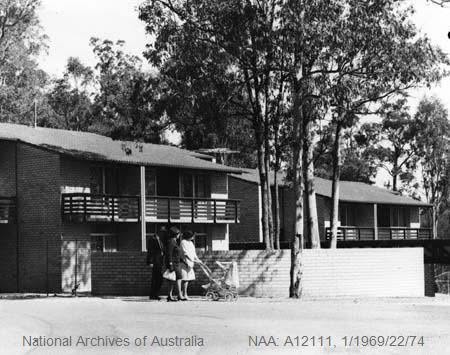
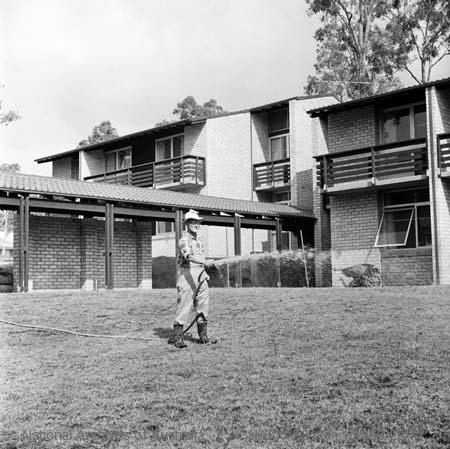
The collection also records Wacol’s accommodation buildings, living units and landscaped grounds.
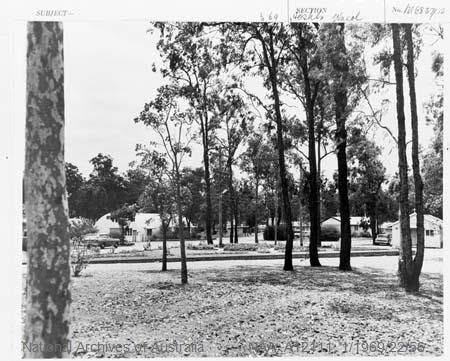
Photographs of a gardener working beside the residential units and views of the buildings among mature trees provide evidence of the centre’s physical appearance in 1969.
For the Camp Columbia Heritage Association, these images are particularly valuable because they document a later chapter in the history of the Wacol site and its changing uses.
Preserving the history of Wacol
The transition from wartime military headquarters to post-war migrant accommodation forms an important part of Wacol’s broader history.
The photographs from 1969 preserve the experiences of people who passed through the migrant centre, many of whom subsequently established permanent homes and communities in Queensland.
They also demonstrate how the history of Camp Columbia and Wacol extends beyond the Second World War into the social history of migration and settlement in Australia.
Photographic collection and acknowledgements
The accompanying photographs are held by the National Archives of Australia, series A12111, and date from 1969.
The photographs are held by the National Archives of Australia, series A12111 (1969). The accompanying captions are based on the original archival descriptions, with individual catalogue references and links provided in the source table below. Personal names have been retained as recorded in the National Archives catalogue.
The Camp Columbia Heritage Association welcomes additional information from former Wacol Migrant Centre residents, their families and people who worked at the centre.
Links to NAA source information
| Photograph | NAA control symbol and link |
| Bank officers assisting newly arrived migrants | 1/1969/22/58 |
| Centre manager Mr H. Bale with new arrivals | 1/1969/22/60 |
| Spanish migrant applying for Queensland Housing Commission accommodation | 1/1969/22/61 |
| Mr and Mrs Bernardo Galan with children Juan and Bernardino | 1/1969/22/62 |
| Five-year-old Tracey, daughter of Mr and Mrs W. R. Robinson, buying a piggy bank | 1/1969/22/64 |
| Mrs Fordi’s Kvamme and Mrs Marta Djuve with their children | 1/1969/22/65 |
| Migrants receiving assistance at the bank | 1/1969/22/66 |
| Migrant children arriving from school on a bus | 1/1969/22/68 |
| Exterior views of the new accommodation buildings | 1/1969/22/74 |
| Gardener working beside the residential units | 1/1969/22/77 |
| School enrolment of 44 children, assisted by teachers and migrant interpreters | 1/1969/22/57 |
| Bank officers changing currency following the arrival of 175 Spanish migrants | 1/1969/22/59A |
| Mrs D. Crombie and son Lee in their accommodation unit | 1/1969/22/75 |
| Christobal Ruiz and family with Mr and Mrs Perez and their children | 1/1969/22/63 |
| General view of the Wacol Migrant Hostel grounds | 1/1969/22/56 |