
Camp Columbia is best known as the headquarters of the U.S. Sixth Army during the Second World War. While senior commanders and planning staff shaped Allied operations from Brisbane, the effective functioning of the headquarters depended on a wide range of specialist support units. Among these were U.S. Army Ordnance units attached to the Sixth Army, responsible for the maintenance, storage and technical management of military equipment.
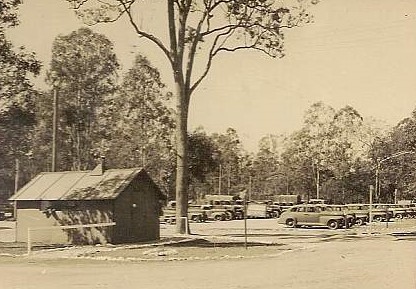
Although Camp Columbia was not a frontline combat base, the scale of its operations meant that reliable weapons, vehicles and equipment were essential at all times. Ordnance personnel ensured that this technical foundation was maintained.
The role of the U.S. Army Ordnance Department
The U.S. Army Ordnance Department was tasked with the care of weapons, vehicles and mechanical equipment across the Army. Ordnance units attached to the Sixth Army at Camp Columbia were responsible for:
- inspection, maintenance and repair of small arms
- servicing and repair of vehicles used for transport, communications and security
- management and storage of weapons and ammunition
- handling of spare parts and specialised technical equipment
- ensuring safety standards for weapons and hazardous materials
Their work ensured that equipment remained serviceable, safe and immediately available when required.
Ordnance support within a headquarters environment
As the headquarters of the Sixth Army, Camp Columbia housed command staff, communications units, medical facilities and security detachments. All relied on equipment that had to function reliably under continuous use.
Ordnance units operated workshops and storage facilities within or near the camp, focusing on preventive maintenance and repair rather than battlefield recovery. Vehicles used for daily operations, weapons carried by guards, and equipment supporting headquarters staff all required regular inspection and servicing.
By addressing faults early and maintaining readiness, ordnance personnel reduced the risk of disruptions to command and administrative operations.
Integration into the Sixth Army structure
Ordnance units at Camp Columbia formed part of the Sixth Army’s broader organisational structure. Their presence reflected the need for headquarters installations to be fully self-sustaining, capable of operating independently for extended periods.
These units worked in close proximity to other Sixth Army elements, responding directly to the technical needs of the headquarters and its attached units. This integration ensured rapid response to equipment failures and efficient management of resources.
Brisbane and the wider maintenance network
While much routine maintenance could be handled at Camp Columbia, ordnance operations were also connected to a wider Allied maintenance and supply network across Australia. Vehicles, spare parts and technical equipment arrived through Queensland ports and rail facilities, while more complex repairs could be referred to larger ordnance depots elsewhere in the country.
Camp Columbia thus functioned as part of a broader system supporting Allied operations throughout the Southwest Pacific.
An essential but often overlooked contribution
Ordnance units rarely feature prominently in wartime narratives, yet their role was indispensable. At Camp Columbia, ordnance personnel ensured that weapons were safe, vehicles operational and equipment dependable.
By maintaining the technical readiness of the Sixth Army headquarters, these units quietly supported the planning, coordination and execution of Allied operations across the Pacific. Their contribution forms an important part of the broader story of Camp Columbia as a fully functioning Allied headquarters in Australia.