
The interviews below are from the book: Wacol, Wolston, Woogaroo 1823-2014. Volume 2 Biographies & Interviews By Vicki Mynott. Richland, Inala and Suburbs History Group. Published with permission from the author.
Steven Owen Davies
During the War, the Americans had a big camp at Wacol — they were all over the place. Like flies. Since there was also an Australian camp at Redbank, I saw the opportunity for another taxi. I bought a big old Nash “mourning coach” from funeral directors Cannon and Cripps — it made a good roomy taxi.
A lot of Americans would ring for me to pick them up and drive them from Wacol to Brisbane. They didn’t need to take the train -they were all on good money, not just the officers also the Negroes. I remember one evening I dropped some Americans off at the Wacol camp – over in Dyer’s paddock. The Negro guard asked me what the big birds flying over were. “Flying foxes”, he got angry and said “Foxes don’t fly, you’re having a go at me. I’ll shoot you.”
He shot into the air — and the white MPs soon arrived. When I told them what had happened, they said “You’re lucky he didn’t shoot you. But don’t worry, he’ll be shot tomorrow.”
It didn’t take much for them to shoot a Negro. I actually saw it in Edward Street one day. A Negro spoke to a white girl and “bing” he was shot by MPs who were walking past. Of course, he was also on the “wrong” side of the river — the American rule was that Negroes weren’t allowed in the city.
I married Edna Ethel Moxbury on 12 September 1942 — I remember that date.
But then about 1944 I was injured when a drunk driver crashed into me and I couldn’t drive the taxi any more. I ended up working casually at the meatworks at Cannon Hill.
What with the travelling, work and family in Goodna, I didn’t get to Wacol much after the War. I haven’t thought about Wacol for over 60 years.
Jack Price
In World War II I was called up, but Manpower wouldn’t release me. All through the war I rode my bike past the US camp at Wacol – the sentry was on Grindle Road, just past Jim Grindle’s house. The American soldiers were all right. But I remember one section of the camp was all Negroes – and the white soldiers didn’t think much of them.
There were some Yanks as patients in the Mental Hospital – but they had their own orderlies. The big American hospital at Wacol only dealt with the physical injuries of war, I guess.
The Grindles were our neighbours. Our family would go over to visit them fairly frequently.
During the War a lot of American munitions were stored on Grindle land, on the flats along Grindle Road. We kids would scramble around their dumps for fun. I remember we scrounged metal dixies and good haversacks: they threw away some great stuff.
In 1943 Gem Grindle died after being thrown by one of our father’s horses. It was a good horse, but it shied at something and threw her. Dad was devastated when he came home and told us “Gem is dead.” I will remember the look on his face until the day I die.
Joan Lord (nee Murphy)
Australian soldiers were camped in the bush on the opposite side of Ipswich Road.
We visited Redbank Army Camp quite often. Mum would bake a heap of cakes and slices, and we’d all go up to give an afternoon tea to some of the men who were far from home. Dad often gave men work at home, didn’t get a chance to have adventures or supply.
My two brothers went into the Army. Vic ended up in New Guinea, and Jim was sent home from Townsville when his feet gave out.
The Americans
I was 15 when the Americans came, working in the office at Coburn’s Frock Shop in the city. Ther owner was Mr Massey MP. Two of my sister worked in the factory as a presser and a machinist. My other sister was a shop assistant at David Jones, and later Myers. One brother worked at James Campbell Hardware in the city, and we all travelled by train.
The American Army moved in behind the railway houses. The US soldiers disembarked at Wacol and were marched up to their camp — Camp Columbia. The camp stretched way over the hill.
The Americans put in another siding to handle the huge amount of bombs and other ordnance moving to and from the big Ammo Dump at Richlands. They built a big hospital in the bush (corner of Wacol Station Road).
Mum and my sister did American laundry — for the officers of course, and they paid well. They came to the house, but none of us became involved with them. We had a blue cattle dog. He bailed up a Negro one night — and my brother joked that “His face went white!”
At the weekend, everyone in Wacol would go up to the camp to watch the films the Americans showed. But we didn’t see much of the soldiers really.
The Diggers and trains
Trains to Toowoomba and beyond passed through Wacol — some of them driven by two of my uncles.
A fair number of trucks went past too — along Ipswich Road, which just had room for two cars — to and from the Army camps, both American and Australian. There were quite a few accidents.
But most war transport was by train. Huge amounts of equipment and materials were carried north. Troops arrived from down south by train. Australian raw recruits were taken by train from Brisbane past our house to Redbank camp for training. From the kitchen window, Mum would wave to them, and to the soldiers in the troop trains leaving Redbank for the war — and later to those in the ambulance trains as the wounded were carried back to the Redbank hospital.
And one day, she unknowingly waved to her own soldier son as the ambulance train passed. It was bringing Jim home from Port Moresby, invalided out sick with Phalaria (a bit like malaria). So the railway was central to the war effort — and it was central to our lives too.
Mr Thomas (Mick) Adames
In February 1942 we were ordered to move out of our home for the American Army to build their camp at Wacol. Not that they helped find us another place. Dad organised us to rent Jim Holland’s big house in Wilruna street (he was living on the hospital grounds). Enevers, who lived in the bush near the “mountain”, had to move too (and Horace Enevers lived in a hut in Greer’s yard at the station for years).
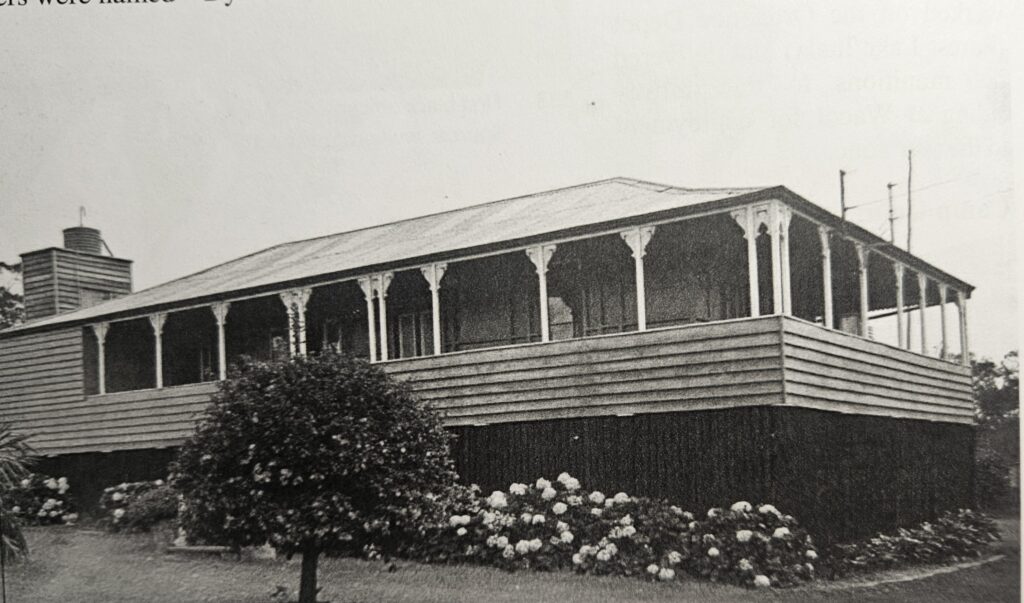
The Americans built a massive hospital; some buildings were weatherboard with asbestos roofs and there were also tents and 3 ply huts dotted around. The nurses used our house as their communal area. Dad and I would go over every few weeks to tidy up our block. I remember the nurses liked to sprawl out and sunbake around the garden. But they didn’t know about the green ants, and we often hear squeals when they were bitten.
But really, we didn’t have much to do with the Americans. I’d ride up to the American PX — where the remand centre is now — to buy Coke (which was new and not generally available at the time). I was taken to the American hospital once, when I had a really deep cut from barbed wire.
We saw some American films at Camp Columbia — on a big outdoor screen — over in the section across Ipswich Road. We’d walk over with the Macs and sit on a log in the bush in the back. I remember Mrs Mac did washing for some of the Americans, so maybe they invited her.
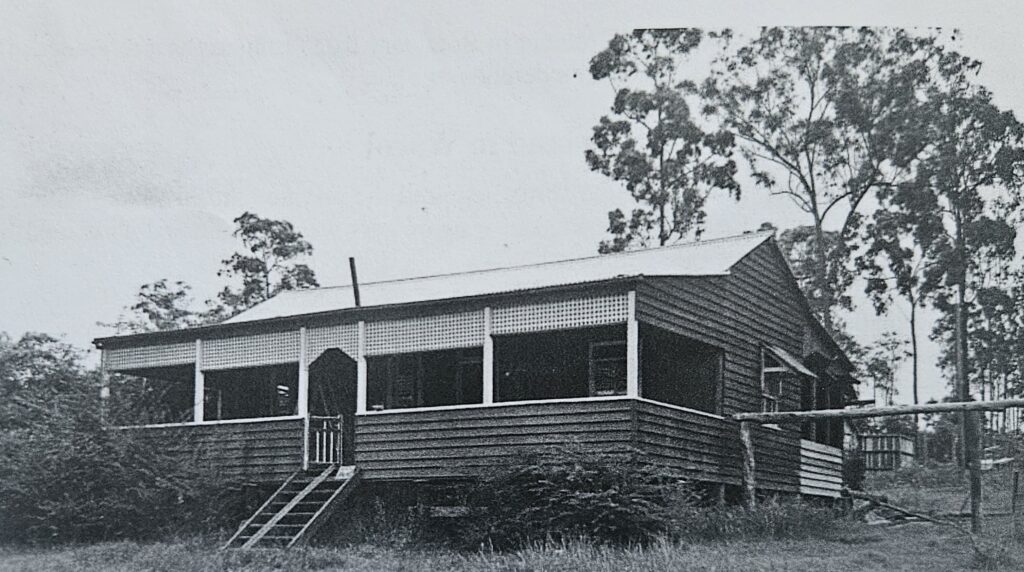
The Americans gravelled the bush track from Grindle Road up the back of the “mountain” and called it “Eleanor Terrace” after Mrs Roosevelt. It’s grown over now.
The railway sidings were unloading and loading bombs day and night. Hundreds were carted out along Grindle Road and were lined up in the Asylum corner paddock – where the DPI is now.
I got my first job in 1942 — in an electrical workshop at Archerfield Aerodrome. I’d ride my bike there every day. I was working for Australian National Airways, but most of our work was servicing planes for the Americans.
We’d sometimes see a US platoon en route march on local roads.
We went back to our own place in 1944, when the Americans left. But the government kept the back section of our land — they wanted to use the big building there for emergency housing. They gave us an equivalent area beside us (in 1951). But we never used it: we had sold off most of our stock, and from then dad only grew vegies for the family: he became a rose and dahlia crank.
These interviews are from the book: Wacol, Wolston, Woogaroo 1823-2014. Volume 2 Biographies & Interviews By Vicki Mynott. Richland, Inala and Suburbs History Group. Published with permission from the author.