
The words “Remember the Alamo” are among the most iconic in American history. They originated in 1836 during the Texas Revolution, following the defeat of Texian defenders at the Alamo mission in San Antonio. Although the battle itself was a military loss, it became a powerful rallying cry symbolising resolve, sacrifice, and determination in the face of overwhelming odds.
More than a century later, this symbolism resurfaced in a very different context: the Pacific War during World War II.
The designation Alamo Force was adopted by General Krueger during the period when Sixth Army headquarters was established in Australia, including its initial headquarters phase at Camp Columbia in early 1943. Although General Krueger was not living in San Antonio at the time, the name reflected both established U.S. Army tradition and his long-standing professional and personal association with Texas military culture and the symbolic legacy of the Alamo. Krueger later chose San Antonio as his place of retirement, reinforcing a connection that had already shaped his wartime command identity.
Alamo Force: A Code Name With Meaning
When the U.S. Sixth Army was activated in Brisbane in January 1943 under the command of Lieutenant General Walter Krueger, it operated under the code name Alamo Force. This designation appears consistently in wartime records and postwar histories of the Sixth Army’s operations in the Southwest Pacific.
Within the U.S. Army, such names were not chosen casually. Alamo Force evoked the moral legacy of the Alamo: endurance, determination, and willingness to operate under difficult and uncertain conditions. Under Krueger, the Sixth Army was tasked with translating General Douglas MacArthur’s strategy into operational reality, often across vast distances, harsh terrain, and with limited infrastructure.
Alamo Force was not a separate unit from Sixth Army. Rather, it was the operational designation used while Sixth Army functioned as MacArthur’s primary field army headquarters, particularly during early New Guinea operations and the broader Allied advance northward.
A Name That Endured: The Alamo Scouts
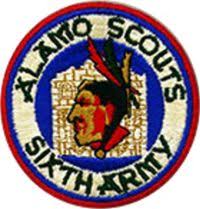
The Alamo designation gained further significance with the formation of the Alamo Scouts in late 1943. Established under Krueger’s authority, this elite reconnaissance unit was drawn from volunteers within Sixth Army formations.
The Scouts conducted deep reconnaissance missions behind Japanese lines in New Guinea and the Philippines, gathering intelligence critical to amphibious landings and ground operations. Their name directly reflected their parent formation, Alamo Force, and carried forward the symbolic association with persistence, risk, and disciplined initiative.
The Connection To Camp Columbia
The Alamo Force designation was already in use during the period when Sixth Army headquarters was established at Camp Columbia in early 1943. Camp Columbia therefore represents not only the physical location where Sixth Army’s command structure took shape in Australia, but also the point at which the Alamo Force identity was embedded in the Pacific campaign.
From Camp Columbia, Krueger and his staff planned and coordinated operations that would soon shift northward. As headquarters moved forward to New Guinea, the foundations laid in Brisbane continued to shape how Sixth Army and Alamo Force operated in the field.
Why “Remember the Alamo” Matters At Camp Columbia
For Camp Columbia, the phrase “Remember the Alamo” provides insight into the cultural and symbolic language used by the U.S. Army during the war. It demonstrates how an American historical reference was adapted to a global conflict and applied to an Allied command operating from Australia.
This link connects Camp Columbia to the broader story of the Pacific War, showing how decisions made at Wacol were part of a command culture grounded in discipline, resolve, and continuity with earlier military traditions. It reinforces Camp Columbia’s role not only as a place of tents and training, but as a site where strategic identity and operational purpose were forged.