
Introduction
During the Second World War, women’s military and auxiliary corps became an essential part of the Allied war effort. Across Australia, the United States, Britain, the Netherlands, and the Netherlands East Indies, women served in uniform in a wide range of non-combatant roles that were vital to military effectiveness. Brisbane, and in particular Camp Columbia and the surrounding staging camps, became one of the most important centres in Australia where American, Australian, and Dutch women served side by side.
The presence of Allied headquarters in Brisbane, including General Douglas MacArthur’s command for the South West Pacific Area, created a concentration of administrative, communications, intelligence, and logistics functions. Women of the American Women’s Army Corps (WAC), the Australian Women’s Army Service (AWAS), and Dutch and Netherlands East Indies women attached to the KNIL all played a key role in sustaining these operations. Camp Columbia and nearby camps such as Yeronga Park formed a unique environment in which women from different nations trained, worked, and lived alongside each other in support of the Allied campaign.
The role of the Women Army Corps (WACs)
During World War II many Allied countries had Women Army Corps (WACs).
The main tasks of the WACs were to serve in a variety of administrative, technical, and communication roles, allowing men to be deployed to combat roles. The roles of the WACs varied widely and included jobs such as clerks, typists, stenographers, radio operators, mechanics, drivers, nurses and supply personnel.
One of the main objectives of the WAC was to provide critical support to the war effort. The women who joined the WACs were trained and worked alongside male soldiers in a variety of support roles. They also had to undergo basic military training, including physical fitness and military customs and courtesies. In addition to their duties, WACs were also expected to conform to military standards of dress and conduct.
International Developments
The Brits had already a Corps during WWI and restated it during in 1941 under the name Auxiliary Territorial Service (ATS). The United States had the Women’s Army Corps (WAC), established in 1942 and the Australian Women’s Army Service (AWAS) was established in 1941.
In the Netherlands, the Women’s Auxiliary Corps (Vrijwillig Vrouwen Hulpkorps – VHK) was founded in 1939. The VHK was intended to enable women to play an active role in the defence of the Netherlands in the event of war. The VHK consisted of volunteers and the women received military training in first aid, communication, card reading and shooting. After the liberation, the VHK became part of the Royal Netherlands Army and was renamed the Women’s Auxiliary Corps of the Royal Netherlands Army (VHK-KL). However, the VHK-KL was disbanded in 1951.
Women’s Corps of the Royal Dutch East Indies Army (KNIL)
The predecessor of the Women’s Corps of the Royal Netherlands East Indies Army (KNIL) was formed on 30 September 1941, a few months before the Japanese troops invaded the Dutch East Indies in January 1942. The idea to set up a women’s corps came from Mrs. Van Mook, the wife of the then lieutenant-governor-general of the Netherlands East Indies (NEI). The purpose of the corps was identical to the tasks of its sister organisations.
The KNIL Women’s Corps consisted of about 300 women of different ages and different ethnic backgrounds, including Javanese, Ambonese and Dutch. The Corps only existed for a few months because of the Japanese occupation of the Dutch East Indies.
During the war, many of the women of the KNIL Corps continued their work and faced challenging circumstances, such as food and medicine shortages and the threat of Japanese attacks. Some were deployed as nurses in the prison camps where Allied soldiers were held by the Japanese.
Several women of the KNIL Corps took part in the guerrilla war against the Japanese occupation in the NEI. They helped in acts of sabotage and served as liaisons between different groups. They also gathered information about Japanese activities and positions. This information was passed on to Netherland Forces Intelligence Service (NEFIS).
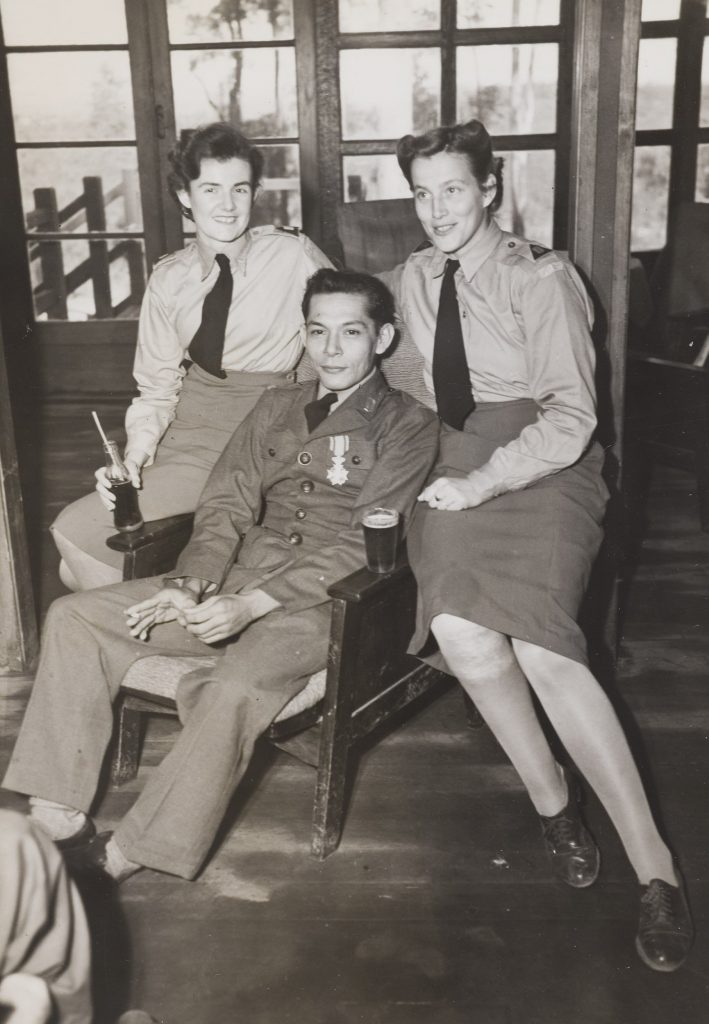
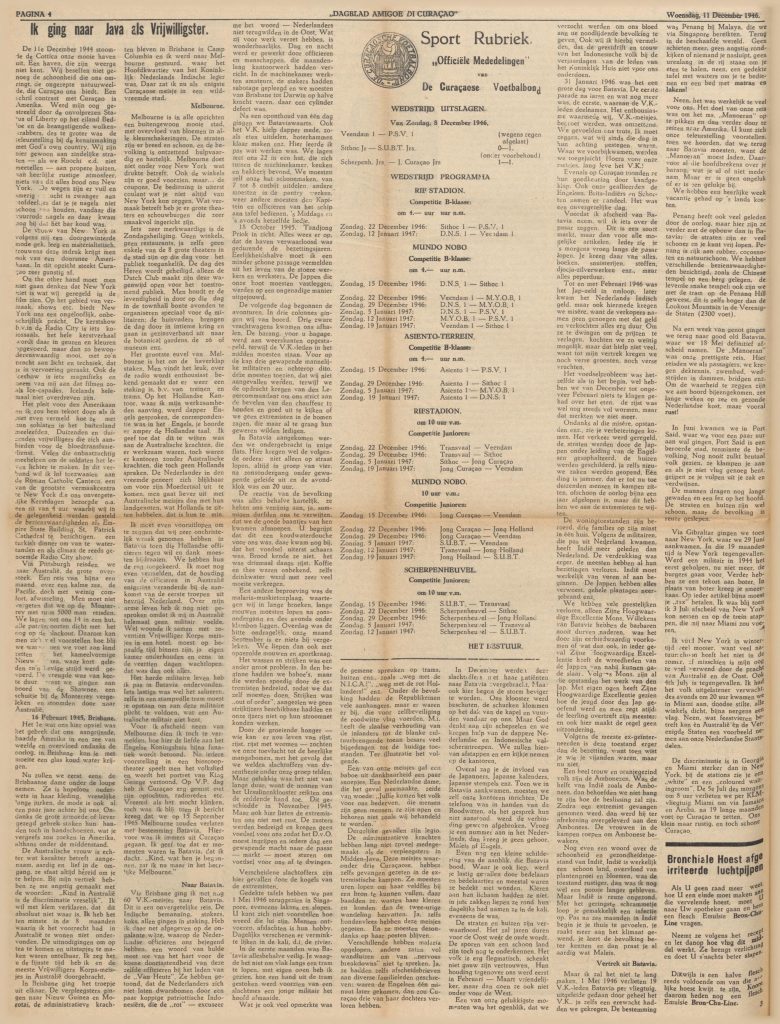
Several women of the KNIL Corps managed to escape the Japanese occupation and joined the Allied forces in Asia. They served in a variety of capacities, including as nurses and as communications and intelligence officers. Some of these women were later evacuated to Australia, where they were reunited with other Dutch forces stationed there. Here they work together with the American WAC. The Dutch and East Indies women were known here as the Dutch WAC.
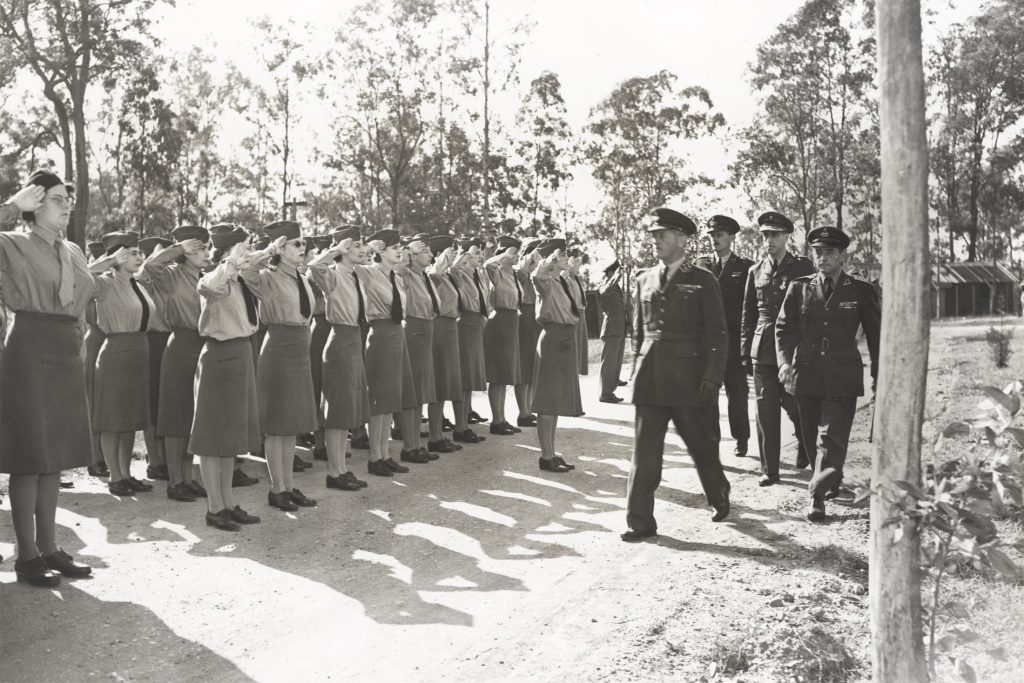
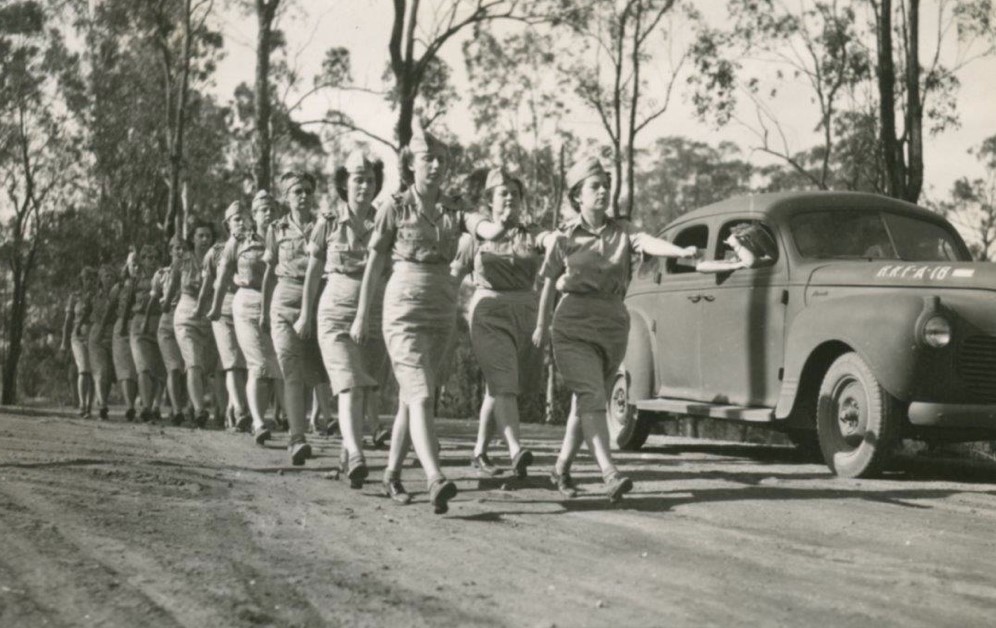
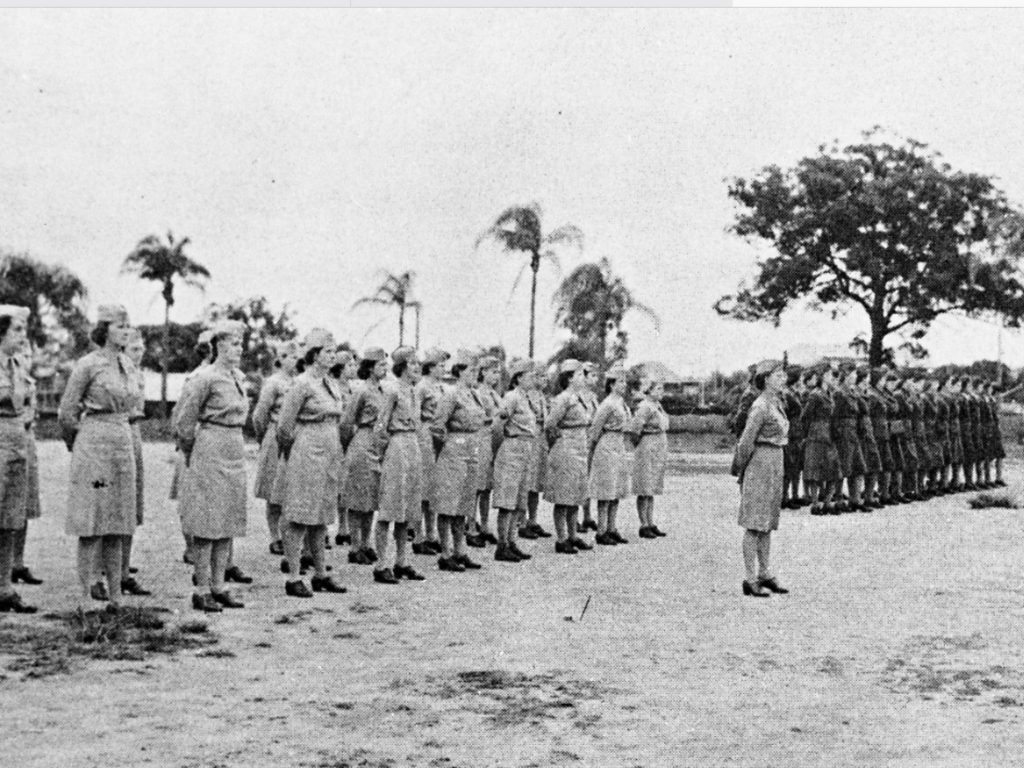
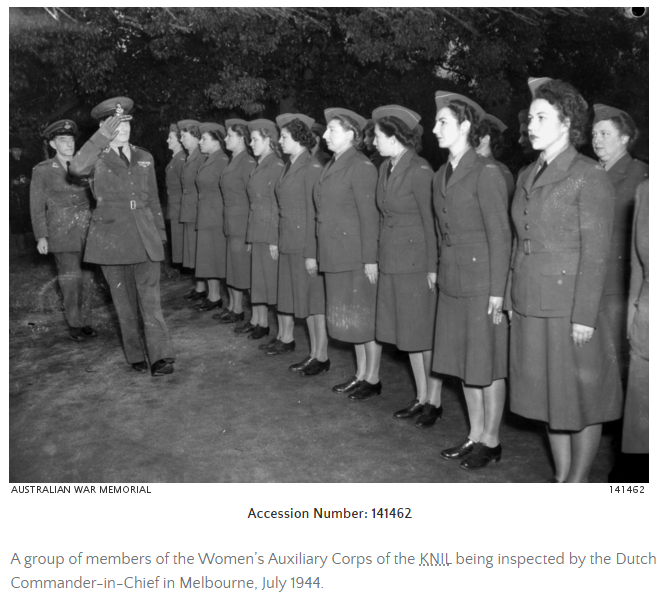
The Dutch WAC in Australia
The Australian-based Women’s Corps of the Royal Netherlands East Indies Army (VK-KNIL) was formally established in Melbourne on 5 March 1944 as part of the Netherlands East Indies government-in-exile. Its purpose was to provide trained women for non-combatant military service, allowing Dutch and Indonesian men to be released for operational duties. From its establishment until late 1945, approximately 225 VK-KNIL women served in Australia.
Although founded in Melbourne, the practical centre of VK-KNIL activity in Australia was Brisbane. Camp Columbia at Wacol became the principal training, administrative, and deployment hub for Dutch women in service. Recruitment drew on women already living in Australia, including refugees from the Netherlands East Indies who had arrived with their families in 1942, as well as women from Western Australia and other states. Some women from Dutch territories in the Caribbean were also recruited through the government-in-exile.
Training initially took place at several locations but was progressively centralised at Camp Columbia. VK-KNIL members received non-combatant military instruction, including drill, marching, saluting, discipline, and rank formation. Commands were issued in Dutch, which presented challenges for recruits from different linguistic backgrounds. Training was supplemented by skills-based instruction preparing women for administrative, medical, communications, welfare, and logistical roles. Some VK-KNIL members trained and worked alongside American WAC personnel, particularly at Camp Yeronga Park, which formed part of the wider Brisbane staging area.
Most VK-KNIL women in Australia were deployed at Camp Columbia, where they performed a wide range of duties. These included clerical and administrative work, medical and welfare services, communications support, and liaison functions between Dutch and Allied units. The concentration of Dutch military, governmental, and intelligence organisations at Camp Columbia created an ongoing demand for skilled female personnel, and shortages of staff meant that women were rapidly absorbed into essential roles.
From September 1945, VK-KNIL members began leaving Australia by air for service in the Netherlands East Indies. Many were assigned to organisations such as RAPWI and the Office for Displaced Persons, assisting former prisoners of war and civilian internees by gathering information on camps and supporting family reunification and recovery efforts. The experience gained in Australia, and particularly at Camp Columbia, formed the foundation for their later post-war service in Java, Sumatra, New Guinea, and other locations.
The VK-KNIL remained in existence until the dissolution of the KNIL in July 1950. While many women returned to the Netherlands, others migrated to Australia or elsewhere. Their contribution has long been underrepresented in post-war histories, despite the essential role they played in sustaining Dutch military and administrative operations in exile and in the immediate post-war period.
The American WACs in Brisbane
After the bombing of Pearl Harbour, the Americans joined the Allied Forces in WWII. In early 1942, General Douglas MacArthur set up his head office for the liberation of the South West Pacific in Brisbane, where he also established his staging camp, Camp Columbia.
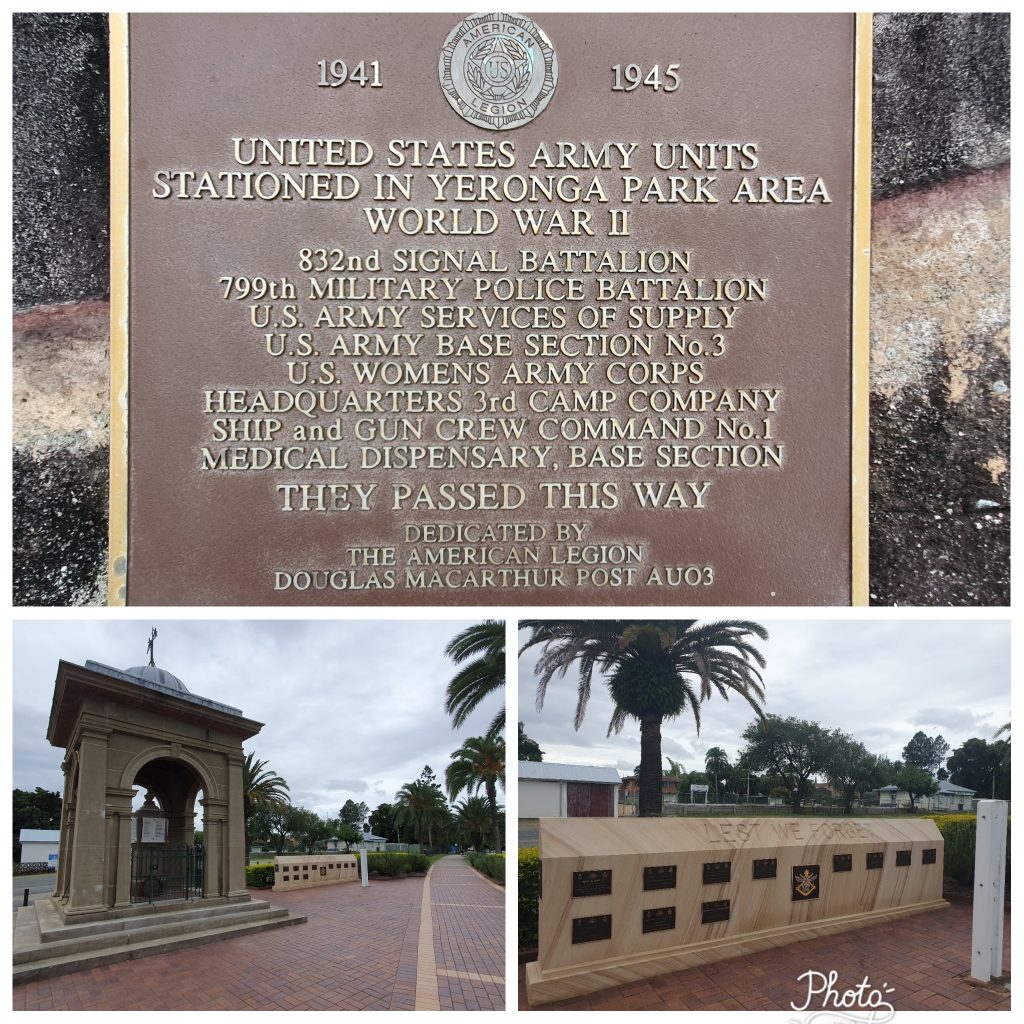
The American facilities stretched over a very large part of south west Brisbane. The American WACs were also involved in this war effort and the US Army had chosen Yeronga Park for a military camp in 1942.
Camp Yeronga Park was part of the wider area of the staging camp and housed a variety of units including, military police, 99th Signal Battalion and the United States Army Services of Supply. The latter also enlisted women from its Women’s Army Corps (WAC).
In September 1944, Dutch and NEI members of the Women’s KNIL Corps joined the Americans at their at Camp Yeronga Park. By that time Camp Columbia was taken over by the Dutch Forces and hosted the NEI Government-in-Exile.
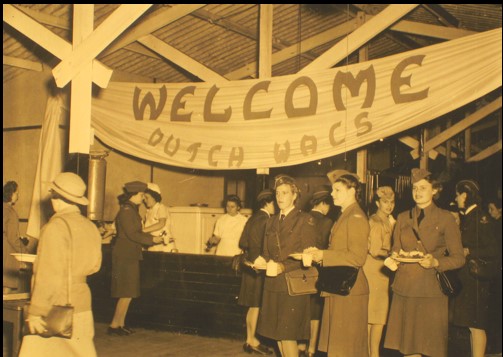
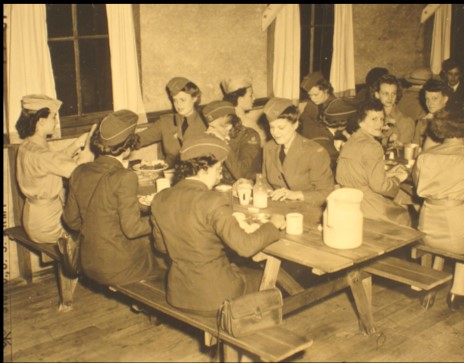
They trained at Yeronga – often together with the American WACs. The American ladies hosted a Welcome Lunch for the Dutchies on 26 September 1944.
Yeronga Memorial Park
Plans for a Memorial for the Dutch and KNIL women has so far failed because of lack of funding. See: Plans for a Memorial for the Dutch WACs
Paul Budde (Update December 2025)
Personal stories from the Women Army Corps – trained at Camp Columbia
n exile but not passive: the Dutch women’s Vrouwenkorps in Fremantle