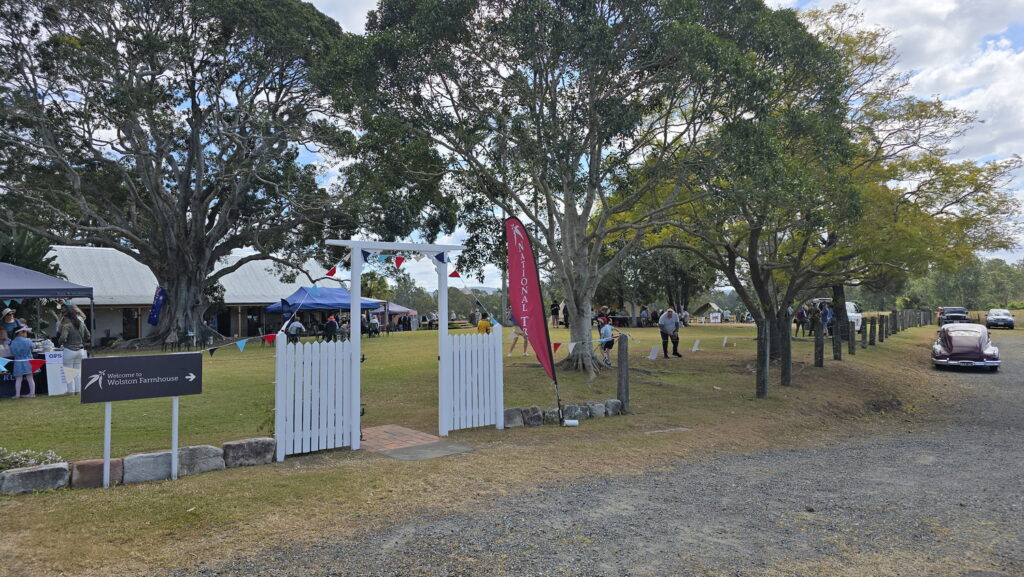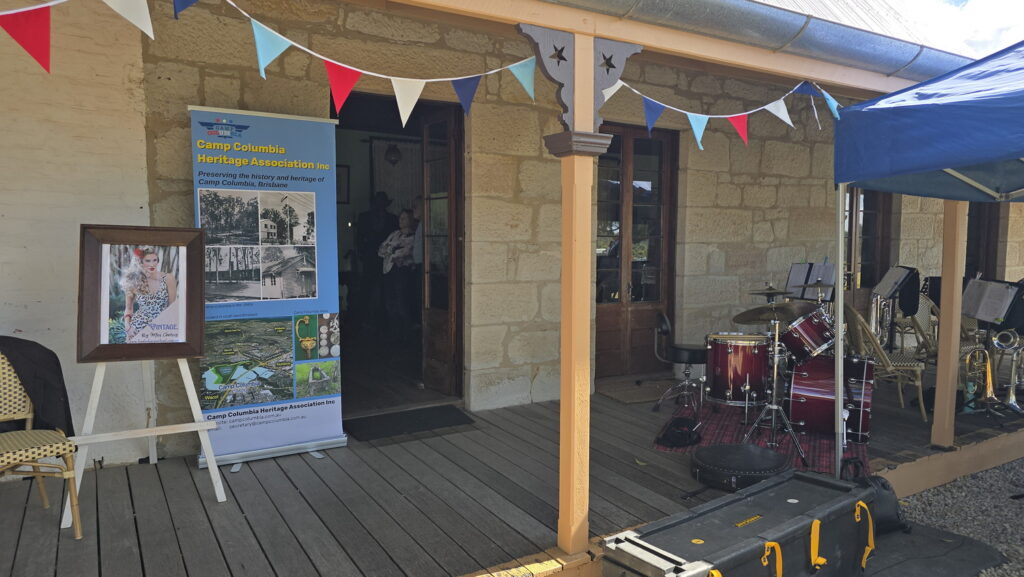
The Camp Columbia Heritage Association’s participation in the Home Front Festival at Wolston Farmhouse on Sunday 16 August 2026 attracted strong interest from visitors and the local community.
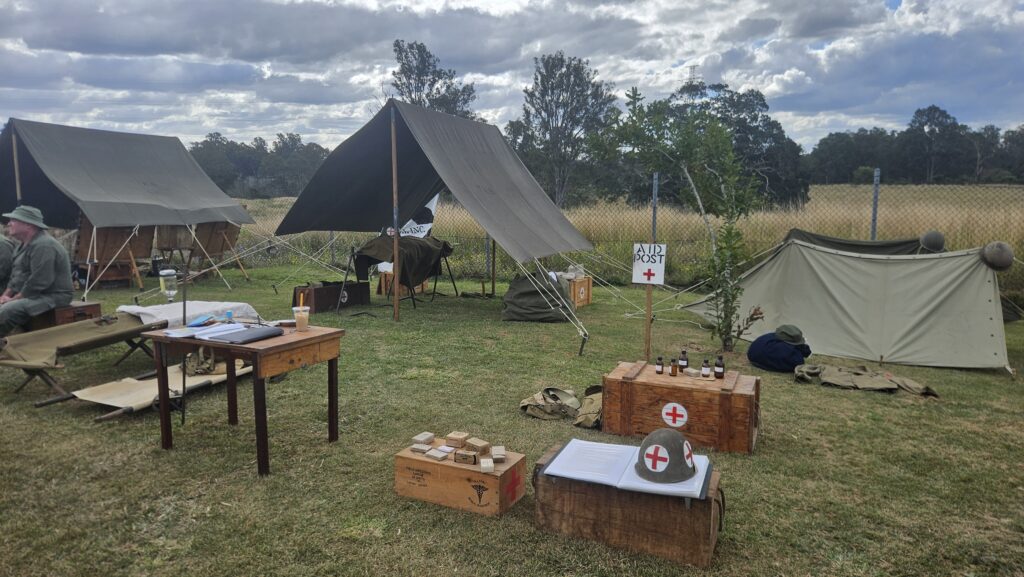
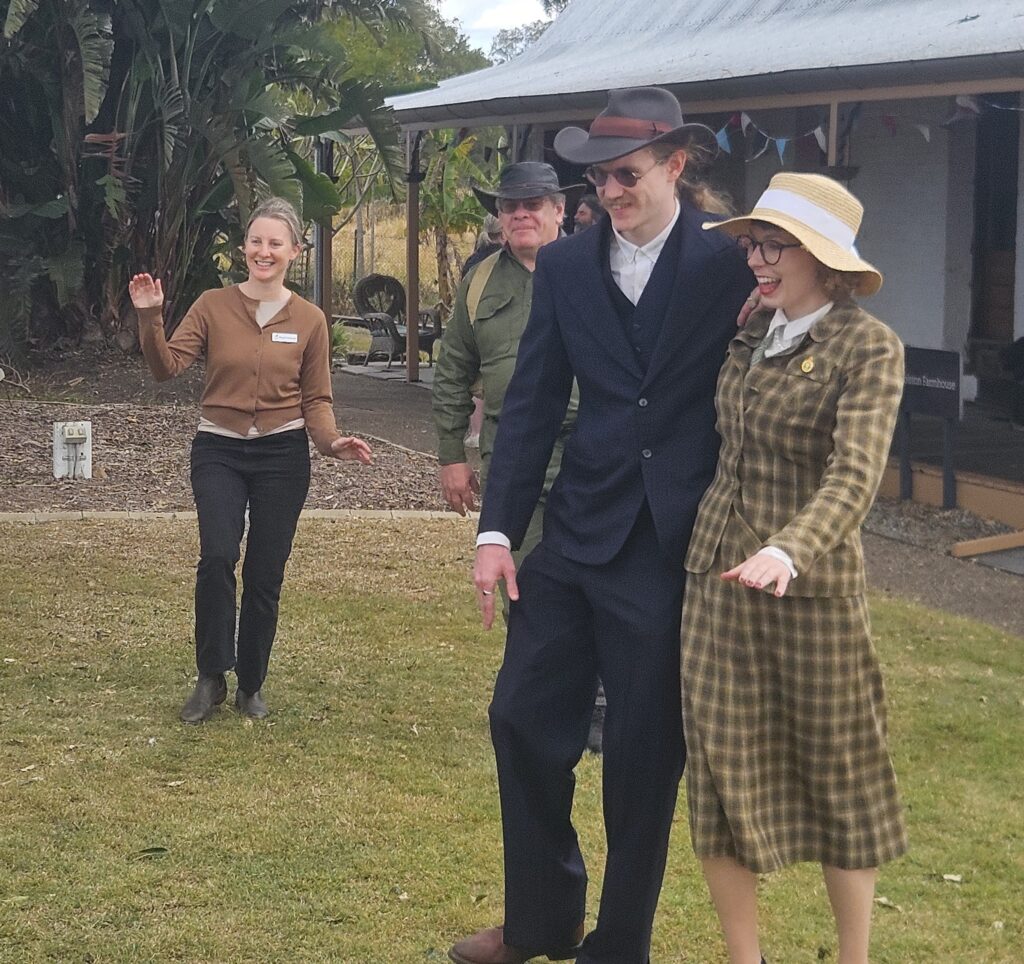
Presented by the National Trust of Australia (Queensland) in partnership with CCHA, the festival commemorated Victory in the Pacific Day and brought Brisbane’s wartime Home Front to life through historical displays, military and civilian re-enactors, 1940s music and dancing, vintage vehicles, heritage demonstrations and family activities.
A successful Camp Columbia exhibition
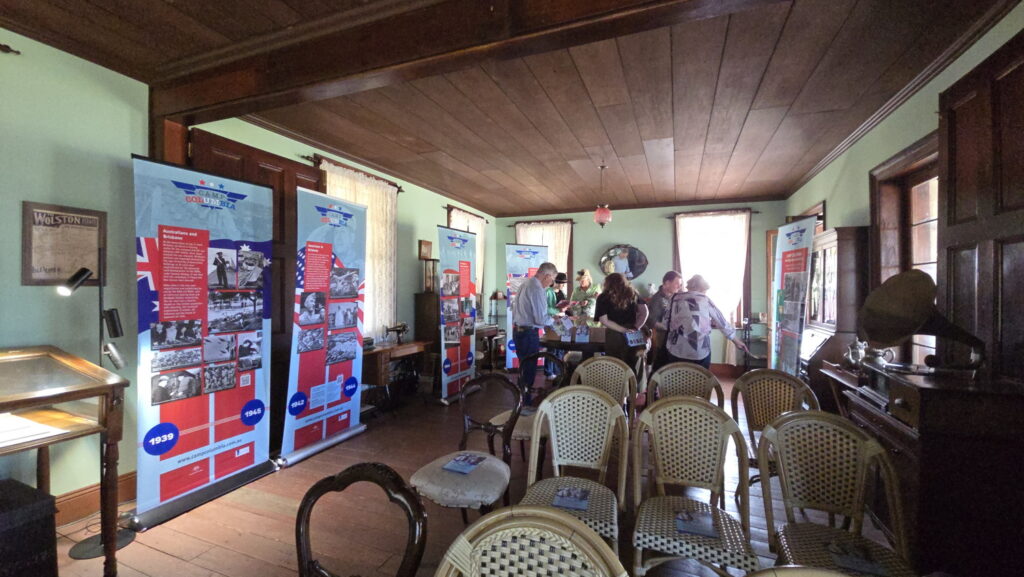
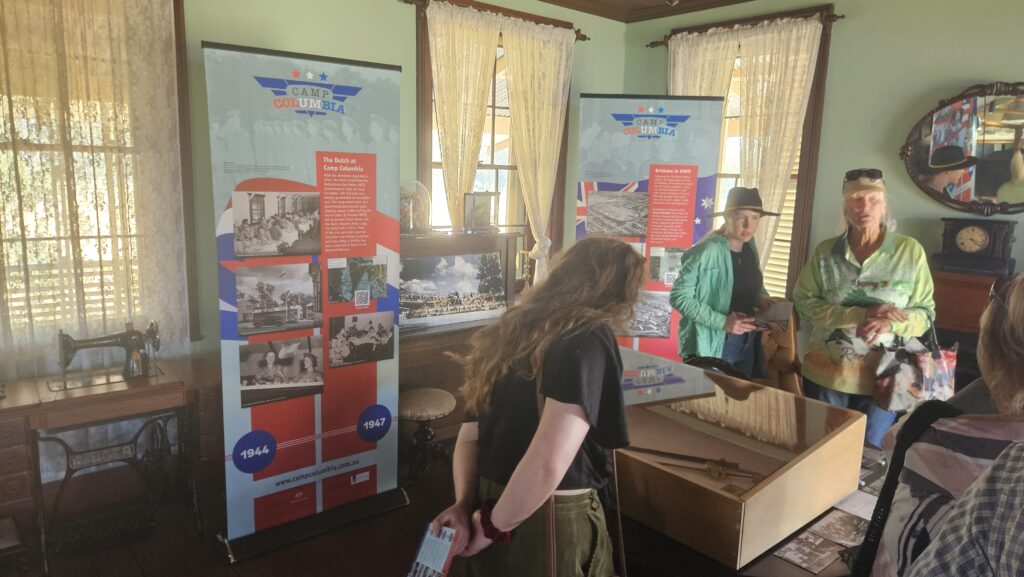
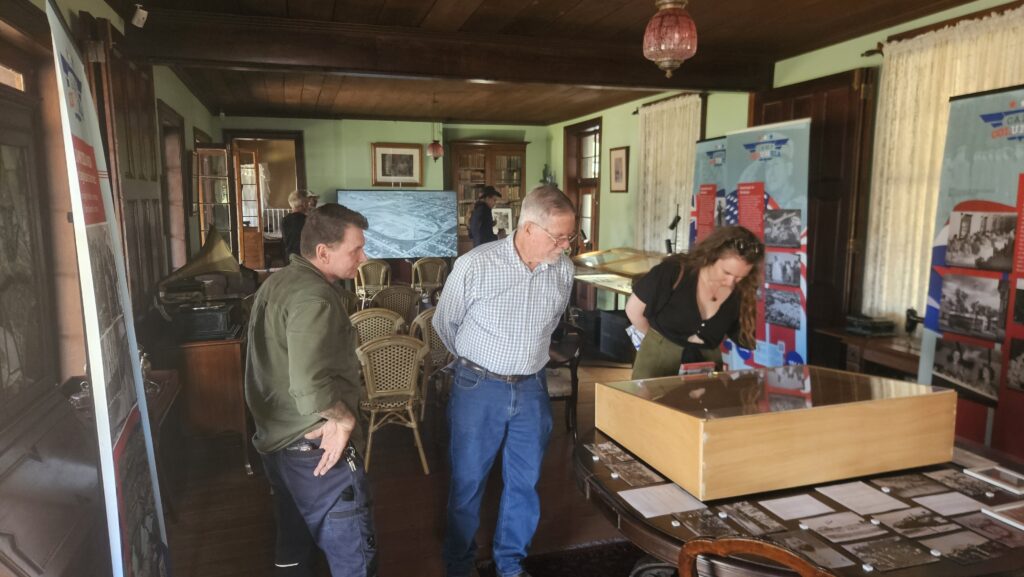
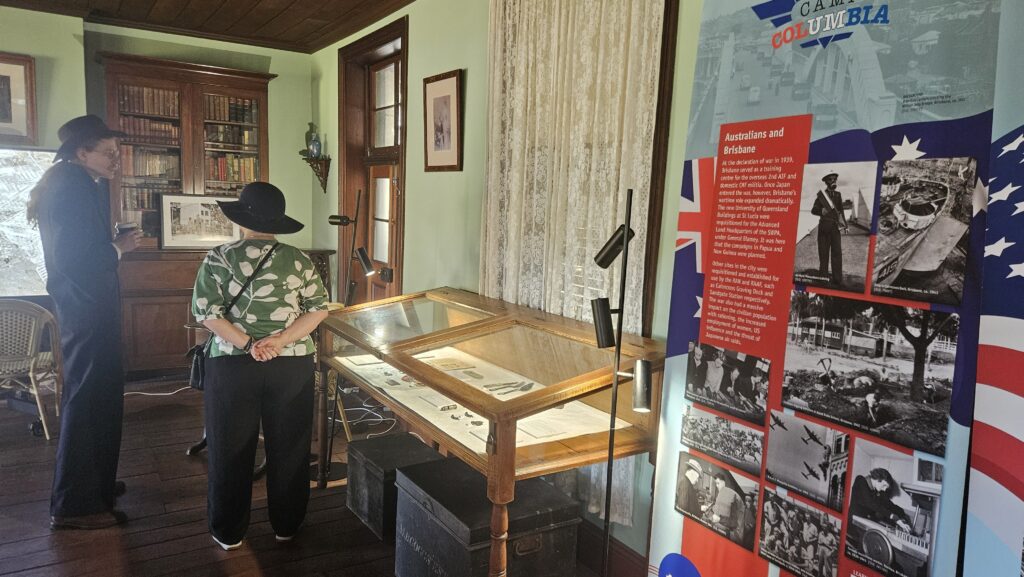
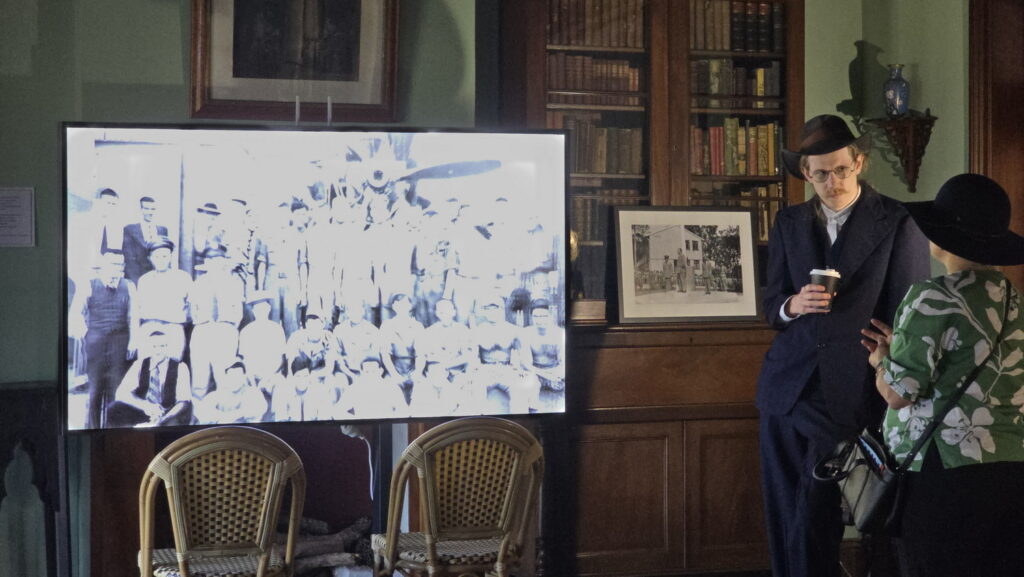
Throughout the day, visitors passed continuously through the CCHA exhibition, which presented the history of Camp Columbia through illustrated banners, historical photographs and original artefacts.
The exhibition explained how the extensive military complex across Brisbane’s south-west was initially developed for the United States Army and included the headquarters of the US Sixth Army. It later became the principal base of the Netherlands East Indies Government-in-Exile from 1944 to 1946.
Visitors also learned how parts of the former military complex were subsequently incorporated into the Wacol Migrant Centre, where thousands of post-war migrants began their new lives in Australia.
The ceremonial sword associated with Camp Columbia was a particular highlight. Displayed alongside other historical material, it provided visitors with a tangible connection to the people who served and worked at the camp.
Presentations attract strong audiences
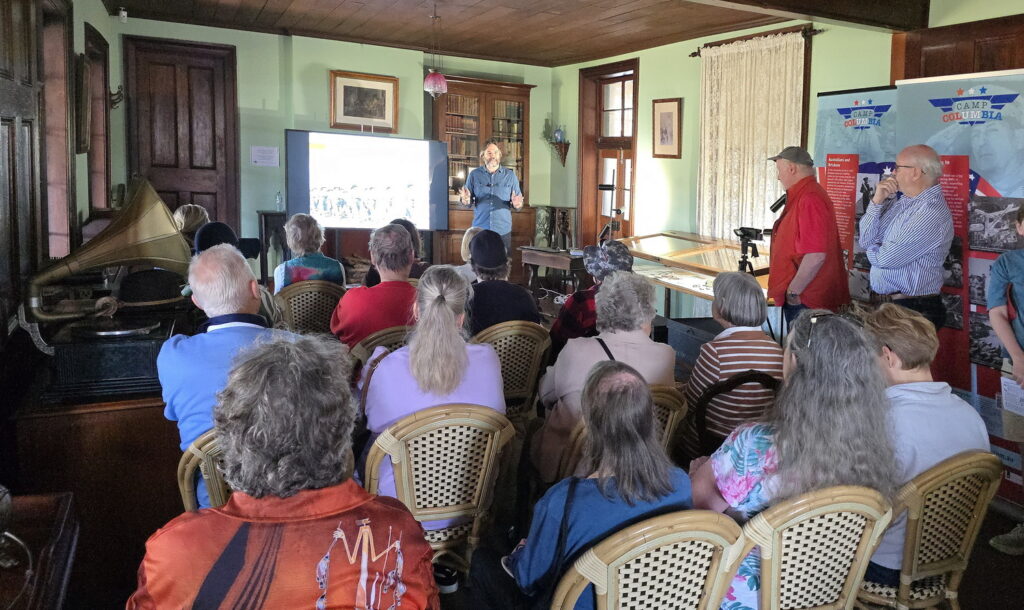
The two Camp Columbia presentations in the parlour of Wolston Farmhouse were also well received.
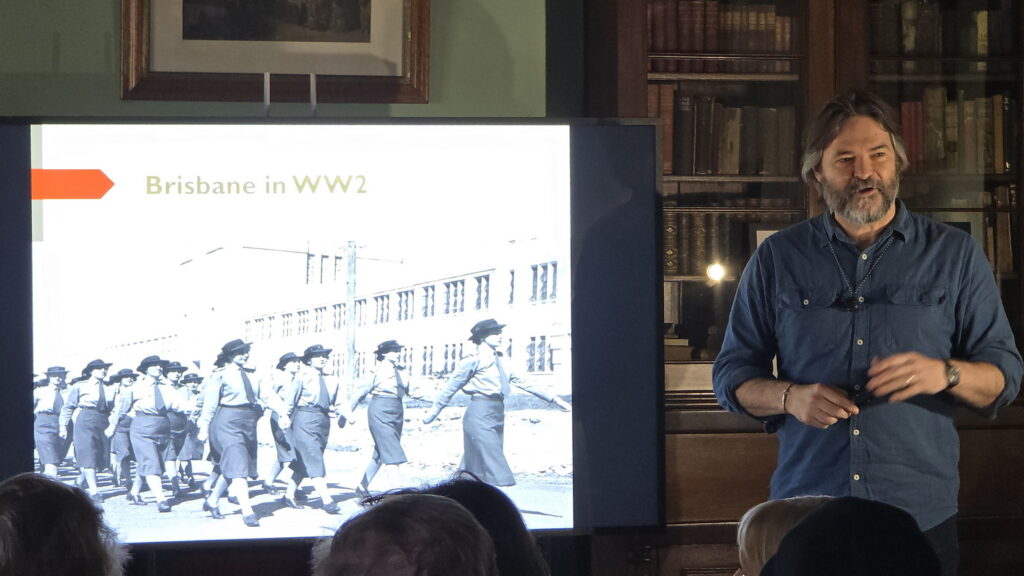
Associate Professor Geoff Ginn of the University of Queensland placed Camp Columbia within the broader history of wartime Brisbane and its role as Australia’s Allied Capital. He also discussed the developing partnership between the University of Queensland and CCHA, including opportunities for historical and archaeological research.
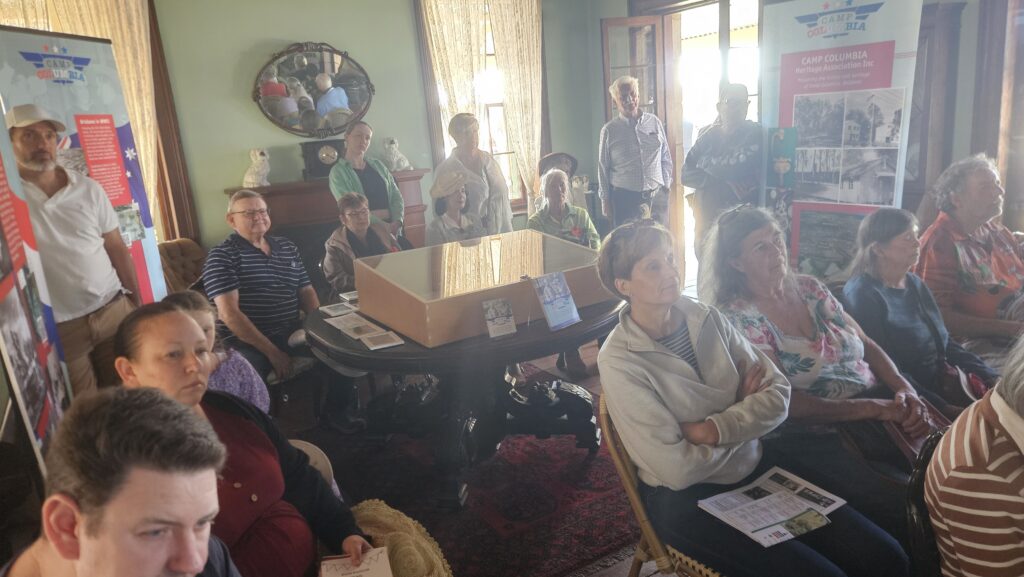
CCHA Chair Paul Budde presented the story of Camp Columbia and explained why the former military complex occupies an important place in the wartime histories of Australia, the United States, the Netherlands and Indonesia. The first presentation attracted a capacity audience, with standing room only.
The strong attendance demonstrated the growing public interest in Camp Columbia and the wider wartime history of Brisbane’s south-west.
See: Presentation Associate Professor Geoff Ginn of the University of Queensland.
Local knowledge adds to the historical record
One of the most valuable outcomes of the festival was the opportunity to speak with local residents who had personal or family connections with the area.
Throughout the day, visitors shared recollections, family stories and information about former military sites and the later Wacol Migrant Centre. Several of these conversations may provide new leads for CCHA’s continuing research.
This local knowledge is particularly important because much of the Camp Columbia landscape has disappeared beneath later residential, industrial and institutional development. Personal memories, family photographs and documents can help identify former locations and reveal how the area changed during and after the war.
CCHA will follow up the information received and, where possible, incorporate it into the developing historical record of Camp Columbia.
A partnership for the future
The festival was also an important early public outcome of the Memorandum of Understanding between CCHA and the National Trust of Australia (Queensland).
Together with the University of Queensland, the organisations are developing a long-term program of exhibitions, historical research, archaeology, education and public engagement focused on Camp Columbia and the wider Wolston–Wacol wartime landscape.
The success of the exhibition, the strong attendance at the presentations and the many conversations with local residents demonstrated the value of bringing this history back into the community where it occurred.
CCHA thanks the National Trust of Australia (Queensland), the staff and volunteers at Wolston Farmhouse, Associate Professor Geoff Ginn, the exhibitors and re-enactors, and everyone who visited the Camp Columbia exhibition or contributed information during the festival.
The Home Front Festival showed that Camp Columbia is not only an important part of Brisbane’s wartime past. Its history continues to live in the memories, family collections and local knowledge of the communities that developed around the former camp.
Video and Photo Gallery
Video podcast produced by Peter Rasey.
Photos by Paul Budde
For more short videos click here