Australia

Aboriginal lives at Wacol: housing, assimilation and the post-war legacy of Camp Columbia

Aboriginal presence, war and the reuse of the Camp Columbia landscape Long before the establishment of Camp Columbia during the Second World War, Aboriginal people lived in and moved through the Wacol–Goodna area for thousands of years. While there are no confirmed archaeological records of permanent campsites or ceremonial grounds on the specific site later […]

Aboriginal lives at Wacol: housing, assimilation and the post-war legacy of Camp Columbia Read More »
Air Chief Marshal Charles Burnett and Australia’s engagement with Dutch intelligence, 1941–1944

In the final months before the Pacific War reached Australia, the Netherlands East Indies emerged as a crucial source of intelligence on Japanese intentions. One of the senior Australian officers directly involved in receiving and assessing this information was Charles Burnett, Chief of the Air Staff of the Royal Australian Air Force. Burnett’s role places

Air Chief Marshal Charles Burnett and Australia’s engagement with Dutch intelligence, 1941–1944 Read More »

Aunty Theresa Williams and Wacol: Aboriginal oral history from the migration camp

When Aboriginal elder Aunty Theresa Williams opened the Camp Columbia WWII Symposium in August 2025, she spoke not only as a Traditional Custodian welcoming participants to Country, but also as someone with a personal connection to Wacol. In her remarks, she recalled that she and her family lived for a period at the Wacol migration

Aunty Theresa Williams and Wacol: Aboriginal oral history from the migration camp Read More »

Archerfield Memories

This document provides a first-hand civilian account of Brisbane’s wartime aviation environment during the Second World War and the immediate post-war years, as experienced at Archerfield Aerodrome. It reflects the strongly international character of Brisbane at the time, shaped by the presence of American, Australian, Dutch, and Netherlands East Indies personnel operating within a shared

Archerfield Memories Read More »

Camp Columbia and Base Section 3: Brisbane in the Allied logistics system

When Allied forces expanded rapidly across the Pacific following the Japanese attacks of December 1941, Australia was transformed almost overnight from a distant imperial outpost into a central rear-area base for a global war. The scale of the challenge was unprecedented. Large numbers of Allied troops, particularly from the United States, began arriving in Australia

Camp Columbia and Base Section 3: Brisbane in the Allied logistics system Read More »

Camp Columbia and the U.S. Sixth Army: A Signal Officer’s First-Hand Account

This paper draws on the autobiography of Lt. Mark Twain Muller, a U.S. Army Signal Officer assigned to Base Section 3, to illuminate the operational and Allied significance of Camp Columbia, located west of Brisbane, during the critical early years of the Pacific War. Muller’s first-hand account provides rare insight into the establishment of Camp

Camp Columbia and the U.S. Sixth Army: A Signal Officer’s First-Hand Account Read More »

The Dutch Women Army Corps in Brisbane

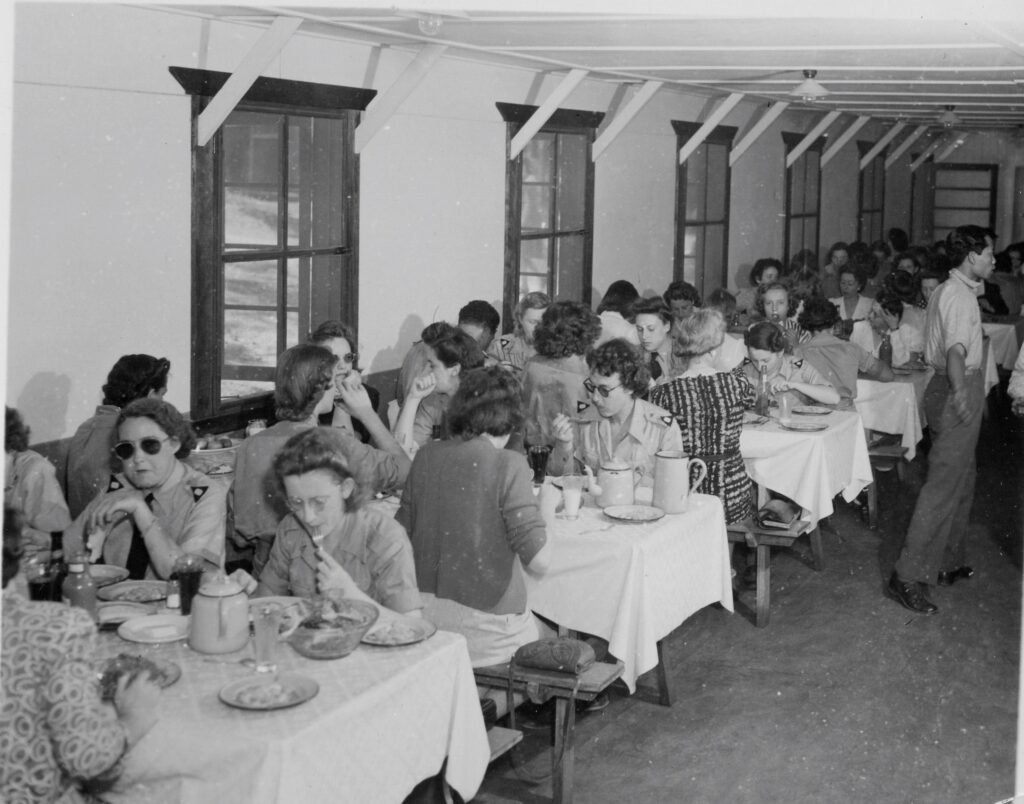
Introduction During the Second World War, women’s military and auxiliary corps became an essential part of the Allied war effort. Across Australia, the United States, Britain, the Netherlands, and the Netherlands East Indies, women served in uniform in a wide range of non-combatant roles that were vital to military effectiveness. Brisbane, and in particular Camp

The Dutch Women Army Corps in Brisbane Read More »

Elva Mary Bennett, Gerk van der Land and a family at war

This article is based on personal documents, military records and a recorded wartime interview provided by Elva Mary Bennett’s son, Russ Morison, together with supporting Australian and Dutch archival sources. The wartime history of the Bennett–van der Land–Morison family connects Australia, the Netherlands, the Netherlands East Indies, Burma and the Middle East. It is a

Elva Mary Bennett, Gerk van der Land and a family at war Read More »

Reunited at Camp Columbia and married in Brisbane: the wartime journey of Jack and Truus Hompe

This article is an English abstract of the two-part Dutch biography of Jack and Truus Hompe, published on IndischHistorisch.nl and based on Louise Hompe’s family chronicle Uitgestelde huwelijksnacht. Their story shows how the Netherlands, Australia and the Netherlands East Indies intersected during the final phase of the Second World War. Early background and wartime separation

Reunited at Camp Columbia and married in Brisbane: the wartime journey of Jack and Truus Hompe Read More »

New Zealand and Brisbane during the Second World War: a limited intelligence connection

When Brisbane became the headquarters of General Douglas MacArthur’s South West Pacific Area (SWPA) in 1942, it developed into one of the key Allied centres in the Pacific War. The United States, Australia and the Netherlands East Indies formed the principal military and administrative presence in the city. New Zealand, operating mainly under the separate

New Zealand and Brisbane during the Second World War: a limited intelligence connection Read More »

The Americans in Brisbane

Between 1942 and 1944, Brisbane hosted one of the most significant concentrations of U.S. military personnel in the Pacific Theatre. Central to this presence was Camp Columbia at Wacol—home to 5,000 troops and headquarters for the U.S. Sixth Army under Lt. Gen. Walter Krueger. From here, key campaigns across New Guinea and the Philippines were

The Americans in Brisbane Read More »

Brisbane at war

When Japan’s attack on Pearl Harbor in December 1941 expanded the war into the Pacific, Brisbane was thrust into the frontline of Allied operations. By 1942, after the bombing of Darwin and growing fears of Japanese invasion, Brisbane became a critical military hub in the South West Pacific. The city transformed rapidly—civilians were evacuated from

Brisbane at war Read More »

Overlooked outpost: Brisbane and Camp Columbia in American WWII literature

Even in Brisbane, the global importance of the city’s role during World War II is largely unknown. Yes, most people are aware that large numbers of American troops were stationed here, and many will recall the so-called “Battle of Brisbane”—but for most, that’s the extent of their knowledge of Brisbane’s wartime significance. As I delved

Overlooked outpost: Brisbane and Camp Columbia in American WWII literature Read More »

Scroll to Top