
Introduction
The wartime story of Jack and Truus Hompe provides a remarkable personal connection between the Netherlands, Camp Columbia in Brisbane and the return of Dutch and Netherlands Indies personnel to the archipelago in 1945.
Jack was an Indo-European civil administrator who had spent the war in the Netherlands. Truus followed him into military service through the Women’s Corps of the Royal Netherlands East Indies Army (VK-KNIL). Their separate wartime journeys brought them to Australia, where they were reunited at Camp Columbia and married in Brisbane before being deployed north.
Their subsequent experiences in North Celebes show what happened when personnel who had passed through wartime Australia encountered the dramatically changed political conditions of the Netherlands East Indies after Japan’s surrender.
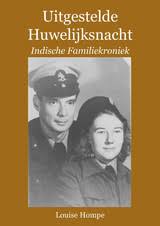
This article is an English summary of the two-part Dutch biography of Jack and Truus Hompe published by IndischHistorisch.nl, based on Louise Hompe’s family chronicle Uitgestelde huwelijksnacht.
Early background and wartime separation
Jack Hompe (born Batavia, 1917) came from a long-established Indo-European family in the Netherlands Indies. His grandfather, Jacobus Hendricus Hompe, left for the Indies in 1884, and Jack’s father, Willem Eduard, became a civil servant after being raised in the Vincentius orphanage in Batavia. Jack was one of six children.
His education prepared him for service in the colonial administration. After attending the brothers’ boarding school in Ambawara and the Canisius College in Batavia, he was one of only seventeen Indo-European boys selected in 1937 to study Indology at the Rijksuniversiteit Utrecht. The program, partly supported by Dutch commercial interests, trained future officials for the Binnenlands Bestuur (Netherlands Indies civil administration). His upbringing, language abilities and social formation matched the expectations for such work.
During the war his entire family was interned by the Japanese; his father died in 1944 when the ship Junyo Maru was torpedoed. Jack remained in the Netherlands, completing his studies before the university was closed.
Mobilisation and reunion in Queensland
After working in Den Bosch and Breda, Jack was called up on 15 March 1945 for service in the Netherlands East Indies as an officier voor speciale diensten (officer for special duties). His training made him urgently needed in the restoration of civil authority after Japanese occupation.
Truus Hoyinck, whom Jack had met during his civilian employment, joined the Vrouwenkorps (Women’s Corps of the KNIL) with the rank of sergeant-major in order to follow him. As a medical analyst she was assigned to the medical service.
Jack travelled ahead, and the couple met again at Camp Columbia in Brisbane at the end of July 1945. They married there in the Catholic church. Camp Columbia had become the principal concentration of Netherlands Indies government and military organisations in Australia. For Jack and Truus it also became a place of personal reunion: after years of wartime uncertainty, they were finally together again and married in Brisbane before their deployment north.
Camp Columbia and NICA mobilisation
When Jack and Truus arrived in Brisbane in 1945, Camp Columbia was headquarters to several Netherlands Indies government and military organisations preparing for the return north.
Among them was the Netherlands Indies Civil Administration (NICA), which was responsible for restoring civil administration in territories recovered from Japanese occupation. Camp Columbia served as NICA’s headquarters and as an important preparation and staging base from which personnel could be organised and dispatched into the operational area.
Jack’s background made him particularly suited to this work. He had studied Indology in Utrecht in preparation for a career in the Netherlands Indies civil administration and had been called up in March 1945 as an officier voor speciale diensten.
The family account does not establish that Jack undertook a formal NICA training course at Camp Columbia, and it would therefore be misleading to describe Wacol as the place where he was trained. What can be established is that he passed through Camp Columbia during the period when NICA personnel were being assembled and deployed northwards.
His subsequent journey provides a personal example of that movement. From Australia he travelled to Hollandia in Netherlands New Guinea and then to North Celebes, where he worked alongside Australian forces, KNIL personnel and NICA officials during the difficult transition following Japan’s surrender.
Truus followed later as a medical specialist, joining him in Manado in December 1945.
Arrival under Australian authority
After their marriage in Brisbane, Jack travelled north to Hollandia in Netherlands New Guinea, where he witnessed the Japanese capitulation. He subsequently continued to North Celebes, arriving at Manado with Australian troops, Sangirese KNIL soldiers and NICA personnel.
The situation they encountered illustrates how different the reality was from the administrative preparations made in Australia.
Following Japan’s surrender, Australian forces assumed responsibility for accepting the Japanese surrender and maintaining order in the region. Dutch and NICA personnel returned within this Allied military framework rather than simply resuming the pre-war administration.
Jack served as a liaison officer between the Dutch and Australian military authorities during this transitional period. His civil-administration background and language skills made him well suited to working between the different organisations.
For Jack, the journey from Camp Columbia to Hollandia and Manado therefore represented more than a geographical return to the Netherlands East Indies. It marked the transition from preparations made in wartime Australia to the complicated political and administrative conditions confronting Dutch personnel on their return.
Truus Hompe in the Minahassa
Truus joined Jack in Manado in December 1945.
As Medical Supply Officer, she was responsible for distributing medicines and relief supplies to Catholic, Protestant and government hospitals and schools throughout the Minahassa. Her work involved extensive travel by jeep and supply vehicles across the region.
Her experience provides a useful personal example of the practical work required as wartime administration gave way to postwar recovery. Medical supplies had to reach communities whose health services and infrastructure had been severely disrupted by occupation and war.
At the same time, Truus encountered growing shortages and political unrest. The Netherlands Indies to which she and Jack had returned was no longer the society Dutch authorities had expected simply to restore after Japan’s defeat.
Their experiences increasingly became part of a new story: not the Allied war against Japan, but the struggle over Indonesia’s political future.
Political tensions, uprising and internment
The political environment confronting Jack and Truus was very different from the one Dutch authorities had anticipated while preparing for the return from Australia.
Indonesian independence had been proclaimed on 17 August 1945, and the reappearance of NICA and other Dutch authorities was increasingly associated with an attempt to restore colonial rule. Attitudes varied considerably between regions and communities, but the return of Dutch administration took place in an increasingly contested political environment.
Australian connections also formed part of this changing atmosphere. Indonesian KNIL personnel who had spent the war in Australia returned with new experiences and expectations, including concerns about differences in pay and treatment. News of Australian maritime workers refusing to load Dutch ships carrying personnel and supplies to Indonesia also became known in the archipelago and provided visible evidence of Australian support for Indonesian independence.
In North Celebes these broader tensions combined with local military grievances. Indonesian non-commissioned officers (onderofficieren) challenged Dutch authority, with disputes over pay, treatment and control of supplies contributing to an uprising.
Jack was among the Dutch officers and administrators detained in the Menado barracks during the unrest.
Truus was not interned. She continued working under increasingly difficult conditions, helping maintain supplies and travelling with Red Cross markings while Jack and other Dutch personnel were being held.
As the situation deteriorated, Jack and Truus were eventually evacuated by boat to Morotai. After a period there, they returned to North Celebes and resumed their duties.
Their experience demonstrates how quickly the assumptions underlying wartime preparations at Camp Columbia had changed. Jack and Truus had travelled north expecting to assist with the restoration of government and essential services after Japanese occupation. Instead, they found themselves working within the emerging political and military struggle over Indonesia’s future.
A Dutch–Australian wartime pathway
The story of Jack and Truus Hompe provides an unusually personal view of the connections between Camp Columbia, Australia and the Netherlands East Indies during the final months of the Pacific War.
Their reunion and marriage in Brisbane, Jack’s passage through the Netherlands Indies organisation at Camp Columbia, his subsequent liaison work with Australian forces, and Truus’s medical-supply work in North Celebes show how individual lives became intertwined with the larger military and administrative preparations being made in Australia.
Their experiences also demonstrate how rapidly those preparations were overtaken by events.
Camp Columbia had been part of a system designed to return Dutch and Netherlands Indies personnel to territories recovered from Japan. By the time Jack and Truus reached North Celebes, Japan had surrendered and Indonesian independence had been proclaimed. The task was no longer simply one of postwar reconstruction and restoration of civil administration.
Their story therefore marks an important transition in Camp Columbia’s history: from the Dutch-Australian wartime cooperation that brought them together in Brisbane to the increasingly Dutch-Indonesian political conflict that confronted them after they returned north.
Sources and further reading
Louise Hompe, Uitgestelde huwelijksnacht. Family chronicle documenting the wartime experiences of Jack Hompe and Truus Hoyinck and their subsequent life in the Netherlands East Indies.
IndischHistorisch.nl, two-part biography of Jack and Truus Hompe. The principal published account on which this English summary is based.
Camp Columbia Heritage Association. Research on the Netherlands Indies Government, NICA, KNIL and other Dutch and Netherlands Indies organisations based at Camp Columbia during 1944–45.
Further DACC research
For related articles and research on NICA, Camp Columbia, the Indonesian presence in wartime Australia, and the activities of Dutch and Netherlands Indies organisations in New Guinea, Morotai and Borneo, see the DACC Research Portal – Dutch and Indonesian Intelligence and Special Operations from Australia during WWII.