
Charles van der Plas: colonial expert, wartime administrator in Australia and advocate of gradual reform
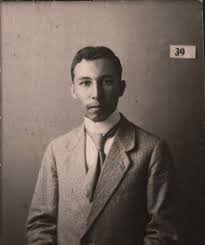
Charles Olke van der Plas (1891–1977) was one of the most experienced Dutch colonial administrators of the Netherlands East Indies. Born in Buitenzorg, now Bogor, in West Java, he developed a deep knowledge of Indonesian society, Islam and local languages. He spoke Malay, Arabic and several Indonesian languages, and was strongly influenced by the work of the Islamic scholar Christiaan Snouck Hurgronje.
Van der Plas served in a range of administrative positions in Java and was Dutch consul in Jeddah, Saudi Arabia, from 1921 to 1926. His years in the Arab world strengthened his understanding of Islam and helped shape his later approach to colonial administration. He believed that Indonesians could no longer simply be governed in a paternalistic way, but had to be drawn more seriously into the administration of their own country.
In 1936 he became Governor of East Java. In that role he promoted agricultural improvement, poverty reduction, education and rural development. Although he remained a Dutch colonial official, his approach was more reformist than that of many of his contemporaries. He sought cooperation with Indonesian leaders and believed that Dutch rule could only survive if it adapted to political and social change.
Flight to Australia
After the Japanese invasion of the Netherlands East Indies in 1942, Van der Plas escaped to Australia with Hubertus van Mook and other senior officials. Australia then became the centre from which the Dutch tried to maintain authority over the occupied Netherlands East Indies and prepare for its eventual liberation.

Van der Plas became Chief Commissioner of the Netherlands East Indies Commission for Australia and New Zealand, based in Melbourne. This Commission functioned as a de facto government-in-exile before the formal establishment of the Netherlands East Indies government-in-exile. From Melbourne, Van der Plas and his colleagues dealt with Australian authorities, Allied military command, Dutch military and naval representatives, displaced civilians, Indonesian seamen, political internees and the practical problems of maintaining a government without a country.
His Australian role was therefore much broader than that of a refugee administrator. He was one of the central Dutch figures in wartime Australia and a key link between the Dutch colonial administration, the Commonwealth Government and the Allied command structure.
The Tanah Merah evacuation
One of Van der Plas’s most significant Australian-linked actions was the evacuation of political prisoners from Tanah Merah in Boven-Digoel, Dutch New Guinea.
The prisoners included Indonesian nationalists and left-wing activists whom the Dutch had previously considered a threat to colonial order. In 1943, with the Japanese advance creating new dangers, Van der Plas travelled from Australia to Merauke and then deep into the interior along the Digul River to organise their evacuation. The journey was difficult and remote, involving a river journey of around 200 kilometres through tropical country.
The Dutch feared that if the Japanese reached Tanah Merah, the prisoners might either be killed, recruited or used for propaganda. Van der Plas arranged for many of them, together with women and children, to be transported to Australia. This decision was politically complicated. The Australian Government was reluctant to accept them, partly because of security concerns and partly because of the White Australia Policy. Van der Plas bypassed some of that resistance by obtaining support from General Douglas MacArthur’s South West Pacific command.
Once in Australia, many of the former Digoel prisoners were held or moved through camps including Cowra, Mackay, Casino, Gaythorne and Camp Columbia, Brisbane. Their presence became part of the wider Indonesian political story in Australia. Some later became active in nationalist and anti-Dutch activities, while Australian unions and political groups increasingly took an interest in their treatment.
This episode is important for Dutch-Australian history. It brought Indonesian political prisoners, Dutch colonial authorities, Australian military administration and Australian labour politics into direct contact. It also showed the contradictions in Van der Plas’s position: he could act humanely and pragmatically, yet he remained part of a colonial system that many Indonesians now rejected.
Camp Columbia, Brisbane
In 1944 the Netherlands East Indies Government-in-Exile was formally established at Camp Columbia, Wacol, Brisbane. Van der Plas became Director of the Department of the Interior and Chairman of the Board of Departmental Heads. This made him one of the most senior civilian officials in the Dutch wartime administration in Australia.
His department was concerned with the future civil administration of the Netherlands East Indies after liberation. From Camp Columbia, Dutch officials prepared plans for restoring government, rebuilding public administration and developing post-war policy for the islands. Van der Plas worked closely with Van Mook, but his own position was substantial. He coordinated the civilian machinery of government while Van Mook dealt with the broader political, diplomatic and Allied military dimensions.
Camp Columbia was therefore not only a military site. It was also the administrative centre from which the Dutch attempted to shape the post-war future of Indonesia. Van der Plas’s presence at Wacol underlines the importance of Brisbane in the final years of Dutch colonial rule in the Netherlands East Indies.
Australia as a political turning point
The Australian years were a turning point in Van der Plas’s career. In Melbourne and Brisbane he helped develop ideas for a reformed post-war Netherlands East Indies. These ideas included greater Indonesian participation and, later, a federal structure intended to provide an alternative to full republican independence.
However, events moved faster than Dutch planning. While Van der Plas and Van Mook were preparing reforms from Australia, Indonesian nationalism was being transformed by Japanese occupation, wartime mobilisation and the collapse of Dutch authority. By the time Japan surrendered in August 1945, many Indonesians no longer wanted gradual reform within a Dutch imperial framework. They wanted independence.
Return to Indonesia
After the Japanese surrender, Van der Plas returned to Indonesia. He became an important Dutch civilian representative in the difficult transition from war to revolution. He was involved in attempts to restore administration and later supported federal solutions, including the creation of the State of East Java and the State of Madura as part of the Dutch-sponsored United States of Indonesia model.
These plans failed to gain lasting support. Indonesian republicans saw them as attempts to divide the independence movement, and political support in the Netherlands also weakened. The federal solution collapsed, and Dutch sovereignty was transferred to Indonesia in 1949.
Later development work
After leaving Indonesia, Van der Plas continued to work internationally. His later career took him into early development assistance, including work in Saudi Arabia, Gambia, Greece and West Africa. He worked on irrigation, agriculture, adult education and local economic initiatives. His approach emphasised working with local communities rather than simply imposing policies from above.
This later work reflected themes that had already marked much of his career: practical administration, respect for local knowledge, and a belief that development required cooperation with the people most directly affected.
Legacy
Charles van der Plas died in Zwolle in 1977. No full biography has yet been written, but his career deserves closer attention. He stood at the intersection of colonial administration, wartime exile, Indonesian nationalism, Australian wartime policy and post-war development assistance.
For Dutch-Australian history, his importance lies especially in the years 1942–1945. In Australia he helped lead the Netherlands Indies Commission, organised the evacuation of Tanah Merah political prisoners, dealt with Australian authorities over Indonesian internees and became one of the senior civilian figures of the Netherlands East Indies Government-in-Exile at Camp Columbia in Brisbane.
His story shows that Australia was not merely a place of refuge for Dutch officials after the fall of the Netherlands East Indies. It became a centre of Dutch wartime administration, Allied planning and Indonesian political activity. Van der Plas was one of the key figures in that complex and often overlooked chapter of Australian, Dutch and Indonesian history.
- Reform or restoration? Political tensions over the future of the Netherlands East Indies during wartime exile.
- Wartime reform and Indonesian voices: Dutch–Indonesian political tensions in exile.
- Frustration and fortitude: the Dutch purchasing mission and wartime tensions in Australia
- From indifference to diplomacy: how the war transformed Dutch–Australian foreign relations