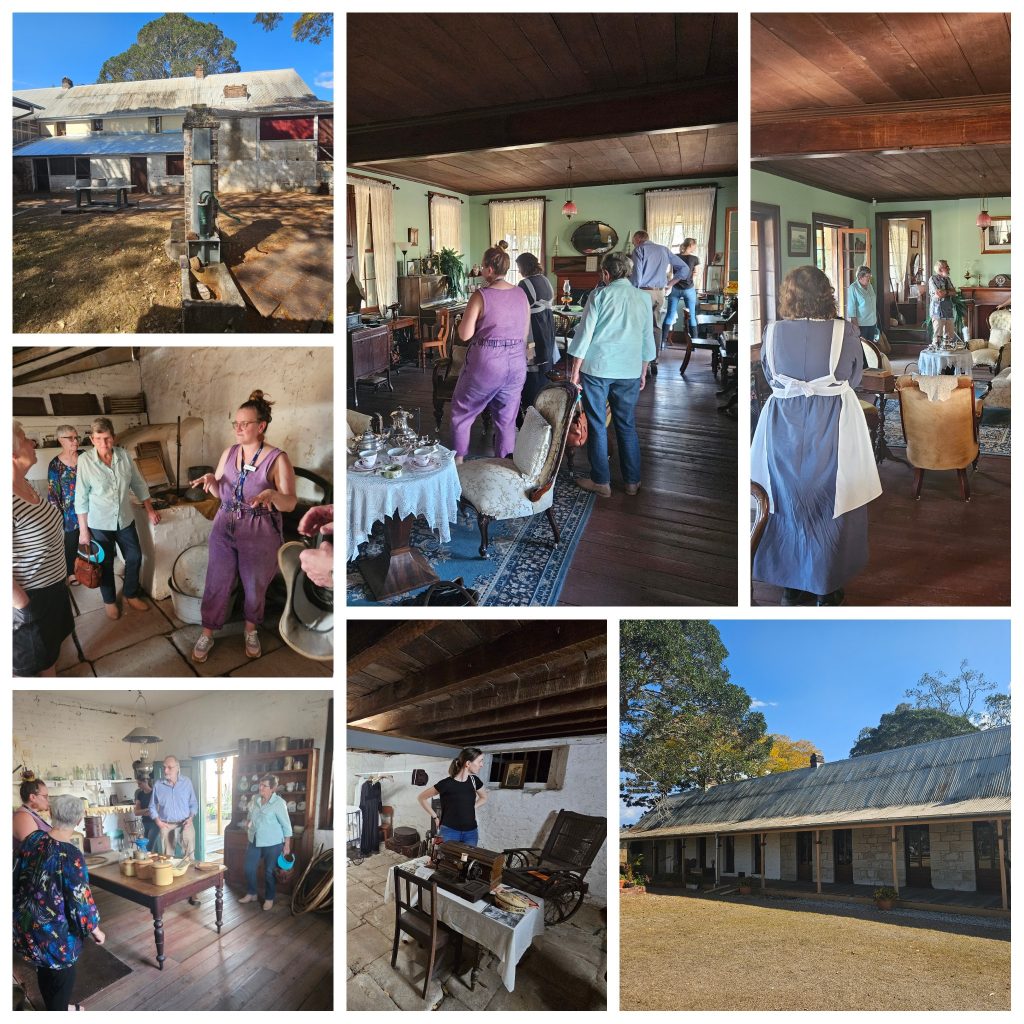
Wolston House at Wacol is one of Brisbane’s oldest surviving colonial homesteads and occupies an important place in both Queensland history and Brisbane’s World War II heritage landscape. Built in 1852, the house long predates the military transformation of the surrounding area during World War II, yet its wartime experiences directly connected it to Camp Columbia and the massive Allied presence that reshaped Brisbane during the Pacific War.
Today, Wolston House and the former Camp Columbia site stand as close neighbours. Through a new collaboration between the National Trust of Australia (Queensland) and the Camp Columbia Heritage Association Inc. (CCHA), both organisations are working towards a more integrated interpretation of this shared heritage landscape — linking colonial settlement history, wartime history, archaeology, education and public engagement.
Early history of Wolston House
Wolston House was established around 1852 by Dr Stephen Simpson, Commissioner of Crown Lands in the Moreton Bay colony. Simpson, originally from Wolston in Warwickshire, England, gave both the house and the surrounding district their name.
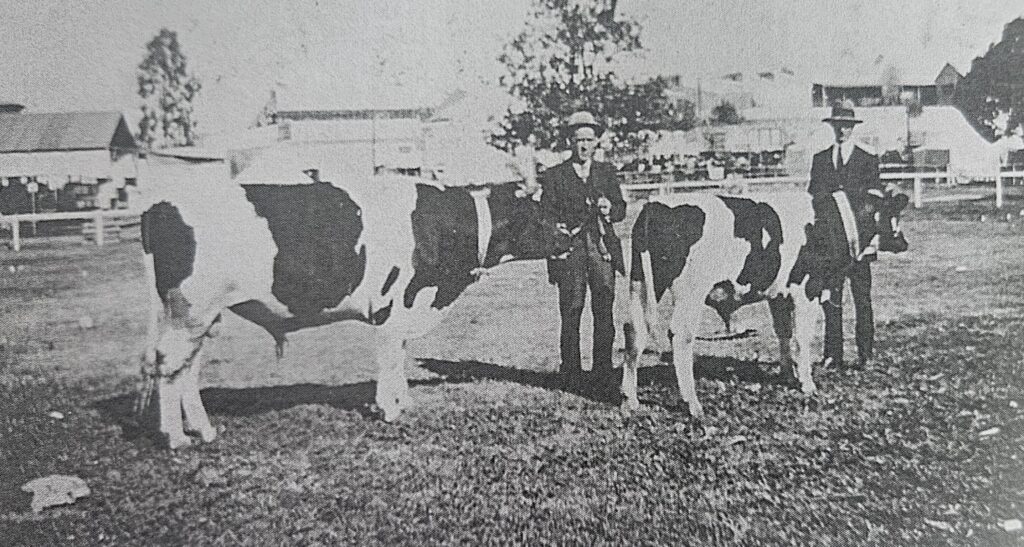
In 1860, the property later passed to pastoralist M. B. Goggs. At this time the property covertred all of Wacol (including all of area that would later become Camp Columbia) and even extended beyond Wacol. It was a large horse and cattle station. Goggs expanded the homestead and further developed the cattle and horse operations. In 1906 the Grindle family purchased the property and established a successful dairy and mixed farming enterprise that became well known throughout the Brisbane district.
By the mid-twentieth century the house had fallen into disrepair, but historical groups campaigned for its preservation. In 1965 the property was handed to the newly formed National Trust of Queensland, largely to save the house from demolition.
Today Wolston House remains:
- effectively the only surviving colonial farmhouse in Brisbane;
- the building that inspired the creation of National Trust Queensland;
- and the only National Trust property within the City of Brisbane.
Wolston House during World War II
The quiet rural landscape around Wolston House changed dramatically during World War II when sections of the Wolston estate were resumed or commandeered for the construction of Camp Columbia, one of the largest American military facilities established in Brisbane during the Pacific War.
The following wartime summary, based on Ian Sharp’s publication The Wolston Story, captures the direct impact of the Allied military presence on Wolston House and the Grindle family:
“During WW II, part of the property was taken to build Camp Columbia for the American Army. Jim Grindle’s house at Wacol Station was also commandeered by the US – and he moved back to Wolston House.
The American motor pool and ammo dump were visible from the homestead. Troop manoeuvres damaged the property and allowed stock to escape (the Grindles ran a huge prize dairy herd that supplied much of Brisbane). And a trainee pilot from Archerfield crashed on the property and was killed.
The Grindles entertained American officers, and Jem Grindle (19) had an American boyfriend. After a riding accident in 1943, she was rushed to the American hospital nearby. But she died the next day – the second heir to Wolston House to end a dynasty with a fall from a horse.”
— Ian Sharp, The Wolston Story, National Trust Queensland, 1998.
This account provides a rare and highly personal insight into the interaction between local Queensland families and the American military presence in wartime Brisbane. Rather than existing separately from the war, Wolston House became embedded within the operational environment of Camp Columbia.
From the homestead the family could see military installations, ammunition depots and troop activity. The surrounding rural landscape was transformed by roads, pipelines, barracks, hospitals and military infrastructure associated with the American camp.
The nearby American hospital mentioned in the account formed part of the broader Camp Columbia complex that supported Allied operations throughout the South West Pacific.
Camp Columbia and the transformation of Wacol
Camp Columbia became a major Allied military centre during World War II. Initially developed for the United States Army, the broader Wacol area later also accommodated elements connected to the Netherlands East Indies government-in-exile, military units and wartime refugee activities.
The establishment of the camp fundamentally altered the landscape around Wolston House. Rural farmland was converted into military facilities and transport infrastructure, linking Wacol directly into Brisbane’s wartime role as the operational centre for Allied activities in the South West Pacific.
The wartime transformation extended beyond the immediate military years. After the war, parts of the former camp facilities were adapted for migrant and refugee accommodation, while other areas evolved into institutional and industrial uses that continue to shape the district today.
This broader history increasingly positions the Wacol area as an important component of Brisbane’s emerging recognition as the “Allied Capital of Australia” during World War II.
A new partnership in shared heritage
Recognising the close historical relationship between the two sites, the National Trust of Australia (Queensland) and the Camp Columbia Heritage Association Inc. have formalised their collaboration through the signing of a Memorandum of Understanding (MoU). The agreement establishes a long-term framework for research, education, exhibitions and public engagement centred on Wolston House and the former Camp Columbia site.
The partnership supports:
- education programs relating to Camp Columbia, Wolston House and Brisbane’s wartime history;
- archaeological research and historical investigations;
- exhibitions and interpretive activities;
- public talks and commemorative programs;
- stronger interpretive links between Wolston House, Camp Columbia and Pooh Corner Bushland Reserve; and
- collaboration with universities, heritage organisations, community groups and government agencies.
The collaboration seeks to strengthen recognition of Brisbane’s role as the Allied Capital of Australia during the Second World War while presenting the shared heritage narratives associated with Wolston House and Camp Columbia within a coordinated educational and heritage landscape.
Importantly, Wolston House contributes established museum, education and visitor infrastructure, research facilities and exhibition space, while CCHA provides historical research, interpretive material, educational resources and stewardship of the surviving Camp Columbia landscape at Pooh Corner Bushland Reserve. Together, these complementary strengths create a unique platform for preserving and interpreting one of Australia’s most significant wartime heritage landscapes.
Looking to the future
The partnership between Wolston House and Camp Columbia marks another important step in establishing a long-term heritage and education precinct centred on Brisbane’s wartime history.
Working alongside the recently established partnership with the University of Queensland, the collaboration creates new opportunities for historical research, archaeological investigation, student engagement and public education. Together, these partnerships provide the foundations for an integrated program that combines academic research, archaeology, exhibitions, digital storytelling and community engagement.
Future initiatives include:
- expanded school education programs;
- University of Queensland student research projects and archaeological fieldwork;
- permanent and travelling exhibitions;
- digital mapping and storytelling projects;
- heritage trails linking Wolston House, Camp Columbia and Pooh Corner Bushland Reserve;
- public lectures, commemorative events and community programs; and
- broader interpretation of Brisbane’s role as the Allied Capital of Australia during the Second World War.
Together, Wolston House and Camp Columbia demonstrate how colonial history and wartime history intersect within the same landscape. The survival of Wolston House provides a rare physical connection between Brisbane’s nineteenth-century pastoral history and its transformation into one of Australia’s principal Allied military centres during World War II.
Supported by partnerships with the National Trust of Australia (Queensland), the University of Queensland, Brisbane City Council, government agencies and an expanding network of Australian and international heritage organisations, CCHA is helping to build a lasting legacy for Camp Columbia. By bringing together research, archaeology, education, exhibitions and storytelling, the association aims not only to preserve this remarkable history but also to ensure that it continues to inform and inspire future generations.