
The history of the former Camp Columbia site at Wacol did not end with the departure of the American and Dutch military forces after the Second World War. In many ways, a new chapter was only just beginning. Over the following decades the vast military complex was transformed into one of Queensland’s most important migrant reception centres and later into emergency and transitional housing facilities. The story of the site reflects broader changes in Australian society — from war mobilisation to post-war migration, multiculturalism and social housing.
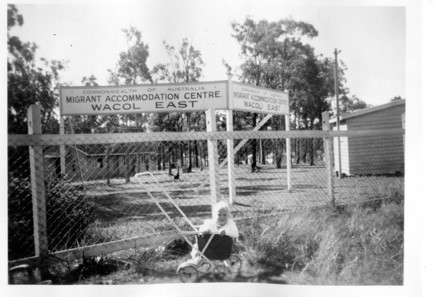
During the war, Camp Columbia had served as a major Allied military base on Brisbane’s western outskirts. Initially developed by the United States Army during 1942–43, the camp later became closely associated with the Netherlands East Indies Government-in-Exile and Dutch military operations in Australia. By the end of the war, however, large sections of the camp had become surplus to military requirements.
At the same time Australia faced an enormous post-war challenge. Europe was devastated, millions of people were displaced, and the Australian Government launched an ambitious immigration program under the slogan “populate or perish”. The country needed workers, population growth and economic development. Former military camps across Australia were quickly converted into migrant accommodation centres.
The “Populate or Perish” policy reflected widespread concern after WWII that Australia’s relatively small population left the country vulnerable to future military threats. The post-war immigration program was therefore seen not only as an economic necessity but also as a strategic national priority.
At Wacol, part of the former Camp Columbia area was adapted in 1949 into what became known as the Wacol East Displaced Persons Holding Camp. Refugees and displaced persons from war-torn Europe began arriving in Queensland after years spent in camps across Germany, Austria and other parts of Europe.
Contemporary reports described plans for Wacol and the nearby Fraser’s Paddock camp to accommodate over 1,100 displaced persons, with Wacol itself intended to house around 600 migrants. Facilities included communal dining rooms, kitchens, laundries and toilet blocks based on “community principles”.
The first arrivals included people from Poland, Latvia, Lithuania, Ukraine, Yugoslavia, Estonia and other Eastern and Central European countries devastated by war and occupation. Many had lost homes, families and entire communities during the conflict. For them, Australia represented safety and the opportunity to rebuild their lives.
The migrants were housed in converted timber barracks and former military huts originally built for Allied troops during the war. Conditions were often basic. Families commonly lived in small cubicles within larger communal huts, sharing kitchens, laundries and amenities. Brisbane’s heat could make the former army accommodation uncomfortable, particularly during summer.
Nevertheless, for many migrants Wacol represented hope and stability after years of uncertainty. Oral histories describe the mixture of relief, anxiety and optimism experienced by families arriving in an unfamiliar country on the other side of the world.
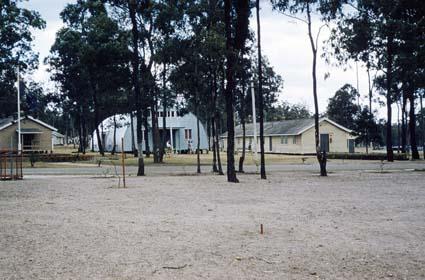
In the early 1950s the facility expanded and became officially known as the Wacol Migrant Centre. It grew into the largest migrant reception centre in Queensland. Although designed for around 1,600 residents, numbers at times approached 2,000.
Wacol was both the first and largest migrant reception centre in Queensland. During the peak years between 1950 and 1952, nearly 2,000 people were living there, with some families still accommodated in tents due to overcrowding.
Over the years the migrant population diversified. Alongside Eastern European displaced persons came assisted migrants from the Netherlands, Italy, Greece, Germany, Malta and the United Kingdom. Many Dutch migrants who later settled across Queensland spent their first weeks or months in Australia at Wacol.
The centre became an important entry point into Queensland’s growing multicultural society. English classes, employment allocation services and social activities were organised to assist migrants in adapting to life in Australia. Many residents found employment in nearby factories, brickworks, railway operations and construction industries in Brisbane’s western suburbs.
The impact of the centre extended well beyond the camp itself. Many migrant families who passed through Wacol later settled in nearby suburbs such as Darra, Inala, Oxley and Richlands. Ethnic clubs, churches, sporting organisations and cultural associations established in these suburbs often had direct links to families who first arrived through the Wacol centre.
The long-term impact of this migration is still visible in the demographics of the surrounding suburbs. According to material in the attached document, the Wacol region became one of the most multicultural areas in Australia. Census data from 2011 showed that 42.8% of people in Wacol had both parents born overseas, significantly above Queensland and national averages.
The site also played a role in later refugee movements. During the 1970s, following the Vietnam War, some Vietnamese refugees arriving in Queensland were temporarily accommodated at Wacol as Australia’s migration policies evolved from post-war European resettlement towards a broader multicultural immigration program.
Alongside the migrant centre, parts of the former Camp Columbia area were also used for emergency and transitional housing. This became known as the Wacol Housing Camp.
The housing camp reflected another major social issue confronting post-war Queensland — a severe shortage of affordable housing. Former military huts and barracks were repurposed to accommodate families facing housing difficulties and social dislocation.
Aboriginal families were among those housed at Wacol during periods of acute housing stress. This added another important layer to the long history of the area, linking the site not only to wartime and migrant experiences but also to the broader story of Aboriginal displacement and social policy in Queensland.
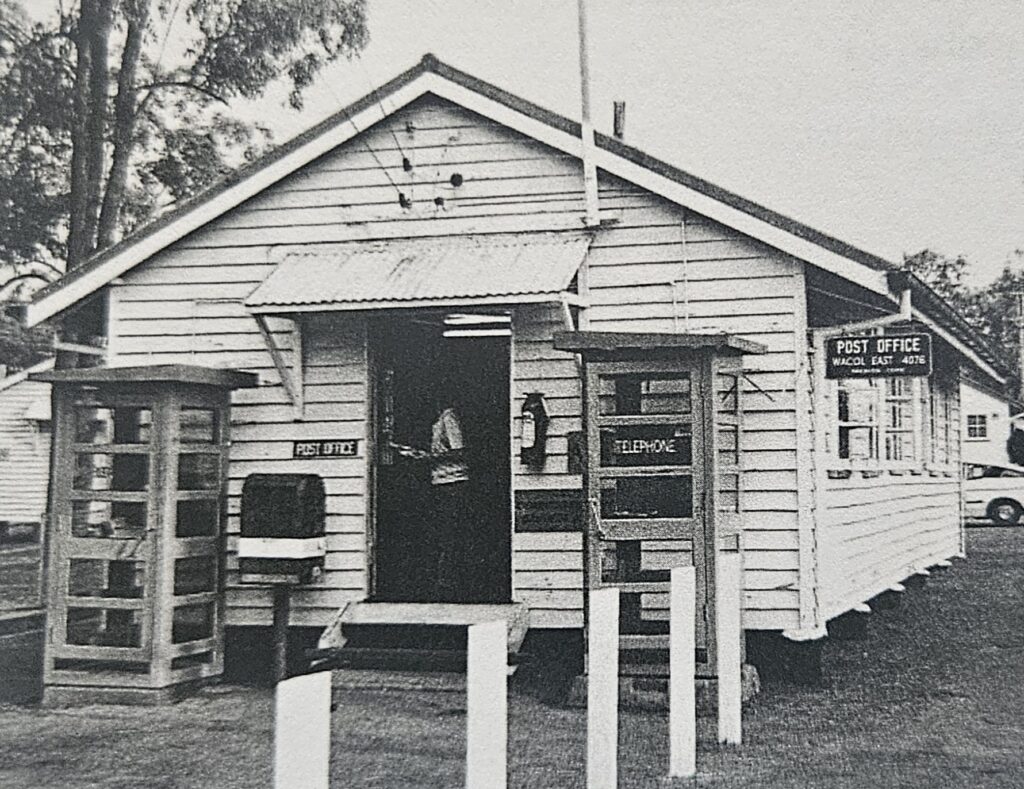
Conditions within the housing camp were often difficult. Many of the wartime buildings were ageing and never designed for long-term civilian occupation. Nevertheless, for many residents the camp provided temporary shelter and community support during difficult periods of transition.
The various post-war uses of the site reveal an extraordinary continuity of purpose. Across several decades the former Camp Columbia area successively accommodated military personnel, refugees, migrants and socially disadvantaged families. In each phase the site served people experiencing displacement, uncertainty or major life transitions.
Contemporary newspaper reports from the early 1950s provide insight into daily life at Wacol. One article described the camp as a community where women significantly outnumbered men because many husbands were working elsewhere under two-year employment contracts. The report noted that more than 1,100 children were living in the camp and described migrants saving money to purchase land in Brisbane’s western suburbs while waiting for permanent housing opportunities.
By the 1980s the old wartime buildings had deteriorated significantly. Australia’s immigration policies and migrant settlement practices were also changing. Large communal migrant hostels were increasingly regarded as outdated, with newer approaches favouring direct settlement into community housing.
In 1987 the Wacol Migrant Centre and the nearby Willie Mackenzie Hostel were officially closed. Soon afterwards the Queensland Prisons Department took control of much of the former camp area. The site later became part of Queensland’s expanding correctional precinct, including the opening of the Arthur Gorrie Correctional Centre in 1992.
Today, only fragments of the original wartime and migrant infrastructure survive. Yet the broader Camp Columbia landscape remains historically significant because of its multiple layers of use and memory.
The site tells a much larger story than simply that of a wartime military base. It reflects Australia’s transformation after the Second World War — from a nation mobilised for global conflict to a rapidly changing multicultural society shaped by migration, refugee resettlement and post-war reconstruction.
While many Australians supported immigration, competition for jobs and housing sometimes created resentment towards “New Australians”. Despite these challenges, migrant communities gradually became integrated into the social and economic life of Queensland and played a major role in shaping modern multicultural Brisbane.
For thousands of people who passed through Wacol, whether as soldiers, refugees, migrants or families seeking housing, the former Camp Columbia site represented a place of transition, uncertainty and new beginnings.
Within the Camp Columbia Heritage Precinct are also the remnants of buildings that were used by the migrants
See also:
After the war Camp Columbia was opened for refugees and migrants
Last remaining hut of the military barracks at Camp Columbia